Site-archief
Boris Pasternak
Russische poëzie
.
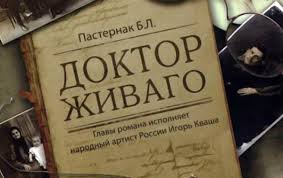
Boris Pasternak (1890 – 1960) was de zoon van een gewaardeerd kunstschilder Leonid Pasternak en de pianiste Rosa Kaufman. Hij groeide op in een kosmopolitisch en intellectueel milieu: tot regelmatige bezoekers van de familie behoorden onder anderen de componisten Sergej Rachmaninov en Alexander Scriabin, de dichter Rainer Maria Rilke en schrijver Leo Tolstoj. Boris studeerde muziek en filosofie en hij publiceerde gedichten van zijn 22ste. Later zei hij over dit werk dat het onrijp was. Hij werd wereldberoemd met zijn roman Dokter Zjivago. Onder meer door dit werk ontving hij in 1958 de Nobelprijs voor de literatuur.
Bij deze roman behoren een 25tal gedichten. Mede hierdoor wordt hij gezien als één van de grootste dichters van het post-revolutionaire Rusland. Pasternaks poëzie wordt gekenmerkt door een intens meebeleven met het gevoel van het onderwerp. Het gaat om de emoties, de extase van gevoelens. Zijn gedichten kenmerken zich door een hoge muzikaliteit. Kern van zijn poëzie is de metafoor die berust op een vluchtige associatie. Zeker in zijn beginperiode zijn de gedichten niet altijd even toegankelijk.
De hof Gethsemane
De sterren flonkerden wat onbekommerd
Maar er viel licht toch waar de bocht begon.
De weg lag om d’ Olijfberg heen gekronkeld
En daar beneden stroomde de Kedron.
De kleine weide stokte halverwege
En ging vervolgens in de Melkweg op.
De zilveren olijven liepen tegen .
De hemel met zijn stergewemel op.
Aan ’t einde bij een hof liet Hij hen achter
En zei dat Hij weer bij hen komen zou.
‘Blijf waken bij de muur,’ zei Hij, ‘en wacht er
Mijn ziel is diep bedroefd, tot stervens toe.’
En zonder weerstand deed Hij afstand van de
Almachtigheid en wonderdadigheid,
Als waren ’t dingen die Hij eenmaal leende.
Hij was nu even sterfelijk als wij.
De nachtelijke verte leek een oord van
Vernietiging en van het niet-bestaan.
De wereld was volkomen uitgestorven
En leven was slechts mooglijk in die tuin.
Terwijl Hij in de zwarte diepten staarde,
Zij waren leeg, geen eind en geen begin
Bloeddroppels zwetend, bad Hij aan Zijn Vader:
Neem deze drinkbeker van mij vandaan!
Hij bad en zie, zijn moeheid was te dragen,
Hij liep weer naar de schuur en zag terstond
Dat Zijn discipelen te slapen lagen,
Vlak langs de weg, in ’t priemgras op de grond.
Hij zei: ‘De Heer heeft jullie uitverkoren
Voor deze tijd, maar jullie slapen maar…
De Zoon des Mensen is de dood beschoren,
Hij geeft zichzelve over aan ’t gevaar.’
Direct daarop verschenen de verraders,
Met fakkels en met zwaarden toegerust.
Het waren slaven, vergezeld van Judas,
Met op zijn lippen de verraderskus.
De enige die weerstand bood was Petrus:
Hij sloeg het oor van een der slaven af.
‘Een twist wordt nooit door ’t zwaard beslecht,’ zei Jezus,
‘Dus steek dat zwaard weer in de schede weg.
Kan God de Vader mij geen eng’len zenden,
Zijn legioenen om mij bij te staan?
Dan zouden, zonder mij een haar te krenken,
Mijn vijanden weer spoorloos verder gaan.
Maar ’t levensboek is aan de bladzij toe
Die ’t liefste is van alle heiligdommen.
Al het geschrevene tot heden moet
Nu in vervulling gaan. Het zij zo. Amen.
De loop der eeuwen lijkt op een parabel
En kan in brand geraken, onderweg.
In naam van haar verschrikkelijke luister
Daal ik vrijwillig af in ’t smart’lijk graf.
En op de derde dag zal ik herrijzen.
Dan drijven eeuwen, als een karavaan
Van barges, zoals vlotten verder drijven,
Te mijnen oordeel uit het duister aan.’
.

Boris Pasternak in 1934 tijdens het eerste congres van Sovjet schrijvers
Met dank aan ‘Spiegel van de Russische poëzie’ en Wikipedia
Cranky Old Man
Mak Filiser
.
Poëzie kan een bron van vreugde zijn, het kan een manier zijn om met problemen om te gaan of om emoties in te verwerken. Het kan echter ook een manier zijn om iets aan de kaak te stellen. In de categorie ‘Dichter in verzet’ heb ik hier al verschillende voorbeelden van behandeld.
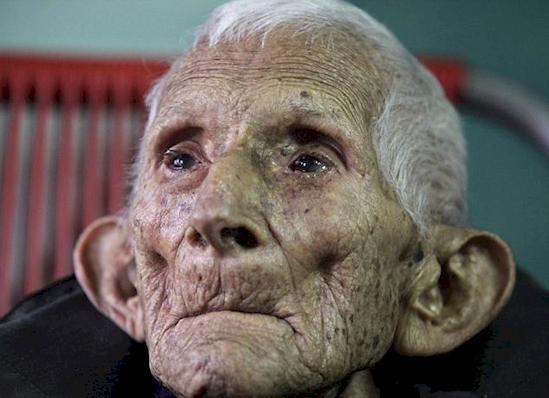
Via Facebook kwam ik op de website damn.com en daar stond een bericht over een oude man die was gestorven in een verpleeghuis. Het verplegend en verzorgend personeel dat de kamer van Mak Filiser moest leeg maken na zijn overlijden kwam tot hun grote verrassing een gedicht van zijn hand tegen met de veelzeggende titel ‘Cranky Old Man’.
In dit gedicht verteld Mak over zijn leven, van jonge jongen tot oude man, hoe het is om als oude man zijn laatste dagen te slijten in een verpleeghuis. Over een jonge geest in een oud lichaam. Een verpleegster kopieerde het gedicht en deelde het uit, het haalde deze website en er is zelfs een Nederlandse vertaling van dit bericht geplaatst op http://www.trendnova.nl/verpleegkundige-in-verpleeghuis/
Omdat ik de Engelse tekst net iets mooier en pakkender vind hier het origineel.
.
Cranky Old Man
.
What do you see nurses? What do you see?
What are you thinking…when you’re looking at me?
A cranky old man…not very wise,
Uncertain of habit…with faraway eyes?
Who dribbles his food…and makes no reply.
When you say in a loud voice…I do wish you’d try!’
Who seems not to notice…the things that you do.
.
And forever is losing…A sock or shoe?
Who, resisting or not…lets you do as you will,
With bathing and feeding…The long day to fill?
Is that what you’re thinking? Is that what you see?
Then open your eyes, nurse…you’re not looking at me.
I’ll tell you who I am . . . . .. As I sit here so still,
.
As I do at your bidding…as I eat at your will.
I’m a small child of Ten…with a father and mother,
Brothers and sisters…who love one another
A young boy of Sixteen…with wings on his feet
Dreaming that soon now…a lover he’ll meet.
A groom soon at Twenty…my heart gives a leap.
Remembering, the vows…that I promised to keep
.
At Twenty-Five, now…I have young of my own.
Who need me to guide…And a secure happy home.
A man of Thirty…My young now grown fast,
Bound to each other…With ties that should last.
At Forty, my young sons…have grown and are gone,
But my woman is beside me…to see I don’t mourn.
At Fifty, once more…Babies play ’round my knee,
Again, we know children…My loved one and me.
.
Dark days are upon me…My wife is now dead.
I look at the future…I shudder with dread.
For my young are all rearing…young of their own.
And I think of the years…And the love that I’ve known.
I’m now an old man…and nature is cruel.
It’s jest to make old age…look like a fool.
The body, it crumbles…grace and vigor, depart.
There is now a stone…where I once had a heart.
But inside this old carcass a young man still dwells,
.
And now and again…my battered heart swells
I remember the joys…I remember the pain.
And I’m loving and living…life over again.
I think of the years, all too few…gone too fast.
And accept the stark fact…that nothing can last.
So open your eyes, people…open and see.
Not a cranky old man.
Look closer…see…ME!!
.
Van een oplettende lezer kreeg ik de tip dat dit gedicht een verbastering of aangepaste versie is van een gedicht van David L. Griffith met als titel ‘Too soon old’. Hier te lezen: http://www.spotlightdavid.com/TooSoonOld.html
Poëzie en wetenschap
Gillian K. Ferguson
.
In 1880 schreef Matthew Arnold in De studie van de Poëzie:
“Meer en meer zal de mensheid ontdekken dat we ons moeten wenden tot de poëzie om het leven te interpreteren, om ons te troosten, om ons te onderhouden, zonder poëzie, zal de wetenschap onvolledig zijn. Waar we nu religie en filosofie bij de wetenschap betrekken zal dit worden vervangen door poëzie. Wetenschap, zeg ik, zal niet compleet zijn zonder poëzie. Niet voor niets benoemt Wordsworth poëzie als ‘de hartstochtelijke uitdrukking, in het aangezicht van alle wetenschap’. En wat is een gelaat zonder uitdrukking ”
Wetenschap en poëzie lijken twee werelden maar zijn dat natuurlijk niet. Hoewel wetenschap gebaseerd is op feiten en rede en poëzie op emotie en verbeelding hebben de twee veel raakvlakken. Of zoals Einstein al zei: “The most beautiful thing we can experience is the mysterious. It is the source of all true art and science.’
Op de website van Gillian K. Ferguson ‘The human genome, poems on the book of life’ schrijft de dichter over juist deze twee schijnbaar tegengestelde werelden. Niet voor niets heeft ze haar website genoemd naar het genoom (het geheel van erfelijke informatie in een cel).
Gillian K. Ferguson is een Schots dichter. Ze is meerdere malen bekroond als dichter. Haar werk is beschreven als oogverblindend origineel, lichtgevend en moedig intelligent; ze combineert levendige lyriek en sensualiteit met een bijzonder acuut ‘Celtische’ gevoeligheid voor de natuur.
.
The Genome is a Poem
.
The Genome is a poem –
sung from the lips of God;
.
original whisper in the dark
beginning, the written Word
.
that bred blue Earth
among sister stars –
.
brother planets,
spinster Moon.
.
Stirred in water molecules,
that gorgeous chemistry –
.
some thickening of light;
organic fibres – clinging
.
to a simple idea, somehow,
of existence – evolving life.
.