Site-archief
Poëzie in een tv serie
Yeats
.
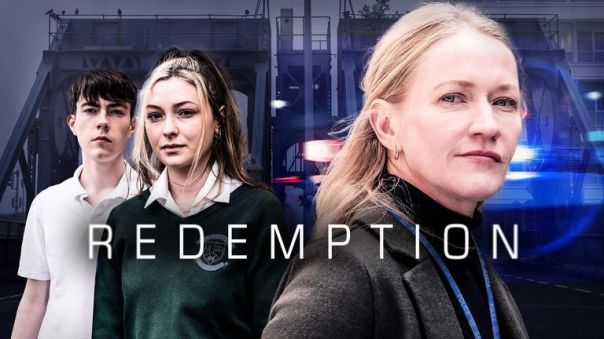
Eergisteravond keek ik naar een nieuwe (politie-) serie op televisie getiteld ‘Redemption’ of zoals het door NPO 2 wordt aangeduid ‘een rauw en onderhoudend Iers misdaaddrama’. In de misdaadserie Redemption (aflossing) is de dood van een jonge vrouw in Dublin in nevelen omhuld. Aan haar moeder (een poliotie inspecteur) de taak om de zaak te ontrafelen. Rauw en onderhoudend is het zeker want als ik er hier over schrijf dan weet je het al, in de eerste aflevering van dieze serie wordt meteen al een gedicht voorgedragen.
Hoofdinspecteur Colette Cunningham wordt vanuit Liverpool naar Dublin geroepen want haar dochter blijkt daar gestorven te zijn. Een dochter waar ze al 20 jaar niets meer van heeft vernomen. Daar aangekomen blijkt ze oma van twee pubers. Omdat haar dochter gestorbven is en begraven wordt spreekt zij tijdens de kerkdienst (het blijft Ierland) de aanwezigen toe. In haar korte toespraak zegt ze dat haar dochter vroeger als jong meisje een gedicht zo mooi vond dat ze het uit haar hoofd had geleerd. Vervolgens draagt ze dit gedicht voor.
Hoewel nergens wordt gezegd welk gedicht van welke dichter wist ik meteen, op basis van de gebruikte woorden en het metrum van het gedicht, dat dit van de Ierse dichter William Butler Yeats (1865-1939) moest zijn. Dan is het nog slechts een zin onthouden, daarop googlen en voila, het betreft hier het gedicht ‘Down By the Salley Gardens’. Het gedicht werd eerst gepubliceerd in ‘The Wanderings of Oisin and Other Poems’ in 1889.
In 1909 werd dit gedicht op muziek gezet door Herbert Hughes op de traditionele ballade ‘The Maids of Mourne Shore’. Sinds dat jaar is het gedicht door meer dan 47 artiesten als James Galway, Angelo Branduardi, Tangerine Dream, The Waterboys en Emma Thompson vertolkt en opgenomen.
.
Down By the Salley Gardens
.
Down by the salley gardens my love and I did meet;
She passed the salley gardens with little snow-white feet.
She bid me take love easy, as the leaves grow on the tree;
But I, being young and foolish, with her would not agree.
.
In a field by the river my love and I did stand,
And on my leaning shoulder she laid her snow-white hand.
She bid me take life easy, as the grass grows on the weirs;
But I was young and foolish, and now am full of tears
.
Poëzie en film
Artificial intelligence
.
Het is alweer even geleden dat ik schreef over films die een gedicht als basis hebben. De film AI, Artificial Intelligence uit 2001 is zo’n film. AI (van regiseur Steven Spielberg) is een film over een robot die een echte jongen wil zijn (zoiets als Pinocchio). Dr. Know (met de stem van Robin Williams) citeert in de film uit het gedicht ‘The Stolen Child’ van William Butler Yeats. (Een slimme referentie in een film die veel van de donkere elementen van een sprookje bevat). Yeats publiceerde dit gedicht in 1889 in ‘The Wanderings of Oisin and Other Poems’. Zijn gedicht is gebaseerd op deze Ierse legende en heeft betrekking op faeries die een kind bedriegen om met hen mee te komen.
.
The Stolen Child
.
Where dips the rocky highland
Of Sleuth Wood in the lake,
There lies a leafy island
Where flapping herons wake
The drowsy water rats;
There we’ve hid our faery vats,
Full of berrys
And of reddest stolen cherries.
Come away, O human child!
To the waters and the wild
With a faery, hand in hand,
For the world’s more full of weeping than you can understand.
Where the wave of moonlight glosses
The dim gray sands with light,
Far off by furthest Rosses
We foot it all the night,
Weaving olden dances
Mingling hands and mingling glances
Till the moon has taken flight;
To and fro we leap
And chase the frothy bubbles,
While the world is full of troubles
And anxious in its sleep.
Come away, O human child!
To the waters and the wild
With a faery, hand in hand,
For the world’s more full of weeping than you can understand.
Where the wandering water gushes
From the hills above Glen-Car,
In pools among the rushes
That scarce could bathe a star,
We seek for slumbering trout
And whispering in their ears
Give them unquiet dreams;
Leaning softly out
From ferns that drop their tears
Over the young streams.
Come away, O human child!
To the waters and the wild
With a faery, hand in hand,
For the world’s more full of weeping than you can understand.
Away with us he’s going,
The solemn-eyed:
He’ll hear no more the lowing
Of the calves on the warm hillside
Or the kettle on the hob
Sing peace into his breast,
Or see the brown mice bob
Round and round the oatmeal chest.
For he comes, the human child,
To the waters and the wild
With a faery, hand in hand,
For the world’s more full of weeping than he can understand.
.





 ZICHTBAAR ALLEEN