Site-archief
Wees voorzichtig als je voorover bukt
Charles Bukowski
.
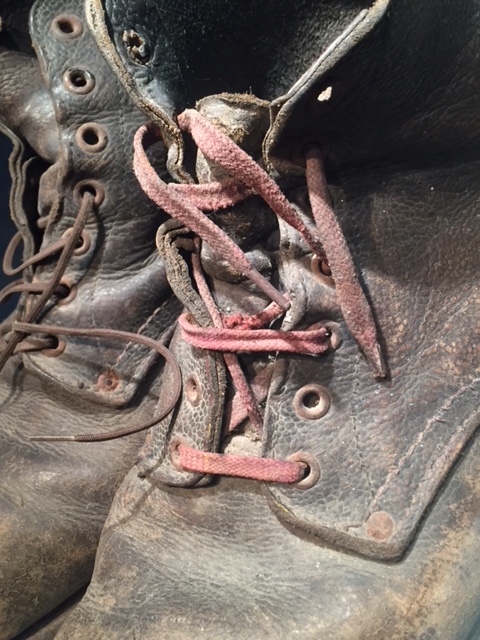
Als groot fan van Charles Bukowski lees en herlees ik zijn poëzie met enige regelmaat. Wat Charles Bukowski als geen ander kon was van iets kleins, iets alledaags een boeiend gedicht maken. Poëtisch gezien is zijn werk misschien minder spannend maar inhoudelijk en qua vorm, realistisch, rauw, zeker zeer de moeite waard. Een gedicht waarin iets kleins als uitgangspunt wordt genomen is ‘Shoelace’ of veter. Het zijn niet de grote dingen die een man naar het gekkenhuis sturen maar juist de kleine dingen, zoals Bukowski heel duidelijk beschrijft in dit gedicht.
.
Shoelace
.
a woman, a
tire that’s flat, a
disease, a
desire: fears in front of you,
fears that hold so still
you can study them
like pieces on a
chessboard…
it’s not the large things that
send a man to the
madhouse. death he’s ready for, or
murder, incest, robbery, fire, flood…
no, it’s the continuing series of small tragedies
that send a man to the
madhouse…
not the death of his love
but a shoelace that snaps
with no time left …
The dread of life
is that swarm of trivialities
that can kill quicker than cancer
and which are always there –
license plates or taxes
or expired driver’s license,
or hiring or firing,
doing it or having it done to you, or
roaches or flies or a
broken hook on a
screen, or out of gas
or too much gas,
the sink’s stopped-up, the landlord’s drunk,
the president doesn’t care and the governor’s
crazy.
light switch broken, mattress like a
porcupine;
$105 for a tune-up, carburetor and fuel pump at
sears roebuck;
and the phone bill’s up and the market’s
down
and the toilet chain is
broken,
and the light has burned out –
the hall light, the front light, the back light,
the inner light; it’s
darker than hell
and twice as
expensive.
then there’s always crabs and ingrown toenails
and people who insist they’re
your friends;
there’s always that and worse;
leaky faucet, christ and christmas;
blue salami, 9 day rains,
50 cent avocados
and purple
liverwurst.
or making it
as a waitress at norm’s on the split shift,
or as an emptier of
bedpans,
or as a carwash or a busboy
or a stealer of old lady’s purses
leaving them screaming on the sidewalks
with broken arms at the age of 80.
suddenly
2 red lights in your rear view mirror
and blood in your
underwear;
toothache, and $979 for a bridge
$300 for a gold
tooth,
and china and russia and america, and
long hair and short hair and no
hair, and beards and no
faces, and plenty of zigzag but no
pot, except maybe one to piss in
and the other one around your
gut.
with each broken shoelace
out of one hundred broken shoelaces,
one man, one woman, one
thing
enters a
madhouse.
so be careful
when you
bend over.
.
Mijn computer
Charles Bukowski
.
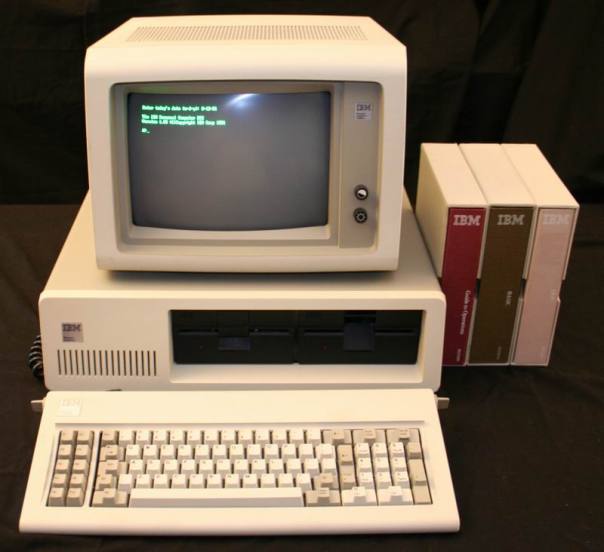
In de vakantieperiode mag een gedicht van één van mijn favoriete Amerikaanse dichter, Charles Bukowski, natuurlijk niet ontbreken. Daarom het gedicht ‘My computer’.
.
My computer
.
“What?” they say, “you got a
computer?”
it’s like I have sold out to
the enemy.
I had no idea so many
people were prejudiced
against
computers.
even two editors have
written me letters about
the computer.
one disparaged the
computer in a mild and
superior way.
the other seemed
genuinely
pissed.
I am aware that a
computer can’t create
a poem.
but neither can a
typewriter.
yet, still, once or
twice a week
I hear:
“what?
you have a
computer?
you?”
yes, I do
and I sit up here
almost every
night,
sometimes with
beer or
wine,
sometimes
without
and I work the
computer.
the damn thing
even corrects
my spelling.
and the poems
come flying
out,
better than
ever.
I have no
idea what causes
all this
computer
prejudice.
me?
I want to go
the next step
beyond the
computer.
I’m sure it’s
there.
and when I get
it,
they’ll say,
“hey, you hear,
Chinaski got a
space-biter!”
“what? ”
“yes, it’s true!”
“I can’t believe
it!”
and I’ll also have
some beer or
some wine
or maybe nothing
at all
and I’ll be
85 years old
driving it home
to
you and me
and to the little girl
who lost her
sheep.
or her
computer.
.
Bukowski
Vrijheid
.
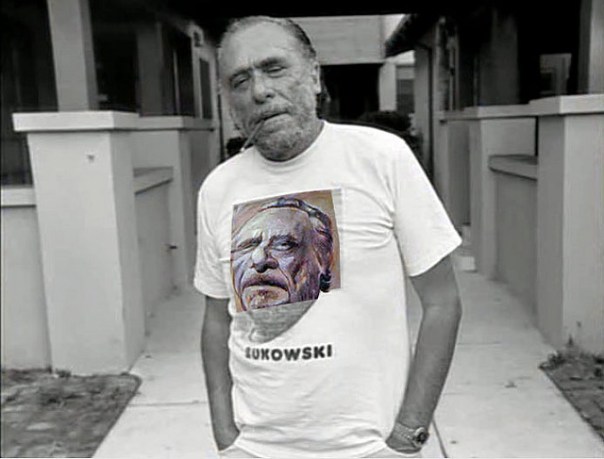
Op de website van Manu Bruynseraede vond ik het gedicht ‘freedom’ van Charles Bukowski in een vertaling. Waarschijnlijk van Manu. En zeer de moeite waard.
.
vrijheid
.
Ze zat in het raam
van kamer 1010 in het Chelsea-hotel
in New York,
de kamer van Janis Joplin.
Het was 40 graden,
ze zat op speed
en één van haar benen hing over
de vensterbank en ze leunde naar buiten
en zei: “God, dit is machtig!”
en toen gleed ze uit
en viel bijna
en kon zich nog net tegenhouden.
Het scheelde maar net.
Ze kwam terug binnen,
liep naar het bed en strekte zich
erop uit.
Ik heb veel vrouwen verloren
op vele verschillende manieren
maar op deze manier
zou de eerste keer geweest zijn.
Toen rolde ze van het bed
landde neer op haar rug
en toen ik naar haar toe kwam
sliep ze.
De hele dag had ze naar het Vrijheidsbeeld
willen gaan kijken.
Voorlopig
zou ze me daarover
niet meer lastig vallen.
.
Overweeg de hel
Berthold Brecht
.
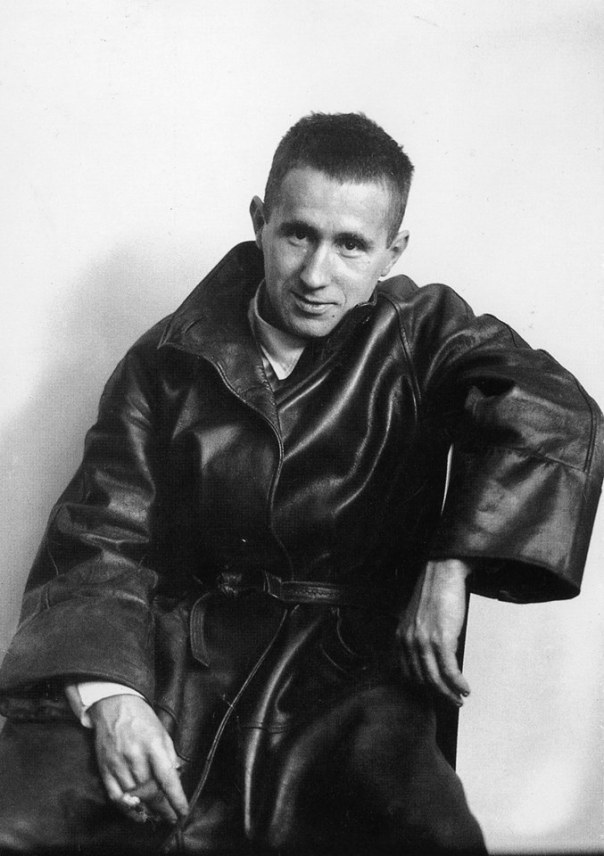
Op het forum https://bukowskiforum.com kwam ik terecht nadat ik de vraag had gesteld welke dichter te vergelijken was met Charles Bukowski. Het kan heel boeiend zijn om te lezen wat lezers en fans van een bepaalde dichter vinden van andere dichters die, wellicht, vergelijkbaar zijn met hun idool. In dit geval kwam de naam van Paul Celan naar boven. Op zichzelf geen vreemde suggestie maar doorbladerend kwam ineen de naam van Berthold Brecht naar voren, geïllustreerd door het gedicht ‘Contemplating hell’.
Eugen Berthold Friedrich (Bertolt) Brecht (1898 – 1956) was een Duits dichter, (toneel)schrijver, toneelregisseur en literatuurcriticus wiens werk sterk politiek geëngageerd was . Brecht wordt gezien als de grondlegger van het episch theater. Hij werkte veel samen met de componisten Hanns Eisler en Kurt Weill. In 1933 vluchtte Brecht uit Duitsland voor de nazi’s en kwam na omzwervingen in de Verenigde Staten terecht. In de koude oorlog periode werd hij echter vervolgd worden wegens on-Amerikaanse activiteiten (lees communistische of crypto-communistische activiteiten in de McCarthyperiode) , waarna hij vertrok naar Oost-Berlijn.
Uit de periode waarin hij in de Verenigde Staten leefde (in Los Angeles) stamt dit kritische gedicht.
.
Contemplating Hell
Contemplating Hell, as I once heard it,
My brother Shelley found it to be a place
Much like the city of London. I,
Who do not live in London, but in Los Angeles,
Find, contemplating Hell, that it
Must be even more like Los Angeles.
Also in Hell,
I do not doubt it, there exist these opulent gardens
With flowers as large as trees, wilting, of course,
Very quickly, if they are not watered with very expensive water. And fruit markets
With great leaps of fruit, which nonetheless
Possess neither scent nor taste. And endless trains of autos,
Lighter than their own shadows, swifter than
Foolish thoughts, shimmering vehicles, in which
Rosy people, coming from nowhere, go nowhere.
And houses, designed for happiness, standing empty,
Even when inhabited.
Even the houses in Hell are not all ugly.
But concern about being thrown into the street
Consumes the inhabitants of the villas no less
Than the inhabitants of the barracks.
.
Kerstmis 2017
Charles Bukowski
.
Eerste Kerstdag 2017. Geen betere datum om een gedicht van één van mijn favoriete dichters/schrijvers Charles Bukowski te plaatsen. En wel omdat het gedicht ‘some kind of nut’ het gevoel weergeeft van verschillende mensen die ik ken, die eigenlijk niet kunnen wachten tot de kerstdagen weer voorbij zijn. Juist voor die mensen, en omdat alle andere mensen die wel van de kerstdagen houden al volop aan bod en in beeld komen en voorzien worden van elke mogelijke vorm van kerstfeest, het gedicht van Bukowski.
.

Met dank aan Karen Bertrams
(witte) hond
Charles Bukowski
.
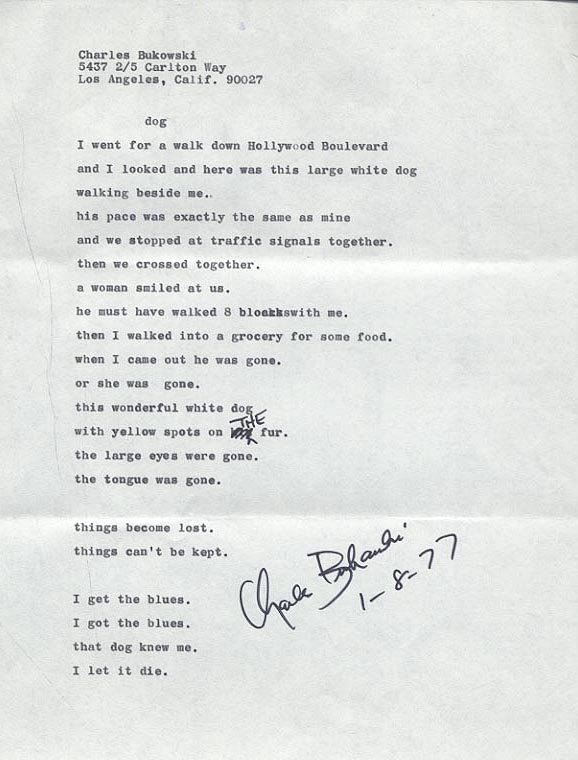
Op de website https://bukowski.net/manuscripts/ staan een enorme hoeveelheid varhalen en gedichten van Charles Bukowski te lezen. Zoals hij ze destijds getypt op papier aan zijn uitgever toestuurde. Het gedicht ‘white dog’ is een bijgewerkte versie van het origineel getiteld ‘dog’ dat anders eindigt en iets anders is van opzet. Omdat ik van ‘white dog’ een Nederlandse vertaling vond deel ik die hier met jullie. In de afbeelding daaronder het origineel getiteld ‘dog’.
Het gedicht ‘white dog’ verscheen in ‘The pleasures of the damned’ uit 2007, het origineel ‘dog’ dat Bukowski schreef in 1977, verscheen in de bundel ‘What matters most is how well you walk through the fire’ uit 1999.
.
white dog
.
I went for a walk on Hollywood Boulevard.
I looked down and there was a large white dog
walking beside me.
his pace was exactly the same as mine.
we stopped at traffic signals together.
we crossed the side streets together.
a woman smiled at us.
he must have walked 8 blocks with me.
then I went into a grocery store and
when I came out he was gone.
or she was gone.
the wonderful white dog
with a trace of yellow in its fur.
the large blue eyes were gone.
the grinning mouth was gone.
the lolling tongue was gone.
things are so easily lost.
things just can’t be kept forever.
I got the blues.
I got the blues.
that dog loved and
trusted me and
I let it walk away.
.
witte hond
,
Ik ging wandelen op Hollywood Boulevard.
Ik keek naar beneden en er liep
een grote witte hond naast me.
Zijn pas was precies dezelfde als de mijne.
We hielden samen halt aan de verkeerslichten.
We staken samen de zijstraten over.
Een vrouw glimlachte naar ons.
Hij moet zo 8 huizenblokken samen
met mij voortgegaan zijn.
Toen liep ik een kruidenier binnen en toen
ik buiten kwam was hij weg.
Of was zij weg.
Een prachtige witte hond
met een vlok geel in zijn vacht.
De grote blauwe ogen waren weg.
De grijnzende mond was weg.
De lusteloze tong was weg.
Dingen gaan zo makkelijk verloren.
Dingen kunnen gewoon niet altijd blijven.
Ik ben triest.
Ik ben triest.
Die hond hield van me
en vertrouwde me en ik
liet hem lopen.
.
A love poem
Charles Bukowski
.
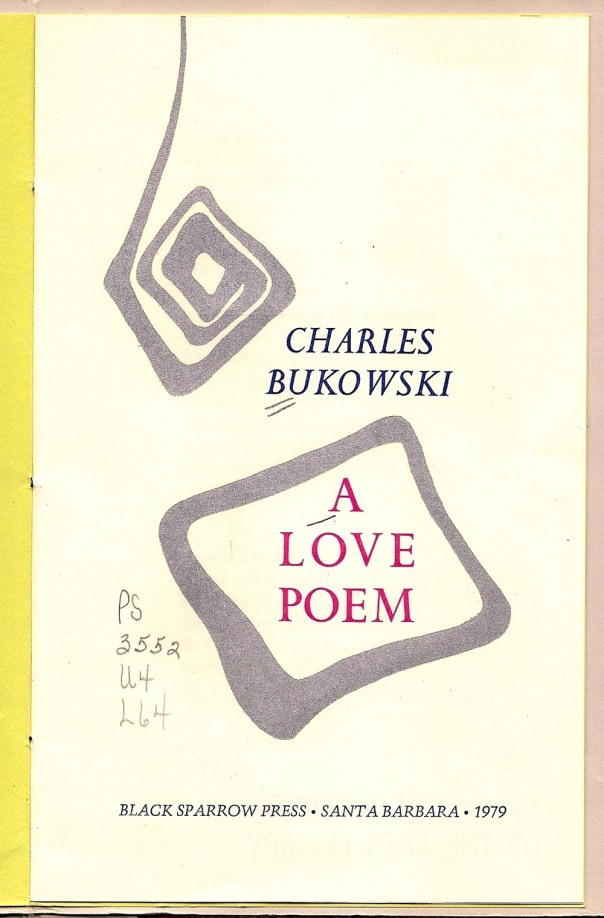
Om de zoveel tijd voel ik de behoefte om iets van Charles Bukowski te lezen. Hij heeft een manier van de dingen opschrijven die ik zeer bewonder en waardeer. Zonder opsmuk of tierelantijnen, zonder hoogdravend te zijn of gekunsteld, gewoon recht voor zijn raap maar toch altijd bijzonder. Daarom dan ook hier een gedicht zonder titel uit de bundel ‘A love poem’ uit 1979, uitgegeven door Black Sparrow Press.
.
all the women
all their kisses the
different ways they love and
talk and need.
.
their ears they all have
ears and
throats and dresses
and shoes and
automobiles and ex-
husbands.
.
mostly
the women are very
warm they remind me of
buttered toast with the butter
melted
in.
.
there is a look in the
eye: they have been
taken they have been
fooled. I don’t quite know what to
do for
them.
.
Charles Bukowski over Truman Capote
Nuestros amantes
.
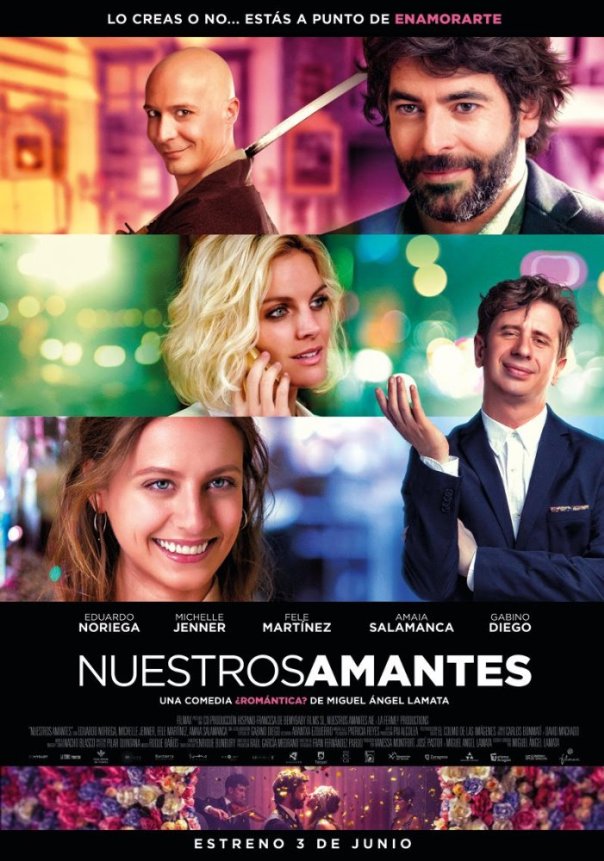
Ik weet niet hoe het jullie vergaat maar als er in een film een verwijzing zit naar een dichter, een gedicht of iets dat met poëzie te maken heeft, dan ben ik altijd meteen wakker (als ik dat al niet was natuurlijk). Vanuit een niet aflatende nieuwsgierigheid naar alles wat met poëzie te maken heeft wil ik dan ook altijd de fijne details weten. Dit gebeurde me ook weer afgelopen zaterdag. Op Netflix waren we de Spaanse film ‘Nuestros Amantes’ uit 2016 of ‘Our lovers’ zoals de Engelse titel luidt, aan het bekijken toen de twee hoofdpersonen het ineens hadden over hun favoriete schrijvers Charles Bukowski en Truman Capote. De regelmatige lezer van dit blog weet dat Charles Bukowski één van mijn favoriete dichters is uit het Engelse taalgebied.
In de film werd gesproken over een gedicht dat Bukowski geschreven zou hebben over Capote. Dat ben ik dus gaan uitzoeken. Het betreft hier het gedicht ‘Nothing but a scarf’ dat verscheen in ‘Come on in’ en hoewel het lijkt alsof Bukowski de vloer aanveegt met het schrijverschap van Capote blijkt uit de laatste twee zinnen toch een zekere waardering en respect.
.
Nothing but a Scarf
.
long ago, oh so long ago, when
I was trying to write short stories
and there was one little magazine which printed
decent stuff
and the lady editor there usually sent me
encouraging rejection slips
so I made a point to
read her monthly magazine in the public
library.
I noticed that she began to feature
the same writer
for the lead story each
month and
it pissed me off because I thought that I could
write better than that
fellow.
his work was facile and bright but it had no
edge.
you could tell that he had never had his nose rubbed into
life, he had just
glided over it.
next thing I knew, this ice-skater-of-a-writer was
famous.
he had begun as a copy boy
on one of the big New York
magazines
(how the hell do you get one of those
jobs?)
then he began appearing in some of the best
ladies’ magazines
and in some of the respected literary
journals.
then after a couple of early books
out came a little volume, a sweet
novelette, and he was truly
famous.
it was a tale about high society and
a young girl and it was
delightful and charming and just a bit
naughty.
Hollywood quickly made a movie out of
it.
then the writer bounced around Hollywood
from party to party
for a few years.
I saw his photo again and again:
a little elf-man with huge
eyeglasses.
and he always wore a long dramatic
scarf.
but soon he went back to the New York and to all the
parties there.
he went to every important party thereafter for years
and to
some that weren’t very
important.
then he stopped writing alltogether and just went
to the parties.
he drank and doped himself into oblivion almost
every night.
his once slim frame more than doubled in
size.
his face grew heavy and he no longer looked
like the young boy with the quick and dirty
wit but more like an
old frog.
the scarf was still on display but his hats were
too large and came down almost to his
eyes;
all you noticed was his
twisted
lurid
grin.
the society ladies still liked to drag him
around New York
one on each arm
and
drinking like he did, he didn’t live
to enjoy his old age.
so
he died
and was quickly
forgotten
until somebody found what they claimed was his secret
diary / novel
and then all the famous people in
New York were very
worried
and they should have been worried because when it
was published
out came all dirty
laundry.
but I still maintain that he never really did know how to
write; just what and
when and about
whom.
slim, thin
stuff.
ever so long ago, after reading
one of his short stories,
after dropping the magazine to the floor,
I thought,
Jesus Christ, if this is what they
want,
from now on
I might as well write for
the rats and the spiders
and the air and just for
myself.
which, of course, is exactly what
I did.
.
Magical Mystery Tour
Charles Bukowski
.
Mocht je denken dat deze blog over The Beatles gaat, helaas, dat is niet het geval. De titel doet wellicht iets dergelijks vermoeden maar in dit geval betreft het een gedicht van één van mijn favoriete dichters uit het Engelse taalgebied Charles Bukowski. In dit gedicht neemt Bukowski de titel letterlijk en fantaseert hij erop los over hoe zo’n mysterieuze magische rit eruit zou kunnen zien. Natuurlijk maken vrouwen en drank deel uit van zijn fantasie.
Behalve de tekst van Magical Mystery Tour ook een video waarin Tom O’Bedlam het gedicht voordraagt.
.
Magical Mystery Tour
.
I am in this low-slung sports car
painted a deep, rich yellow
driving under an Italian sun.
I have a British accent.
I’m wearing dark shades
an expensive silk shirt.
there’s no dirt under my
fingernails.
the radio plays Vivaldi
and there are two women with
me
one with raven hair
the other a blonde.
they have small breasts and
beautiful legs
and they laugh at everything I
say.
as we drive up a steep road
the blonde squeezes my leg
and nestles closer
while raven hair
leans across and nibbles my
ear.
we stop for lunch at a quaint
rustic inn.
there is more laughter
before lunch
during lunch and after
lunch.
after lunch we will have a
flat tire on the other side of
the mountain
and the blonde will change the
tire
while
raven hair
photographs me
lighting my pipe
leaning against a tree
the perfect background
perfectly at peace
with
sunlight
flowers
clouds
birds
everywhere.
.
Gedichtenjukebox
Bibliotheek Rotterdam
.
Voor Ongehoord! maar ook voor mijn werk kom ik regelmatig in de centrale bibliotheek van Rotterdam. Pal naast station Blaak en de markthal gelegen in het centrum van Rotterdam. Al jaren loop ik op de eerste verdieping langs de Gedichtenjukebox en eerlijk gezegd was het nooit in me opgekomen om daar iets over te schrijven. Ten onrechte natuurlijk want de Gedichtenjukebox biedt een keur aan prachtige poëzie.
De echte ouwe jukebox met daarin filmpjes van dichters die voordragen uit eigen werk is gevuld met filmpjes van het VPRO programma Dode Dichters Almanak en biedt onder andere filmpjes met onder andere Simon Vestdijk, Gerrit Kouwenaar, Gerard Reve maar ook Charles Bukowski en Wislawa Szymborska. Op de filmpjes zijn de dichters te zien en te beluisteren terwijl ze zelf hun poëzie voordragen.
Kijk voor alle filmpjes op http://www.vpro.nl/boeken/programmas/dode-dichters-almanak.html of loop een keer binnen bij de centrale bibliotheek in Rotterdam.
.
Hieronder een gedicht van en door Gerard Reve (niet die uit de gedichtenjukebox) met als titel ‘Getuigenis’.
Getuigenis
Ze willen dat ik schrijf
voor de vooruitgang.
Maar ik kan niet schrijven zoals zij,
al stam ik van hen af.
Ik moet de wijken van het volk in
en mijn oor te luisteren leggen:
zo hoor je nog eens wat.
Wat wil het volk?
Niet veel goeds, dat is zeker.
Dus ga ik de straat op,
met mijn eigen vaandel
waarop geschreven staat:
Vrijheid! Ziekte! Ouderdom!
Lang leve de Dood!
.





 ZICHTBAAR ALLEEN