Categorie archief: Poëzie en Film
Gedichten in films
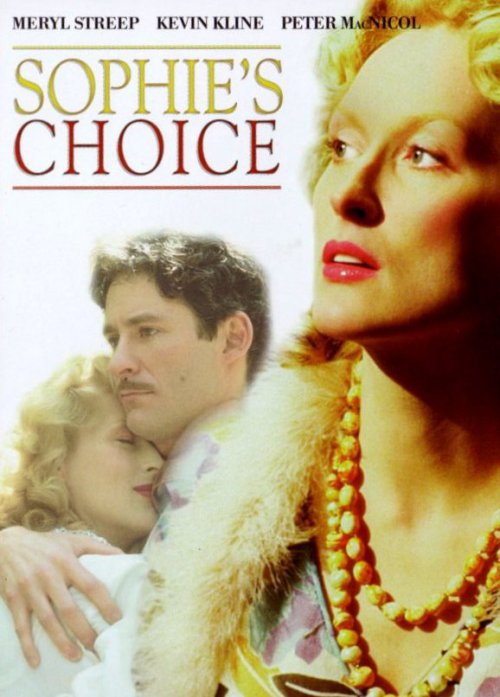
Sophie’s Choice
.
Het is alweer enige tijd geleden dat ik regelmatig schreef over poëzie in films. Vanaf vandaag zal ik weer wat vaker aandacht besteden aan wat je een ‘gelukkig huwelijk’ zou kunnen noemen. Ik weet niet hoe het jullie vergaat maar altijd wanneer er poëzie of een gedicht in een film voorkomt luister ik ineens scherper, wil ik weten welk gedicht van welke dichter het hier betreft.
Een gedicht kan ook een heel duidelijke functie hebben in een film, om iets te verduidelijken, om iets van een context te voorzien of om bij te dragen aan de sfeer, het onderwerp of het gewicht van het onderwerp. In het volgende voorbeeld is dit aan de orde. In de film Sophie’s choice leest Kevin Kline in bed het gedicht ‘Ample make this bed’ van Emily Dickinson voor.
Als je kijkt naar de analyse van het gedicht van Dickinson dan begrijp je waarom de regisseur gekozen heeft voor juist dit gedicht.
“This poem is in two contexts, one is that the poet speaks about a sensual moment that she is going to spend with her companion, or is imagining about it, where she wants everything perfect and ready. The way she is paying attention to the small details shows her anticipation about the moment that is yet to come. She wants nothing to disturb her on that day, or ever.”
.
Hieronder de scene uit de film waarin Kevin Kline het gedicht voorleest aan Meryl Streep (met speciale Spaanse ondertiteling) en de geschreven tekst.
Ample make this bed.
Make this bed with awe;
In it wait till judgment break
Excellent and fair.
Be its mattress straight,
Be its pillow round;
Let no sunrise’ yellow noise
Interrupt this ground.
.
Met dank aan https://beamingnotes.com
The Waste Land
T.S. Eliot
.
Vorige week bezocht ik het filmhuis voor de film ‘Problemski Hotel’ naar het boek van Dimitri Verhulst. Een bijzondere film, dramatisch en komisch tegelijk. In deze film citeert de hoofdpersoon Bipul enige keren een aantal zinnen uit het gedicht ‘The Waste land’ van T.S. Eliot (1888 – 1965) en dan met name de regels uit de eerste strofe ‘April is the cruelest month’. De eerste 7 regels van de eerste strofe bevatten deze regels. In deze regels noemt T.S. Eliot April een wrede maand terwijl wij hier in het Westen April zien als de maand dat de Lente begint.
In dit gedicht spreekt een getormenteerd mens. Een dichter die aan depressies lijdt. In plaats van het mooie nieuwe te zien voelt de dichter hier een pijnlijke opluchting en brengt dit pijnlijke herinneringen bij hem boven. In de rest van het gedicht werkt hij dit (zijn depressie) verder uit. In de film verwijzen deze regels naar de problemen en uitzichtloosheid van de vluchtelingen in de opvang (het Problemski Hotel).
T.S. Eliot droeg dit gedicht op de dichter Ezra Pound. Het gedicht bestaat uit 5 delen. Als je het gehele gedicht wil lezen kan dat op http://www.poetryfoundation.org/poem/176735 Ik plaats hier het eerste gedeelte.
.
The waste Land


September 1958: Portrait of American-born poet TS Eliot (1888 – 1965) sitting with a book and reading eyeglasses, around the time of his seventieth birthday. (Photo by Express/Express/Getty Images)
Skyfall
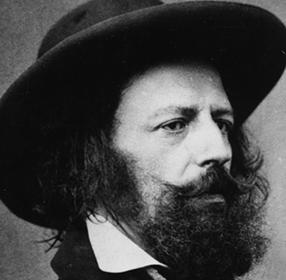
Lord Alfred Tennyson
.
Soms komen werelden bijeen waarvan je misschien niet zo snel verwacht dat ze bij elkaar komen. Dat gevoel kreeg ik toen ik afgelopen week naar de James Bond film Skyfall zat te kijken. M. het grote opperhoofd van de 00 agenten, citeert tijdens een ‘hearing’ door de, voor haar verantwoordelijke, minister een strofe uit het gedicht ‘Ulysses’ van Lord Alfred Tennyson.
Het is overigens niet de eerste keer dat dit gedicht redelijk prominent in een film voorkomt. Al eerder was het te horen in Dead poets society, maar dat is een film (qua titel en inhoud) waar je een dergelijk gedicht eerder verwacht dan in een actiefilm.
Het gebruik van deze strofe sluit echter heel mooi aan bij waar het in deze scene van de film omgaat. Hoewel Ulysses en zijn zeemannen niet meer zo sterk zijn als in hun jeugd, zijn ze “sterk in wil” en worden ondersteund door hun vastberadenheid om verder “meedogenloos te streven, te zoeken, te vinden, en niet toe te geven”.
.
Ulysses
It little profits that an idle king,
By this still hearth, among these barren crags,
Matched with an aged wife, I mete and dole
Unequal laws unto a savage race,
That hoard, and sleep, and feed, and know not me.
I cannot rest from travel;
I will drink Life to the lees.
All times I have enjoyed
Greatly, have suffered greatly, both with those
That loved me, and alone; on shore, and when
Through scudding drifts the rainy Hyades
Vext the dim sea. I am become a name;
For always roaming with a hungry heart
Much have I seen and known–cities of men
And manners, climates, councils, governments,
Myself not least, but honored of them all,–
And drunk delight of battle with my peers,
Far on the ringing plains of windy Troy.
I am a part of all that I have met;
Yet all experience is an arch wherethrough
Gleams that untraveled world whose margin fades
For ever and for ever when I move.
How dull it is to pause, to make an end,
To rust unburnished, not to shine in use!
As though to breathe were life! Life piled on life
Were all too little, and of one to me
Little remains; but every hour is saved
From that eternal silence, something more,
A bringer of new things; and vile it were
For some three suns to store and hoard myself,
And this gray spirit yearning in desire
To follow knowledge like a sinking star,
Beyond the utmost bound of human thought.
This is my son, mine own Telemachus,
To whom I leave the scepter and the isle,
Well-loved of me, discerning to fulfill
This labor, by slow prudence to make mild
A rugged people, and through soft degrees
Subdue them to the useful and the good.
Most blameless is he, centered in the sphere
Of common duties, decent not to fail
In offices of tenderness, and pay
Meet adoration to my household gods,
When I am gone. He works his work, I mine.
There lies the port; the vessel puffs her sail;
There gloom the dark, broad seas.
My mariners, Souls that have toiled, and wrought, and thought with me,
That ever with a frolic welcome took
The thunder and the sunshine, and opposed
Free hearts, free foreheads–you and I are old;
Old age hath yet his honor and his toil.
Death closes all; but something ere the end,
Some work of noble note, may yet be done,
Not unbecoming men that strove with gods.
The lights begin to twinkle from the rocks;
The long day wanes; the slow moon climbs; the deep
Moans round with many voices. Come, my friends,
‘Tis not too late to seek a newer world.
Push off, and sitting well in order smite
The sounding furrows; for my purpose holds
To sail beyond the sunset, and the baths
Of all the western stars, until I die.
It may be that the gulfs will wash us down;
It may be we shall touch the Happy Isles,
And see the great Achilles, whom we knew.
Though much is taken, much abides; and though
We are not now that strength which in old days
Moved earth and heaven, that which we are, we are,
One equal temper of heroic hearts,
Made weak by time and fate, but strong in will
To strive, to seek, to find, and not to yield.
.
Met dank aan http://www.poets.org, sparknotes.com en Youtube.
Filosofie van de liefde
Percy Bysshe Shelley
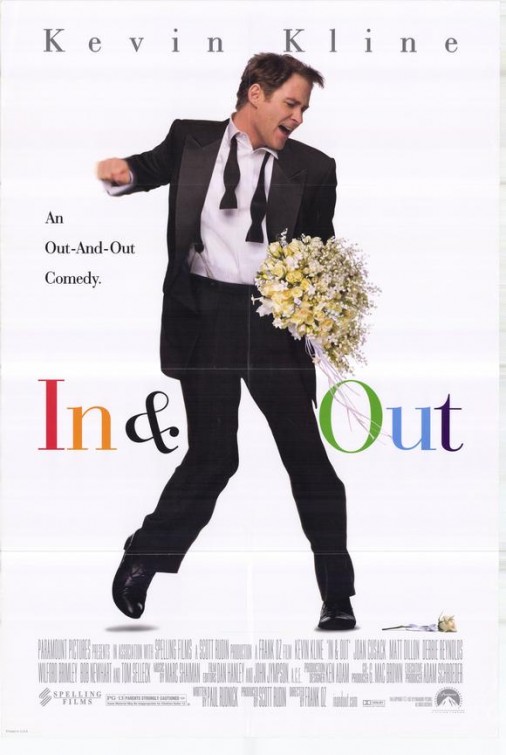
Om Percy Bysshe Shelley (1792 – 1822) zou ik bijna een nieuwe categorie starten; dichters met intrigerende namen. Toch maar niet doen misschien. Wat ik wel ga doen in ieder geval is een prachtig gedicht plaatsen van Shelley namelijk ‘Love’s philosophy’. Dit gedicht wordt gebruikt in de film ‘In & Out’ uit 1997 van Frank Oz met Kevin Kline, Joan Cusack, Matt Dillon en Tom Selleck. In & Out werd bekend als een van de mainstream pogingen om een gay film van zijn tijd te zijn.
.
Love’s philosophy

Emma Lazarus
The new Colossus
.
Emma Lazarus (1849 – 1887) was een Amerikaans dichter/essayiste. Geboren in een sefardisch-joodse familie schreef ze aanvankelijk sterk melancholische gedichten. Door de progroms in de Oekraïne veranderde haar toon en wijdde ze zich volledig aan de verdediging van het vervolgde joodse volk. Ze werd hierom ook wel ‘mother of exiles’ genoemd.
Het meest bekend is ze gebleven door haar sonnet ‘The new Colossus’ (1883), met de bekende regel “Give me your tired, your poor”, dat in 1886 op het voetstuk van het Vrijheidsbeeld werd aangebracht.
Lazarus reisde twee keer door Europa, eerst in 1885 en daarna in 1887. Na deze laatste trip keerde ze ziek terug en overleed kort daarna, waarschijnlijk aan de ziekte van Hodgkin.
Het gedicht ‘The new Colossus komt in twee films voor; ‘Saboteur’ uit 1942 en ‘Since you went away’ uit 1944.
.
The new Colossus
.
Not like the brazen giant of Greek fame,
With conquering limbs astride from land to land;
Here at our sea-washed, sunset gates shall stand
A mighty woman with a torch, whose flame
Is the imprisoned lightning, and her name
Mother of Exiles. From her beacon-hand
Glows world-wide welcome; her mild eyes command
The air-bridged harbor that twin cities frame.
“Keep, ancient lands, your storied pomp!” cries she
With silent lips. “Give me your tired, your poor,
Your huddled masses yearning to breathe free,
The wretched refuse of your teeming shore.
Send these, the homeless, tempest-tost to me,
I lift my lamp beside the golden door!”
.


Met dank aan Wikipedia en poets.org
Philip Larkin
World’s most dangerous roads
.
Vorige week keek ik naar een programma van de BBC “world’s most dangerous roads” met acteur Hugh Bonneville (o.a. uit de film Notting Hill) en actrice/scriptschrijfster Jessica Hynes (o.a. The Royle family en Spaced). In dat programma (uit 2012) bereizen zij één van de meest gevaarlijke wegen ter wereld in Georgië.
Wat heeft dat met Philip Larkin en poëzie te maken zul je je afvragen. In dit programma vermaken zij elkaar met vragen en spelletjes zoals kiezen tussen twee dingen of mensen. Een vraag van Jessica aan Hugh is Larkin of Betjeman? Waarna Jessica Hynes uit haar hoofd het onderstaande gedicht voordraagt van Philip Larkin. Overigens kiest Hugh Bonneville voor Betjeman.
Philip Larkin (1922 – 1985) werd vaak ‘die andere dichter des vaderlands’ genoemd of zoals ze in Groot Brittanië zeggen Poet Laureate. Toen er in 1984 een dichter des vaderlands gekozen moest worden werd zijn naam veel genoemd maar Larkin was een verlegen, provinciale schrijver die niet graag in de schijnwerpers stond. Hoewel Larkin maar een klein oeuvre heeft nagelaten (maar ongeveer 100 pagina’s) wordt zijn werk overal geprezen. Alan Brownjohn schreef over hem:
“the most technically brilliant and resonantly beautiful, profoundly disturbing yet appealing and approachable, body of verse of any English poet in the last twenty-five years.”
Ik zou zeggen lees het volgende gedicht (uit: Collected Poems ;Farrar Straus and Giroux, 2001) en oordeel zelf.
.
This be the verse
“They fuck you up, your mum and dad.
They may not mean to, but they do.
They fill you with the faults they had
And add some extra, just for you.
But they were fucked up in their turn
By fools in old-style hats and coats,
Who half the time were soppy-stern
And half at one another’s throats.
Man hands on misery to man.
It deepens like a coastal shelf.
Get out as early as you can,
And don’t have any kids yourself.”
.

Met dank aan Goodreads en Poetryfoundation.org
Charles Baudelaire
The Jewels / Les Bijoux
.
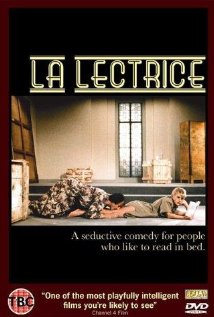
In de categorie ‘poëzie en film’ vandaag de film ‘The reader/ la Lectrice’ en het gedicht The Jewels van Charles Baudelaire.
The film ‘The reader’ uit 1988 of ‘La Lectrice’ zoals de film eigenlijk heet (het is een Franse film) is gebaseerd op de roman van Raymond Jean met dezelfde titel, geregisseerd door Michel Deville. De film gaat over Constance die haar vriend voorleest uit een boek waarin Marie haar diensten aanbiedt als voorlezer van boeken. In het verhaal lopen de twee verhaallijnen en de twee personen van Constance en Marie , beide gespeeld door de actrice Miou-Miou, op een gegeven moment door elkaar en krijgt de film iets ongrijpbaars.
In de film wordt behalve het gedicht van Charles Baudelaire ook werk van Duras, Tolstoi, Lewis Carrol en Markies de Sade voorgelezen. Naast Miou-Miou speelt Patrick Chesnais een hoofdrol. Hij kreeg voor zijn rol de César award (de Franse Oscar).
.
Les Bijoux
La très chère était nue, et, connaissant mon coeur,
Elle n’avait gardé que ses bijoux sonores,
Dont le riche attirail lui donnait l’air vainqueur
Qu’ont dans leurs jours heureux les esclaves des Mores.
Quand il jette en dansant son bruit vif et moqueur,
Ce monde rayonnant de métal et de pierre
Me ravit en extase, et j’aime à la fureur
Les choses où le son se mêle à la lumière.
Elle était donc couchée et se laissait aimer,
Et du haut du divan elle souriait d’aise
À mon amour profond et doux comme la mer,
Qui vers elle montait comme vers sa falaise.
Les yeux fixés sur moi, comme un tigre dompté,
D’un air vague et rêveur elle essayait des poses,
Et la candeur unie à la lubricité
Donnait un charme neuf à ses métamorphoses;
Et son bras et sa jambe, et sa cuisse et ses reins,
Polis comme de l’huile, onduleux comme un cygne,
Passaient devant mes yeux clairvoyants et sereins;
Et son ventre et ses seins, ces grappes de ma vigne,
S’avançaient, plus câlins que les Anges du mal,
Pour troubler le repos où mon âme était mise,
Et pour la déranger du rocher de cristal
Où, calme et solitaire, elle s’était assise.
Je croyais voir unis par un nouveau dessin
Les hanches de l’Antiope au buste d’un imberbe,
Tant sa taille faisait ressortir son bassin.
Sur ce teint fauve et brun, le fard était superbe!
— Et la lampe s’étant résignée à mourir,
Comme le foyer seul illuminait la chambre
Chaque fois qu’il poussait un flamboyant soupir,
Il inondait de sang cette peau couleur d’ambre!
.
The Jewels
My well-beloved was stripped. Knowing my whim,
She wore her tinkling gems, but naught besides:
And showed such pride as, while her luck betides,
A sultan’s favoured slave may show to him.
When it lets off its lively, crackling sound,
This blazing blend of metal crossed with stone,
Gives me an ecstasy I’ve only known
Where league of sound and luster can be found.
She let herself be loved: then, drowsy-eyed,
Smiled down from her high couch in languid ease.
My love was deep and gentle as the seas
And rose to her as to a cliff the tide.
My own approval of each dreamy pose,
Like a tamed tiger, cunningly she sighted:
And candour, with lubricity united,
Gave piquancy to every one she chose.
Her limbs and hips, burnished with changing lustres,
Before my eyes clairvoyant and serene,
Swanned themselves, undulating in their sheen;
Her breasts and belly, of my vine and clusters,
Like evil angels rose, my fancy twitting,
To kill the peace which over me she’d thrown,
And to disturb her from the crystal throne
Where, calm and solitary, she was sitting.
So swerved her pelvis that, in one design,
Antiope’s white rump it seemed to graft
To a boy’s torso, merging fore and aft.
The talc on her brown tan seemed half-divine.
The lamp resigned its dying flame. Within,
The hearth alone lit up the darkened air,
And every time it sighed a crimson flare
It drowned in blood that amber-coloured skin.
.
Cloths of Heaven
Seb Lester
.
Van mijn broer kreeg ik de volgende tip over een toepassing van een beroemd gedicht van W.B. Yeats getiteld ‘Aedh Wishes for the Cloths of Heaven’. Seb Lester is een grafisch ontwerper en kunstenaar uit Lewes in Groot Brittanië. Lester heeft ontwerpen en typografieën gemaakt voor veel grote bedrijven als Apple, Nike, Intel, The New York Times, de Olympische Winterspelen in Vancouver en de laatste heruitgave van J.D. Sallingers ‘The catcher in the rye’.
Tegenwoordig houdt Lester zich vooral bezig met prints in gelimiteerde oplages. Zo is ‘Cloths of Heaven’ als print te verkrijgen maar ook als geborduurd kunstwerk. Of zoals hij zelf zegt over dit kunstwerk: “Ik wilde proberen om de afdruk eruit te laten zien als een prachtig en tijdloos mooi stukje zeer decoratief handwerk. Ik heb me laten inspireren door de middeleeuwen, de renaissance en 18de – eeuwse bronnen , maar ik heb ook geprobeerd om persoonlijke , progressieve en oneerbiedige ideeën te integreren . Het resultaat is een stilistische hybride kunstwerk waarvan ik denk dat het alleen in de 21e eeuw kan ontstaan.”
Aedh Wishes for the Cloths of Heaven
.
Had I the heavens’ embroidered cloths,
Enwrought with golden and silver light,
The blue and the dim and the dark cloths
Of night and light and the half light,
I would spread the cloths under your feet:
But I, being poor, have only my dreams;
I have spread my dreams under your feet;
Tread softly because you tread on my dreams.
.
Dat dit een beroemd gedicht is blijkt uit het feit dat het in 1899 voor het eerst werd gepubliceerd in de bundel ‘The wind among the reeds’ en tot op de dag van vandaag gebruikt wordt in boeken en films. Zo komt het gedicht voor in de films ‘Equilibrium’, ’84 Charing Cross Road’ en ‘Dasepo Naughty Girls’. Daarnaast wordt het in de laatste aflevering van serie 3 van ‘Ballykissangel’ geciteerd door de hoofdpersoon en verscheen het in het fotoboek ‘In Flagrante’ van Chris Killip en in de romans ‘A widow for one year’ van John Irving en ‘The secret intensity of everyday life’ van William Nicholson.
.
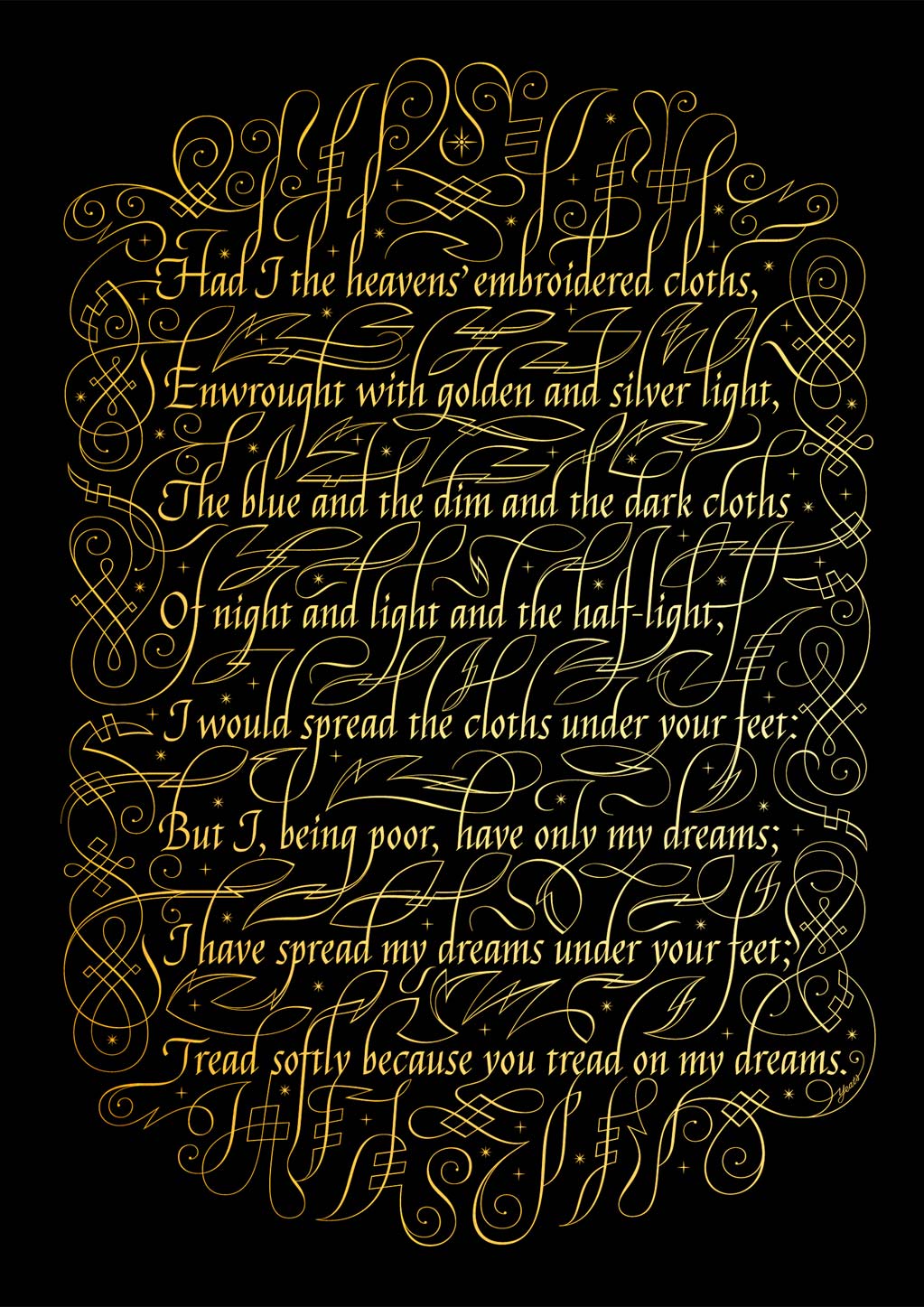
Meer voorbeelden en informatie over Seb Lester op zijn website http://www.seblester.co.uk/
Bonnie & Clyde
Bonnie Parker
.
Naar aanleiding van een redactioneel stuk dat ik las, over het stel dat het oosten van Nederland en een deel van Duitsland de afgelopen dagen in haar greep had, na berovingen, gijzelingen en geweldplegingen, vandaag dit stuk. Want wat las ik? In de meeste kranten en media werden de twee uit Nederland vergeleken met Bonnie & Clyde. Bonnie Parker en Clyde Barrow werden in de jaren dertig van de vorige eeuw als bankrovers en outlaws bekend, opgejaagd door de politie kwamen ze om het leven in een hinderlaag van de politie op 23 mei 1934, volgens de kranten van toen door “een regen van duizend geweerschoten”. Bonnie & Clyde werden verdacht van 14 moorden en diverse roven en inbraken.
Bonnie & Clyde werden vooral bekend na de verfilming van hun leven in 1967 met in de hoofdrollen Faye Dunnaway en Warren Beatty.
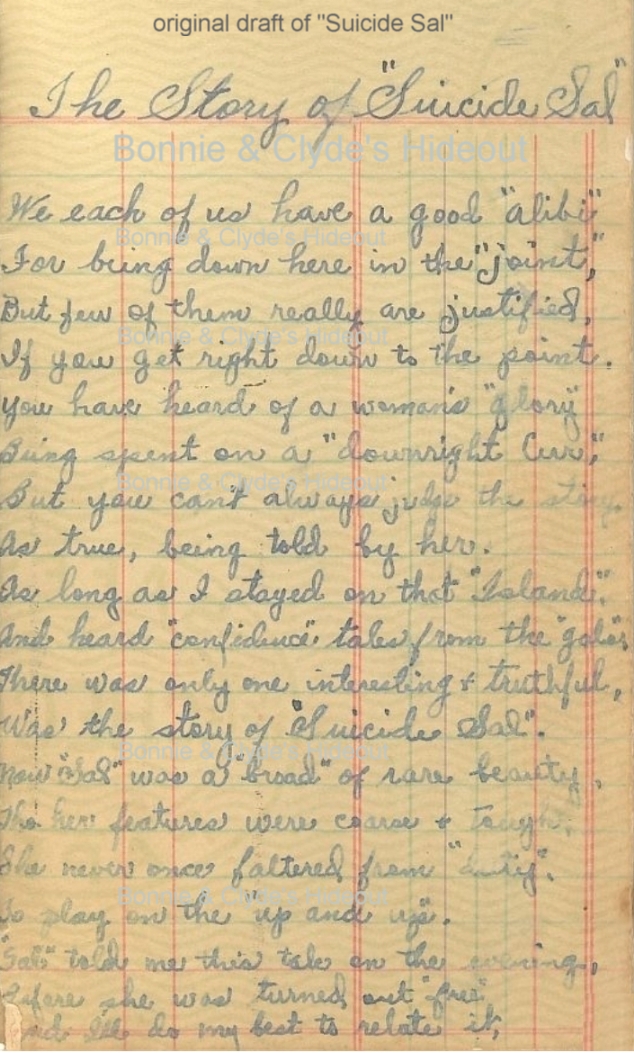
Terug naar de reden van deze post. In dat zelfde redactionele stuk las ik dat Bonnie Parker gedichten schreef. En dat ze een gedicht had geschreven over hoe zij en Clyde tenslotte aan hun einde zouden komen, door geweerschoten van de politie. Dat gedicht heb ik uiteraard opgezocht en hieronder kun je lezen hoe het allemaal is gekomen volgens Bonnie Parker.
.
The trail’s end
You’ve read the story of Jesse James
of how he lived and died.
If you’re still in need;
of something to read,
here’s the story of Bonnie and Clyde.
.
Now Bonnie and Clyde are the Barrow gang
I’m sure you all have read.
how they rob and steal;
and those who squeal,
are usually found dying or dead.
.
There’s lots of untruths to these write-ups;
they’re not as ruthless as that.
their nature is raw;
they hate all the law,
the stool pigeons, spotters and rats.
.
They call them cold-blooded killers
they say they are heartless and mean.
But I say this with pride
that I once knew Clyde,
when he was honest and upright and clean.
.
But the law fooled around;
kept taking him down,
and locking him up in a cell.
Till he said to me;
“I’ll never be free,
so I’ll meet a few of them in hell”
.
The road was so dimly lighted
there were no highway signs to guide.
But they made up their minds;
if all roads were blind,
they wouldn’t give up till they died.
.
The road gets dimmer and dimmer
sometimes you can hardly see.
But it’s fight man to man
and do all you can,
for they know they can never be free.
.
From heart-break some people have suffered
from weariness some people have died.
But take it all in all;
our troubles are small,
till we get like Bonnie and Clyde.
.
If a policeman is killed in Dallas
and they have no clue or guide.
If they can’t find a fiend,
they just wipe their slate clean
and hang it on Bonnie and Clyde.
.
There’s two crimes committed in America
not accredited to the Barrow mob.
They had no hand;
in the kidnap demand,
nor the Kansas City Depot job.
.
A newsboy once said to his buddy;
“I wish old Clyde would get jumped.
In these awfull hard times;
we’d make a few dimes,
if five or six cops would get bumped”
.
The police haven’t got the report yet
but Clyde called me up today.
He said,”Don’t start any fights;
we aren’t working nights,
we’re joining the NRA.”
.
From Irving to West Dallas viaduct
is known as the Great Divide.
Where the women are kin;
and the men are men,
and they won’t “stool” on Bonnie and Clyde.
.
If they try to act like citizens
and rent them a nice little flat.
About the third night;
they’re invited to fight,
by a sub-gun’s rat-tat-tat.
.
They don’t think they’re too smart or desperate
they know that the law always wins.
They’ve been shot at before;
but they do not ignore,
that death is the wages of sin.
.
Some day they’ll go down together
they’ll bury them side by side.
To few it’ll be grief,
to the law a relief
but it’s death for Bonnie and Clyde.
.
Hieronder een ander gedicht van Bonnie in haar handschrift.
.
The Raven
Edgar Allen Poe
.
Het meest beroemde gedicht van Edgar Allan Poe ‘The Raven’ (uit 18450 heeft talloze verfilmingen en niet te vergeten honderden verwijzingen en referenties in de pop en populaire cultuur. Leuk weetje: Boris Karloff speelt in zowel The Raven (1935) als in The Raven (1963) . De twee films zijn alleen verbonden door de titel en verwijzingen naar Poe’s werk (de eerste betreft een interpretatieve dans van het gedicht, de laatste is een komedie). En die twee staan nog los van The Raven (1915) en The Raven (2012).
Het gedicht van Edgar Allen Poe heeft dus nogal wat los gemaakt bij filmmakers. Het gedicht is nogal lang vandaar dat ik hier de eerste en laatste strofe plaats.
Wil je het hele gedicht lezen, dan kan dat op http://www.heise.de/ix/raven/Literature/Lore/TheRaven.html
.
The Raven
.
Once upon a midnight dreary, while I pondered weak and weary,
Over many a quaint and curious volume of forgotten lore,
While I nodded, nearly napping, suddenly there came a tapping,
As of some one gently rapping, rapping at my chamber door.
`’Tis some visitor,’ I muttered, `tapping at my chamber door –
Only this, and nothing more.’
.
And the raven, never flitting, still is sitting, still is sitting
On the pallid bust of Pallas just above my chamber door;
And his eyes have all the seeming of a demon’s that is dreaming,
And the lamp-light o’er him streaming throws his shadow on the floor;
And my soul from out that shadow that lies floating on the floor
Shall be lifted – nevermore!
.
Het hele gedicht voorgedragen door Vincent Price.
.




 ZICHTBAAR ALLEEN