Poëzie als Olympische Sport
Poëzine
.
Poëzine, het onvolprezen digitale magazine vol poëzie en kunst had in één van haar eerste afleveringen als thema “Een zomer zonder doping’. Ik heb daar toen een bijdrage voor geschreven waar ik laatst aan moest denken toen de hele discussie over Sochi en de corruptie binnen de Spelen weer eens aan de orde kwamen. Ik las mijn stuk nog eens terug en besefte toen dat alleen de lezers van Poëzine dit hadden kunnen lezen. Dat zijn er inmiddels al heel veel, maar om het ook met diegene die (nog) geen lid zijn (doen hoor!) te delen alsnog de tekst.
Tijdens de Olympische spelen van 2012 kwamen vele dichters (50 talen) uit allerlei landen bij elkaar in Londen op een festival met de naam Poetry Parnassus. Daar droegen zij hun poëzie voor en van deze voordrachten werden 100.000 kopieën van hun verzamelde werk uitgestort door helikopters boven het olympisch terrein aan de Thames. Een ander poëzie project ‘The Written World’ bestond uit het dagelijks voorlezen van een gedicht uit één van de 204 deelnemende landen, door de BBC. Tot slot waren er op stenen, houten en metalen gedenkplaten gedichten aangebracht die her en der op het Olympisch terrein stonden.
Toch gaat de relatie tussen sport en poëzie verder terug dan je zou denken. In het oude Griekenland waren literaire activiteiten een onlosmakelijk onderdeel van atletiek evenementen. Dichters waren toen minstens zo populair als de atleten. Beroemde atleten uit die tijd lieten dichters odes schrijven over hun belangrijkste zeges. Bij een Grieks atletiek festival bij Delphi, de god van muziek en poëzie, was het voordragen van poëzie een even competitief onderdeel als de atletiekwedstrijden.
Voor een groot deel van de Olympische spelen in de 20ste eeuw was poëzie een officieel wedstrijdonderdeel waarbij medailles waren te winnen. Baron Pierre de Coubertin stond erop dat dit soort Griekse kunsten werden toegestaan naast de sportieve onderdelen. In 1912 werd zijn droom gerealiseerd toen literatuur, muziek, schilderkunst, beeldhouwkunst en zelfs architectuur olympische onderdelen werden tijdens de zogenaamde Pentathlon der Muzen waarbij alle inzendingen direct geïnspireerd moesten zijn door sporten.
Tijdens 7 opeenvolgende Olympische spelen werden gouden, zilveren en bronzen medailles uitgereikt aan zowel schrijvers (meestal dichters) als atleten als sprinters, worstelaars en gewichtheffers. De Coubertin, slim als hij was, deed de eerste keer onder pseudoniem mee en ‘won’ een medaille voor zijn ode aan de sport. Toch was er al snel kritiek op dit onderdeel. Beroemde dichters (T.S. Elliot, Jean Cocteau) werden genegeerd en mindere goden wonnen de medailles voor vaak kritiekloze en ophemelende poëzie. Daarnaast was de regel dat alleen amateurs mochten meedingen terwijl kwaliteit juist meestal niet van amateurs kwam. Toen tijdens de Olympische spelen in en rond de crisistijd en de oorlog deze vorm van competitie ook nog eens werd ingezet als propaganda was dit het eind van de kunsten als competitief onderdeel van de spelen. In 1952 tijdens de Olympische spelen van Helsinki werd poëzie stilletjes van het programma geschrapt. Vandaag de dag zijn alle niet sport uitslagen uit de boeken van de Olympische spelen geschrapt. En misschien is dat maar beter ook. Je kunt je afvragen of poëzie zich leent als Olympisch onderdeel.
Dat tijdens de Olympische spelen van 2012 weer een vernieuwde interesse was voor poëzie kan je alleen maar toejuichen. In plaats van een zomer zonder doping zou je hier kunnen spreken van een sportzomer zonder doping maar met poëzie. En dat is alle doping die je nodig hebt lijkt me.
Tot slot twee coupletten uit het winnende gedicht van Pierre de Coubertin (onder het pseudoniem M. Eschbach geschreven van 1912. Het complete gedicht telt 9 coupletten. Voor de volledige tekst kun je terecht op http://library.la84.org/
I.
O Sport, pleasure of the Gods,
essence of life, you appeared suddenly
in the midst of the grey clearing
which writhes with the drudgery of
modern existence, like the radiant
messenger of a past age, when
mankind still smiled. And the glimmer
of dawn lit up the mountain tops and
flecks of light dotted the ground in the
gloomy forests.
II.
O Sport, you are Beauty! You are the
architect of that edifice which is the
human body and which can become
abject or sublime according to whether
it is defiled by vile passions or improved
through healthy exertion. There can be
no beauty without balance and proportion,
and you are the peerless master
of both, for you create harmony, you
give movements rhythm, you make
strength graceful and you endow suppleness
with power.
.
McDonalds is onmogelijk
McDonalds is impossible
.
Op de website van poetryfoundation.org kwam ik het gedicht ‘McDonalds is impossible’ tegen van Chelsea Martin.
Chelsea Martin heeft een bijzonder aardige website http://www.jerkethics.com/writing.html waarop meer gedichten te vinden zijn maar ook video’s artwork en nog veel meer. De reden dat ik dit gedicht van Chelsea plaats is dat ik hier pas een gedicht met de titel Burger King heb geplaatst en dan mag de grote concurrent natuurlijk niet ontbreken. Tel daarbij op de bijzondere inhoud van dit boeiende gedicht en je snapt waarom ik jullie dit niet wilde onthouden.
.
McDonalds is impossible

Voor mijn verjaardag
E.E. Cummings
.
Omdat ik vandaag jarig ben trakteer ik jullie op één van mijn favoriete dichters met een mooi, toepasselijk gedicht.
.
My mind is
my mind is
a big hunk of irrevocable nothing which touch and
taste and smell and hearing and sight keep hitting and
chipping with sharp fatal tools
in an agony of sensual chisels i perform squirms of
chrome and execute strides of cobalt
nevertheless i
feel that i cleverly am being altered that i slightly am
becoming something a little different, in fact
myself
Hereupon helpless i utter lilac shrieks and scarlet
bellowings.
.

Zwaar in mijn borst
Hélène Swarth
.
Naar aanleiding van mijn blog over Gerry van der Linden kreeg ik van Geraldina Metselaar de tip om ook vooral eens aandacht te besteden aan Hélène Swarth. Nu kende ik de naam van Hélène Swarth wel maar niets van haar werk of haar leven. Daar kwam echter snel verandering in toen ik de blog http://heleneswarth.blogspot.nl/ van Dirk Vekemans ontdekte.
Hélène Swarth (1859-1941) was een Nederlands dichteres die gerekend werd tot de Tachtigers. Ze groeide op in Brussel en bleef in België wonen tot haar huwelijk met de Nederlandse schrijver Frits Lapidoth. Ze debuteerde met Franse, door Lamartine beïnvloede gedichten, maar schakelde op aanraden van Pol De Mont over naar het Nederlands. Haar gedichten werden warm ontvangen door Willem Kloos die haar ‘het zingende hart van Holland’ noemde en haar gedichten publiceerde in zijn tijdschrift De Nieuwe Gids.
Door haar zuiverheid van uitdrukking bereikte zij een opvallende eenheid van vorm en inhoud, terwijl anderzijds haar grote zintuiglijke ontvankelijkheid aan haar beste werk een kosmisch-religieuze inslag geeft. Een mooi voorbeeld hiervan is het gedicht ‘Zwaar in mijn borst’ uit de bundel ‘Blanke duiven’ uit 1895.
.
Zwaar in mijn borst
Zwaar in mijn borst en week van ’t vele weenen,
Was toen mijn hart, roodbloedende uit zijn wond,
Vrucht, regenpijp, door zongloed nooit beschenen,
Vermolmd de boom waar ’t Noodlot haar aan bond.
Wie troost beloofde wierp, in hoon, met steenen
En bitter proefde ik ’t leven in mijn mond.
O liever stil ware ik van de aard verdwenen,
Waar ‘k altijd valscheid, nimmer liefde vond!
Toen vleide een stem: – “Kom mee naar Liefde’s Eden!
En ‘k voelde een blik, die al mijn leed verstond.
En ‘k volgde, in hoop, in deemoed en gebeden,
of me, als Tobias, God een engel zond,
Langs koele waatren, ver van woel’ge steden,
Waar kruiden bloeien voor mijn hartewond.
.

Met dank aan Geraldina Metselaar, Wikipedia en http://heleneswarth.blogspot.nl/
Zij hebben mij gekweld
Heinrich Heine
.
De Duitse dichter van Joodse afkomst Christian Johann Heinrich Heine (geboren Harry Heine, ik verzin dit niet) leefde van 1797 tot 1856 en behoorde tot de Romantische dichters. Heine schreef veel ironische en spitsvondige gedichten (waarbij hij zelfs soms met Karl Marx samenwerkte) die nog steeds gelezen en gewaardeerd worden.
Zijn bekendste werk is ‘Das Buch der Lieder’ waarin onder andere de gedichten ‘Die Lorelei’ en onderstaand gedicht ‘Sie haben mich gequälet’. Van Heine is de uitspraak “Waar men boeken verbrandt, verbrandt men uiteindelijk ook mensen” wat als een profetische uitspraak mag gelden gezien wat er onder de heerschap van Hitler gebeurde.
Omdat Heine van Joodse komaf was en als progressief vrijdenker te boek stond was hij in het Derde Rijk taboe. Zijn gedicht over de Lorelei was echter zo populair onder de Duitsers dat het gedicht in lied- en dichtboeken gewoon vermeld bleef maar dan met de toevoeging Dichter onbekend.
Hieronder het gedicht ‘Sie haben mich gequälet’ in het Duits en in een vertaling van Lepus.
.
Sie haben mich gequälet
Sie haben mich gequälet,
Geërgert blau und blaß,
Die Einen mit ihrer Liebe,
Die Abdern mit ihrem Haß.
Sie haben das Brod mir vergiftet,
Sie gossen mir Gift in’s Glas,
Die Einen mit ihrer Liebe,
Die Andern mit ihrem Haß.
Doch sie, die mich am meisten
Gequält, geärgert, betrübt,
Die hat mich nie gehasset,
Und hat mich nie geliebt.
.
Zij hebben mij gekweld
Zij hebben mij gekweld,
Geërgerd tot overmaat,
De enen met hun liefde,
De anderen met hun haat.
Zij hebben mijn brood vergiftigd,
Zij vulden mijn glas met smaad,
De enen met hun liefde,
De anderen met hun haat.
Maar hij die mij tot overmaat
Heeft gekweld, geërgerd, gegriefd,
Die heeft mij nooit gehaat
En heeft mij nooit geliefd.
.
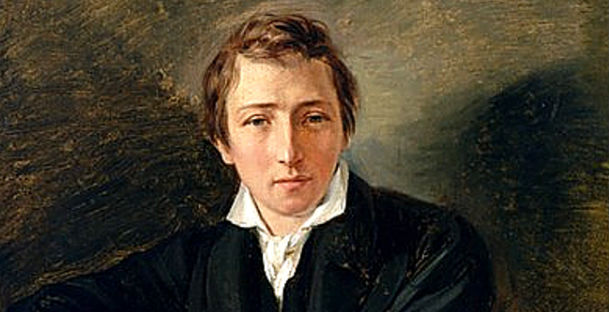
Met dank aan Wikipedia en aan http://users.telenet.be/gaston.d.haese/heine.html
Vrouwen
Gerry van der Linden
.
Onder het motto: Meer vrouwen en poëzie op dit blog (zelf bedacht motto) ga ik de komende tijd een aantal gedichten van vrouwelijke dichters plaatsen gebruik makend van de onvolprezen bundel ‘Volmaakte aanwezigheid, volmaakt gemis’.
Vandaag een gedicht van Gerry van der Linden (1952) is docente Poëzie- en schrijftraining aan ’t Colofon in Amsterdam. Ze publiceerde een aantal dichtbundels waaronder ‘Zandloper’ uit 1997 waar het onderstaande gedicht in is gepubliceerd.
.
Enkele liefdesgedichten
VI
.
Ik zie een man die weggaat.
Een vrouw
laat hem passeren.
.
Daar gaat een schouder
en een heup
die ze heeft vastgehouden.
Ze zijn nu bij de deur.
.
Het is een messcherpe vrouw.
De plooien
heeft ze al weggestreken.
.
Er valt een droge regen
tussen zijn hemd
en haar rok.
Wat zullen ze groeien!
.

Poverty poetry
Send the fire
.
Op de website van send the fire (http://www.sendthefire.ca) vond ik het gedicht ‘Dear Poverty’. The organisatie Send the fire heeft in haar visie haar droom verwoord:
- be a catalyst & hub for our younger generation to be connected in community, formed spiritually and inspired to action.
- spark a wildfire of young people leading the way in society in terms of their passion for life, faith and making a difference in the lives of others locally & globally.
.
Een mooi streven en het gedicht wordt dan ook geïntroduceerd door de volgende woorden:
At SendTheFire we love the beauty of poetry. Words are like art. Carefully crafted like in poetry they paint a beautiful picture.
Here’s some word art (poetry) that we came across recently that we thought you’d enjoy. As you read the words and engage fully with your mind and emotions, it will speak to you.
Read, reflect then leave a comment below about the picture these words painted for you or the thoughts and emotions they stirred up.
.
Dear Poverty
My name is hopelessness
But you can call me misery, despair, depression or any other term that pops up when you Press shift F7 on your pc while writing your paper about Darfur, Congo, Xinjiang, Chechnya or… Port-au-Prince from your climate controlled classroom far, far away from me.
I live in the foundations of fallen buildings,
in the cracks of concrete, and just left of the air pockets
under the rubble.
Reside in the front of supply trucks
after all the pallets have been removed,
and the empty space under the parachute
where the helicopter supposedly dropped more food.
I love the bottoms of bottles of water,
formula, canned and baby food
and whisper there’s not enough to families,
and say to aid workers, there’s nothing you can do.
I love the phrases irreconcilable differences
and hang out at negotiation table in NGO’s board rooms
and come up with conflicts of interest and difference of opinion.
All you can see is me when you can’t see a way out.
And if I hang out long enough my family comes around.
My brother is poverty and my cousin is exploitation
And when the sky stops raining or the earths quits shaking
they are sending pimps to find sex slaves
and johns to exchange services for donations
Traffickers snatch up victims, taken for slave labor.
I inhabit that space in your brain
that makes your question your donation
the con artists are my kin because
they capitalize on these situations.
I will be here
long after the Washington Post and the New York Times.
Long after I’m not mentioned in the headlines.
Still here.
when NBC and CNN are gone
and Anderson Cooper’s chopper has lifted off.
I’ll be here.
Until you come and chase me away
but based on history,
me and my family have no reason to be afraid.
.

Dolly Parton poëzie
Awful Library Books
.
http://awfullibrarybooks.net is een heerlijke website voor bibliothecarissen, dichters en schrijvers, nostalgie liefhebbers, bibliofielen en voor iedereen die graag een glimlach op zijn of haar gezicht wil toveren. Twee bibliothecarissen uit Michigan Mary Kelly en Holly Hibner zijn deze website begonnen vanuit een bibliotheek oogpunt. Voor de niet bibliothecaris is er echter veel te genieten op hun site.
Verbazing en afgrijzen, alles wordt gedeeld met de lezer. En dit alles gekoppeld aan boeken die ze in de bibliotheken tegenkomen. Boeken die soms tot grote verbazing heel veel geleend zijn en soms helemaal niet. Ze maken zich vrolijk over welke boeken er verschenen zijn en wat er vooral afgeschreven moet worden (weed it!) of juist niet.
Wat te denken van het boek ‘Teacher spanks Johnny ; a handbook for teachers’ uit 1968 waarin onder andere staat “five blows with a ping-pong paddle is not unreasonable force“ Neem ook vooral even een kijkje onder de categorie ‘Best of ALB’, de leukste vondsten per jaar gerangschikt.
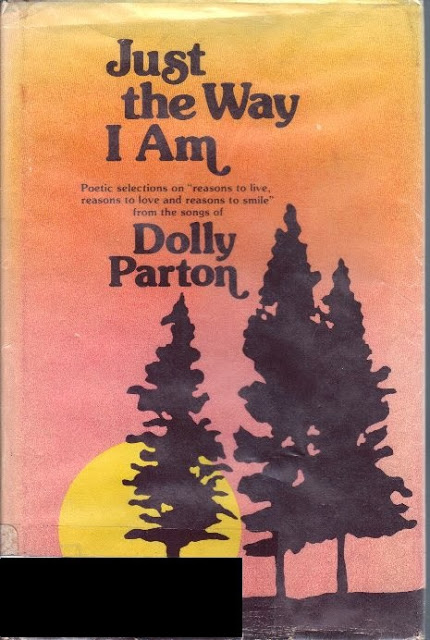
Maar ook op poëzievlak is er een en ander te vinden. Bijvoorbeeld de “Poëziebundel” van Dolly Parton. Just The Way I Am: Poetic Selections on “reasons to live, reasons to love and reasons to smile” from the songs of Dolly Parton uit 1979. Heerlijk fout!
.


Mooi initiatief Vlaams Fonds voor de Letteren
Ondersteuning dichterslezingen
.
Het Vlaams Fonds voor de Letteren ondersteunt lezingen van Vlaamse en Nederlandse dichters. Scholen, bibliotheken en sociaal-culturele verenigingen uit Vlaanderen kunnen € 100,- subsidie aanvragen wanneer een dichter zijn of haar werk komt presenteren. Maar niet alleen Vlaamse dichters komen hiervoor in aanmerking, ook Nederlandse dichters. Deze dichters moeten dan wel op de schrijverslijst van de stichting Schrijver School en Samenleving (SSS) staan, dat dan weer wel.
Misschien wel een erg goed idee voor het (Nederlandse) Fonds voor de Letteren om dit initiatief over te nemen. Er zijn in Nederland vele stichtingen die poëziepodia organiseren en misschien met deze (kleine) subsidie ook een een dichter kunnen uitnodigen die wat meer kost dan alleen een kleine onkosten – of reisvergoeding.
Vlaamse dichters die voor deze subsidie in aanmerking komen zijn terug te vinden op http://www.auteurslezingen.be . Hier zijn ook de voorwaarden voor subsidiëring en de mogelijkheid tot aanvragen te vinden.
.
Simon Vestdijk
Gedicht
.
Uit ‘Nagelaten gedichten’ (1986) en met dank aan Arie Boomsma, het gedicht ‘De zondaar’ van Simon Vestdijk (1898-1971).
.
De zondaar
.
Hij speelde met de schuwe lichaamsdelen,
Die voor de voortplanting zijn ingesteld,
Eén of twee keer, – een onaanzienlijk streelen:
Reeds werd er bij zijn vader aangebeld.
.
Toen heeft men hem twee uren lang gekweld –
Leeraar en vader – met de droevige vele
Voorbeelden van een straffend godsgeweld:
Tering en blindheid en and’re nadeelen. –
.
Men vond hem echter in die sloot nog gaaf.
De klas rouwde, de leeraar schudde braaf
Het hoofd, en heeft ons vragen afgeweerd. –
.
Waarom hebben wij niet, wij laffe honden,
Hem die als wraakengel was uitgezonden
Met zwarte inktpotscherven gecastreerd?
.




 ZICHTBAAR ALLEEN