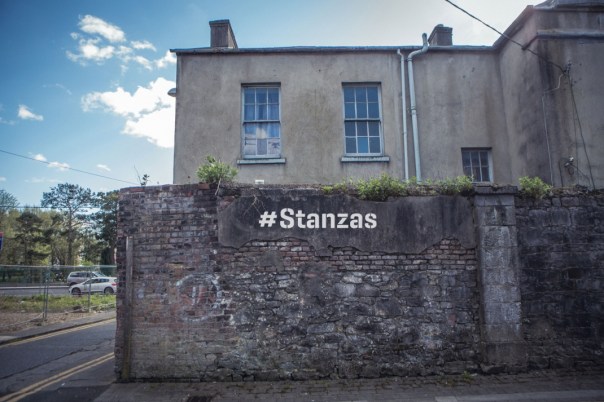
Ieder jaar worden er in Europa in twee landen Culturele hoofdsteden gekozen. Dit gebeurt al vanaf 1985 toen Athene (toen nog in 1 land) het spits afbeet. In 1987 was Amsterdam aan de beurt, in 2001 Rotterdam en in 2018 is Leeuwarden een van de culturele hoofdsteden van Europa ( in de tussenliggende jaren waren er nog vele andere steden Culturele hoofdstad uiteraard ). In 2020 mogen Ierse steden een gooi doen naar deze titel. De stad Limerick (waar de versvorm naar vernoemd is) doet een gooi naar deze benoeming met onder andere het project ‘Poetry goes 3D’ van de poëzie- en prozagroep Stanzas.
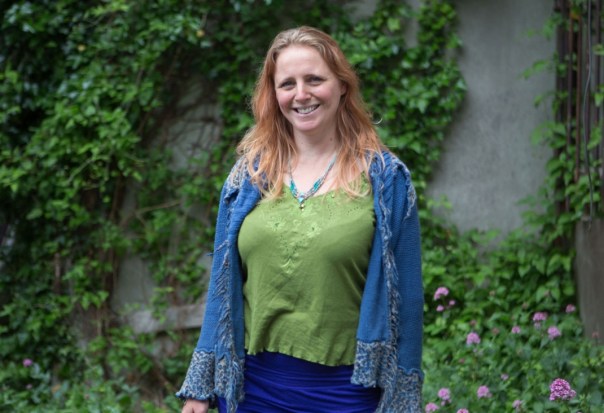
Acht dichters uit Stanzas, kregen de opdracht om gedichten te schrijven voor Limerick 2020. Stanzas stimuleert de ontwikkeling van jong literair talent door middel van reguliere bijeenkomsten en evenementen. Deze diverse groep schrijvers omvat: Melanie White, Aoife Deegan Donnellan, Emer Hayes, Caleb Brennan, RG Allen, Rachel Armstrong, Shane Vaughan en Nina O’Donovan. Citaten uit hun geselecteerde gedichten zullen binnenkort op mysterieuze locaties in en rond de stad waar te nemen zijn, waardoor er interactieve poëziepaden worden gecreëerd.
Ze roepen de inwoners van Limerick op om foto’s te nemen van deze poëzie en te delen via Instagram, Facebook en Twitter (@Limerick2020). Op de website van Limerick2020 kan dan het volledige gedicht worden gelezen. In juli verschijnt dan ook een papieren magazine met alle poëziepaden in de stad. De website van Limerick2020 is http://www.limerick2020.ie
Hier een gedicht van één van de Stanzasdichters Melanie White getiteld ‘The tigress’
.
The Tigress
.
The power and poise in her stride;
the confident toss of her head;
the hunger that simmered inside.
He longed to approach
but she could tear him to shreds.
He stalked the prowling tigress
addicted to her rage.
She directed his dreams,
he couldn’t rest or digress
till he’d put her in a cage.
He clipped her claws,
he filed her teeth,
extracted the venom from the snake.
To prove his superiority
her spirit had to break.
Intoxicated by his need to possess,
he didn’t realise that
once he’d collared the tigress
and muted her wildness
he wouldn’t love her as a pussycat.
Het is alweer even geleden dat ik schreef over films die een gedicht als basis hebben. De film AI, Artificial Intelligence uit 2001 is zo’n film. AI (van regiseur Steven Spielberg) is een film over een robot die een echte jongen wil zijn (zoiets als Pinocchio). Dr. Know (met de stem van Robin Williams) citeert in de film uit het gedicht ‘The Stolen Child’ van William Butler Yeats. (Een slimme referentie in een film die veel van de donkere elementen van een sprookje bevat). Yeats publiceerde dit gedicht in 1889 in ‘The Wanderings of Oisin and Other Poems’. Zijn gedicht is gebaseerd op deze Ierse legende en heeft betrekking op faeries die een kind bedriegen om met hen mee te komen.
.
The Stolen Child
.
Where dips the rocky highland
Of Sleuth Wood in the lake,
There lies a leafy island
Where flapping herons wake
The drowsy water rats;
There we’ve hid our faery vats,
Full of berrys
And of reddest stolen cherries.
Come away, O human child!
To the waters and the wild
With a faery, hand in hand,
For the world’s more full of weeping than you can understand.
Where the wave of moonlight glosses
The dim gray sands with light,
Far off by furthest Rosses
We foot it all the night,
Weaving olden dances
Mingling hands and mingling glances
Till the moon has taken flight;
To and fro we leap
And chase the frothy bubbles,
While the world is full of troubles
And anxious in its sleep.
Come away, O human child!
To the waters and the wild
With a faery, hand in hand,
For the world’s more full of weeping than you can understand.
Where the wandering water gushes
From the hills above Glen-Car,
In pools among the rushes
That scarce could bathe a star,
We seek for slumbering trout
And whispering in their ears
Give them unquiet dreams;
Leaning softly out
From ferns that drop their tears
Over the young streams.
Come away, O human child!
To the waters and the wild
With a faery, hand in hand,
For the world’s more full of weeping than you can understand.
Away with us he’s going,
The solemn-eyed:
He’ll hear no more the lowing
Of the calves on the warm hillside
Or the kettle on the hob
Sing peace into his breast,
Or see the brown mice bob
Round and round the oatmeal chest.
For he comes, the human child,
To the waters and the wild
With a faery, hand in hand,
For the world’s more full of weeping than he can understand.
Toen ik in 1982 als jongste bediende bij een heel klein bibliotheekje begon in Den Haag aan de Segbroeklaan was het hoofd van de bibliotheek een vrijgevochten, intelligente en zeer sympathieke feministe. Zij zette mij aan tot het lezen van allerlei romans waaronder de roman ‘Koningin van Amerika’ van Rita Mae Brown. Dit boek, dat ik nog altijd als één van mijn favoriete boeken aller tijden beschouw bracht mij in aanraking met het werk van Brown. Ik heb al haar vertaalde boeken gelezen (zo’n 15 waaronder een aantal detectives met katten!) en ben dan ook een groot fan.
Rita Mae Brown (1944) werd bekend door haar roman over een jonge lesbische vrouw ‘Rubyfruit Jungle’ uit 1973 dat als een klassieker in het genre wordt gezien. In 1979 kreeg ze een relatie met de beroemde tennisster Martina Navrátilová. Ze schreef vele romans, detectives, filmscenario’s, televisiescripts, historische romans en poëzie.
Dat laatste wist ik tot voor kort niet. In het begin van haar schrijversleven publiceerde ze twee poëziebundels: ‘The hand that cradles the rock’ uit 1971 en ‘Songs to a handsome woman’ uit 1973. In 1994 werden deze twee bundels heruitgegeven in een volume onder de titel ‘Poems’.
Uit deze bundel een aantal gedichten.
.
For Those of Us Working For a New World
The dead are the only people
to have permanent dwellings.
We, nomads of Revolution
Wander over the desolation of many generations
And are reborn on each other’s lips
To ride wild mares over unfathomable canyons
Heralding dawns, dreams and sweet desire.
The Woman’s House of Detention
Here amid the nightsticks, handcuffs and interrogation
Inside the cells, beatings, the degradation
We grew a strong and bitter root
That promises justice.
A Short Note for Liberals
I’ve seen your kind before
Forty plus and secure
Settling for a kiss from feeble winds
And calling it a storm.
The Bourgeois Questions
“I wonder about the burn
Behind your eyes,
What is it in me that disquiets me so?
Do you hate me for my softness?”
“No, I’ve come through a land
You’ll never know.”
A Song for Winds and My Vassar Women
Here among the trees
The world takes the shape of a woman’s body
And there is beauty in the place
Lips touch
But minds miss the vital connection
And hearts wander
Down dormitory halls
More hurt than hollow.
Van Odile Schmidt kreeg ik onder andere de vraag om aandacht te besteden in Dichter op verzoek, aan de dichter Harry Man, omdat “haar jonge gezelschap zo weg was van hem”. Geen beter reden lijkt me dan deze.
Hoewel ik dacht dat Harry Man wellicht een Nederlandse dichter was blijkt hij uit het Verenigd Koninkrijk te komen. Daar wordt Man (1982) gezien als een jonge, eigenzinnige dichter die de grenzen van papier en podium, wetenschap en kunst op intrigerende wijze aftast.
Begonnen als spoken word dichter debuteerde hij in 2014 met ‘Lift’ waarmee hij meteen al de prestigieuze (want langst bestaande) Struga Award won. Deze prijs wordt vergeven in Macedonië.
Harry Man was Clarissa Luard Wordsworth Trust Poet in Residence in 2016 en in 2016 Hawthornden Fellow. In 2016 was hij ook nog TOAST dichter. TOAST Poetry help dichters de stap te zetten van een debuut naar een inbedding van hun werk door ze een podium te bieden en door financiële middelen te vergaren. https://toastpoetry.com/
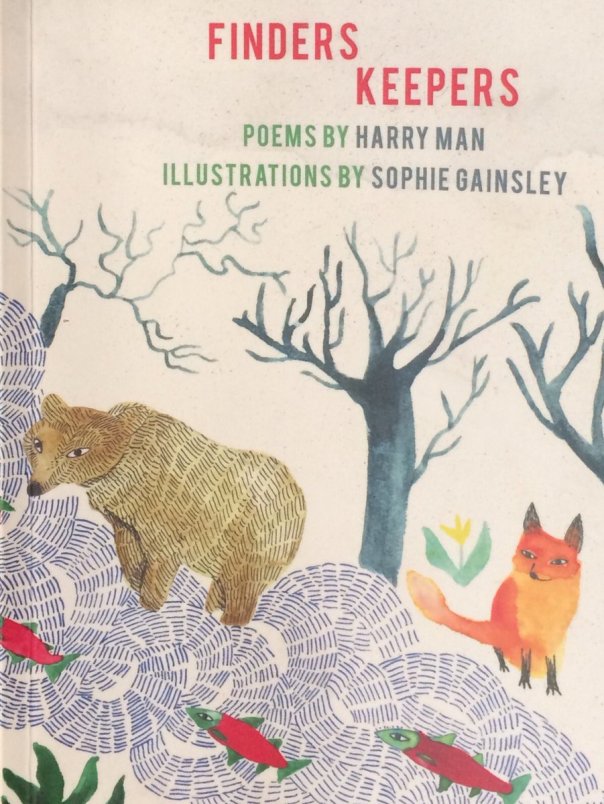
Zijn meest recente ‘pamphlet’ zoals hij ze zelf noemt, is ‘Finders Keepers’ dat handelt over bedreigde diersoorten op de Engelse eilanden. Hij heeft dit samen gemaakt met de kunstenaar Sophie Gainsley. Man’s poëzie werd al in vele talen vertaald.
Het gedicht ‘Ultrasound’ werd gepubliceerd in Popshot Magazine in 2012.
.
Ultrasound
.
The white artery of your spine
hovers beneath a butterfly’s ghost;
wings budding into flight
twice a second, heartbeat by heartbeat.
The isthmus of your foot kicks in the fluid –
the pressure of the sensor is ticklish.
With the end of his biro the doctor
circles your magnified hand gloved in light
and this shimmer, this afterthought of air
in the trees is the breath of your mother.
Night-blind you will fumble back
to its anthem through the clicks
of your hardening head.
This song, secret as a light switch,
is how your breathing will be.
The warmth of my wrist on your belly;
your pulse and mine in time –
the first of your strengths is to be loved.
Na de terroristische aanslag op de Manchester Arena kwamen mensen bij elkaar om hun woede en verdriet te delen. Bij één van deze bijeenkomsten waar duizenden mensen aanwezig waren droeg Tony Walsh zijn gedicht ‘This is the place’ voor. Dit gedicht dat hij oorspronkelijk schreef voor Forever Manchester, een goede doelen stichting die gemeenschapsactiviteiten ondersteunt in Manchester paste zo goed bij de gevoelens die veel mensen hadden; niet opgeven, doorgaan met leven en als inwoners van Manchester één front vormen. Tony Walsh schrijft onder de naam Longfella en is freelance dichter, schrijver en performer en artist -in-education.
Het aardige van bundels en boeken die al wat ouder zijn is dat er vaak later blijkt dat er een belofte wordt ingelost. In de bundel ‘New Women Poets’ uit 1990 las ik het gedicht ‘The unicorn is a symbol of virginity’ van Christiania Whitehead (1969). In dit boek wordt ze nog als aanstormend talent beschreven, net afgestudeerd en met een paar gedichten in verzamelbundels.
Inmiddels is Dr Christiania Whitehead niet alleen afgestudeerd in de middeleeuwse Engelse literatuur in Oxford, vmaar is ze ook sinds 1996 staff member bij Warwick bij het departement Engels. Ze doceert middeleeuwse literatuur en heeft boeken gepubliceerd over architectonische allegorie en devotionele schrift voor vrouwen, evenals een poëzieverzameling , ‘The Garden of Slender Trust’ (Bloodaxe). Uit die bundel komt ook het gedicht dat opgenomen is in New Women Poets.
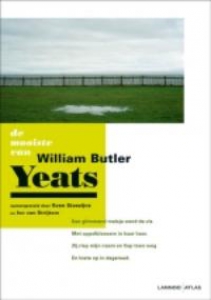
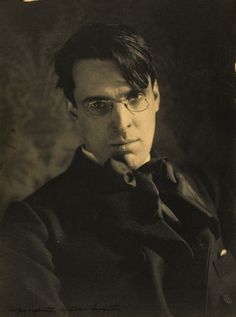
Toen ik de bundel ‘De mooiste van William Butler Yeats’ aan het doorlezen was, wist ik bij het lezen van het gedicht ‘Politiek’ of ‘Politics’ zoals het origineel getiteld is, meteen dat ik hier iets over ging schrijven.
In deze bundel staan de mooiste gedichten van Yeats in de oorspronkelijke Engelse taal en in vertaling van een aantal vertalers waaronder Jan Eijkelboom die het gedicht ‘Politics’ vertaalde.
Waarom dan hier dit gedicht? In een tijd waarin de politieke meningen polariseren en waarin het steeds moeilijker lijkt om een kabinet te vormen (dat krijg je met zo’n versnipperd politiek landschap) is het misschien goed om af en toe even als Yeats te denken. Laat alle problemen hoe groot ook eens even los en denk aan het liefhebben van (in zijn geval) een meisje. Maar een jongen mag natuurlijk ook. Hoe dan ook een mooie gelegenheid om weer eens iets van deze prachtige dichter te plaatsen.
.
Politics
.
‘In our time the destiny of man presents its meaning in political terms‘ – Thomas Mann
.
How can I, that girl standing there,
My attention fix
On Roman or on Russian
Or on Spanish politics?
Yet there’s a travelled man that knows
What he talks about,
And there’s a politician
That has read and thought,
And maybe what they say is true
Of war and war’s alarms,
But O that I were young again
And held her in my arms!
.
Politiek
.
‘In onze tijd drukt het lot van de mens zich uit in politieke termen’ – Thomas Mann
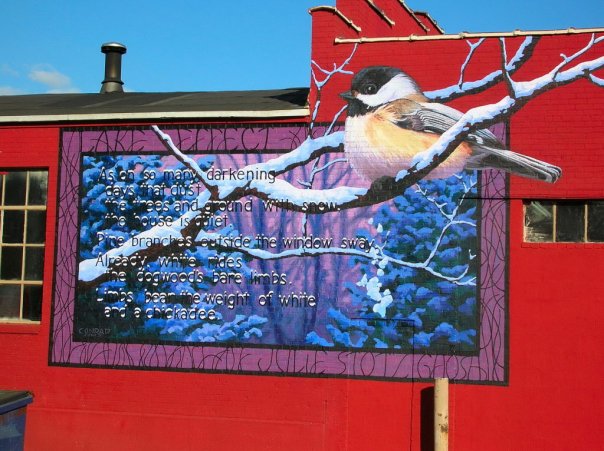
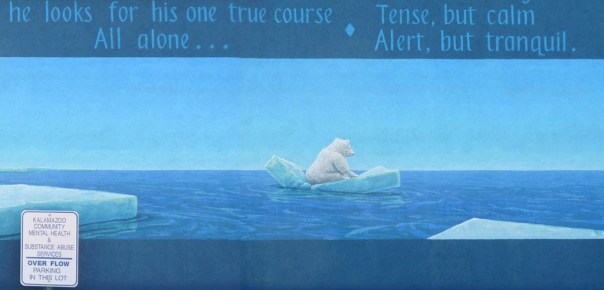
Zoals velen weten is Leiden de onbetwiste hoofdstad van Nederland als het gaat om muurgedichten. Uiteraard zijn er veel meer steden en dorpen in Nederland waar gedichten op muren zijn geplaatst. Zo ook in het buitenland. Ik kwam een mooi voorbeeld tegen van een muurgedicht in Kalamazoo. Ik heb even moeten googelen in welk land dit lag (ik dacht zelf ergens bij Australië) maar het is dus een stad in Michigan in de Verenigde Staten. Dat het hier niet zomaar een onbekend gat betreft blijkt uit het feit dat de wereldberoemde Gibson gitaar hier vandaan komt.
Vanaf 1980 is men begonnen met het aanbrengen van gedichten op muren. Maar bij elk gedicht werd een mural of muurschildering aangebracht door Conrad Kaufman en juist deze schilderingen maken deze muurgedichten iets bijzonders. De Kalamazoo Friends of Poetry kiezen de locaties uit en bepalen samen met Kaufman welk gedicht waar verschijnt. Door de bijzondere schilderingen vielen ze mij op en hieronder wil ik er enkele met jullie delen van respectievelijk Meredith Adams, Julie Stotz-Ghosh, Mark (acht jaar oud) en Emily Kunz, allemaal met schilderingen van Conrad Kaufman.
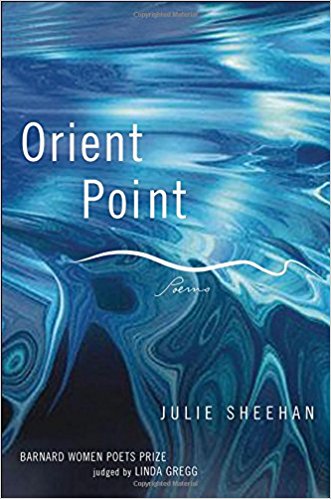
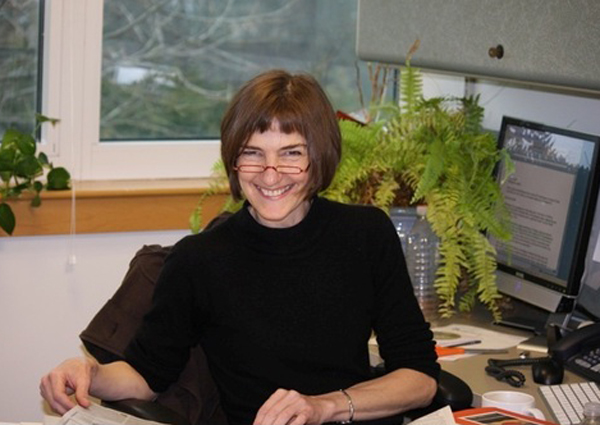
Heel veel gedichten gaan over de liefde, over mooie momenten, herinneringen en fraaie zaken maar over haat gaan gedichten maar zelden. De Amerikaanse dichter Julie Sheehan schreef in haar bundel ‘Orient point’ uit 2006 een prachtig Haat gedicht getiteld ‘Hate poem’.
Op haar website http://juliesheehan.com/about/hate-poem/ schrijft ze over dit gedicht: This is not the story behind the hate—there is no story behind the hate, or if there is, I’m not telling. Instead, I have an observation, one that has probably occurred to many: hate and love can be described in the same, outlandish, hyperbolic and indistinguishable terms, probably because hate and love require the same degree of passionate intensity. Don’t say Yeats didn’t warn us, but it may be that hate and love are the same thing. Surely both are equally capable of mass destruction.
Kortom, als je de woorden ‘hate’ veranderd in ‘love’ dan heb je ineens een gedicht vol passie over liefde. Gaat het toch weer over de liefde.
.
Hate poem
.
I hate you truly. Truly I do.
Everything about me hates everything about you.
The flick of my wrist hates you.
The way I hold my pencil hates you.
The sound made by my tiniest bones were they trapped in the jaws of a moray eel hates you.
Each corpuscle singing in its capillary hates you.
Look out! Fore! I hate you.
The little blue-green speck of sock lint I’m trying to dig from under my third toenail, left foot, hates you.
The history of this keychain hates you.
My sigh in the background as you pick out the cashews hates you.
The goldfish of my genius hates you.
My aorta hates you. Also my ancestors.
A closed window is both a closed window and an obvious symbol of how I hate you.
My voice curt as a hairshirt: hate.
My hesitation when you invite me for a drive: hate.
My pleasant “good morning”: hate.
You know how when I’m sleepy I nuzzle my head under your arm? Hate.
The whites of my target-eyes articulate hate. My wit practices it.
My breasts relaxing in their holster from morning to night hate you.
Layers of hate, a parfait.
Hours after our latest row, brandishing the sharp glee of hate,
I dissect you cell by cell, so that I might hate each one individually and at leisure.
My lungs, duplicitous twins, expand with the utter validity of my hate, which can never have enough of you,
Breathlessly, like two idealists in a broken submarine.
Poëzie is niet alleen iets van het verleden. Dus mag in een Ierse dichtersweek ook de moderne Ierse poëzie niet ontbreken. Elaine Feeney (1979) is geboren in Galway. Zij won in 2008 de Cúirt Grand Slam. Dit festival was van oorsprong een poëziefestival maar heeft de laatste jaren een verandering ondergaan naar een breed jaarlijks literatuurfestival. Zij is opgeleid in het Presentation College van de stad en studeerde Engels op St. Jarlath’s College, Tuam. Feeney heeft internationaal gepresteerd sinds haar eerste slam succes. Zij wordt beschouwd als een van de ‘meest provocerende vrouwelijke dichters van het afgelopen decennium uit Ierland’. Zij heeft 4 poëziebundel uitgegeven en een CD en werkt aan een roman. Haar gedichten werden wereldwijd gepubliceerd in magazines en tijdschriften en in verzamelbundels.
Uit haar bundel ‘The radio was gospel’ uit 2013 het gedicht met de intrigerende titel ‘Charles Bukowski is my dad’.
.
Charles Bukowski is my Dad
He stands with me in the
best-dressed-lady-line,
holding open my pearl lace
umbrella to the
ravaging Galway rain.
He calls me up on
blue Mondays and gives me
whiskey on bold Fridays.
He fills up my father-space
He fills up my mind-space
He fills up my hot-water bottle
His advice fills up my cheer
and revives my rotted liver,
but that’s a small price to pay
because Bukowski’s my Dad.
He’s my feather pillow
and my guitar string.
He’s my soccer coach and sex therapist
He paints my nails
pepperminty green and sings
raindrops keep falling on my head
on wicked trips to the racetrack.
But that’s a small price to pay
because Bukowski’s my dad.









 ZICHTBAAR ALLEEN