Categorie archief: Youtube
Gebarentaalgedicht
Polder
Van Stefanie kreeg ik een tip dat er in Leiden wordt gewerkt aan een nieuwe vorm van muurgedichten, namelijk in de vorm van gebarentaal. Dit muurgedicht in gebarentaal, wordt weergegeven in de vorm van een videokunstwerk. Dit gedicht zal worden aangebracht op een muur in de Leidse Hortus Botanicus. De keuze voor het gedicht ‘Polder’ is een eerbetoon aan Wim Emmerik (1940-2015), een belangrijke pionier van de gebarentaal. ‘Polder’, één van Emmeriks op beeld vastgelegde gedichten, gaat over zijn relatie tot het vlakke Nederlandse polderlandschap. Initiatiefnemers zijn onder meer het Taalmuseum Leiden en het Leiden University Centre for Linguïstics (LUCL), één van de instituten van de Faculteit Geesteswetenschappen van de Universiteit Leiden. Wim Emmerik heeft een belangrijke rol gespeeld in het gebarentaalonderzoek in Nederland. In de jaren ’80 en ’90 was hij betrokken bij onderzoek van de Nederlandse Stichting voor het Dove en Slechthorende Kind (NSDSK)) en aan de Universiteit van Amsterdam, waar hij ook vele generaties studenten gebarentaalles gaf.
Leiden staat bekend om zijn muurgedichten. Die zijn geschreven in allerlei verschillende talen, en laten de schoonheid zien van die diversiteit. Een gedicht in de Nederlandse gebarentaal – de moedertaal van de Nederlandse dovengemeenschap – mag daar natuurlijk niet aan ontbreken. Tenslotte is gebarentaal één van de uniek Nederlandse talen is, net zoals het Fries. Steek je de grens over naar België of Duitsland, dan hanteren ze daar een andere gebarentaal.’
Op de website van Voor de kunst https://www.voordekunst.nl/projecten/6035-muurgedicht-in-nederlandse-gebarentaal is het mogelijk om een bijdrage te leveren aan het verwezenlijken van dit bijzondere muurgedicht.
.
Liz Berry
The Patron Saint of School Girls
.
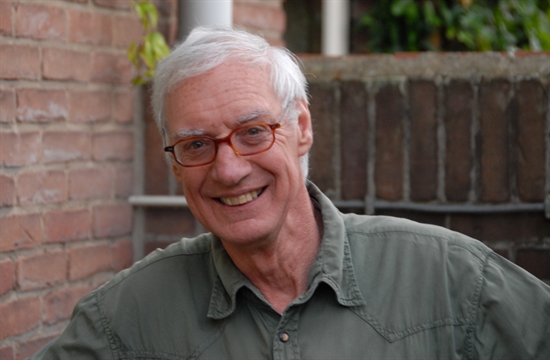
Liz Berry (1980) werd geboren in The Black Country in Engeland en woont nu in Birmingham. Haar pamflet ‘The Patron Saint of Schoolgirls’ werd gepubliceerd door Tall Lighthouse in 2010. Liz’s debuutbundel ‘Black Country’ (2014), werd aanbevolen door de Poetry Book Society, kreeg de Somerset Maugham Award, won de Geoffrey Faber Memorial Award en won The Forward Prize voor beste debuut in 2014.
Black Country werd gekozen als een boek van het jaar door The Guardian, The Telegraph, The Mail, The Big Issue en The Morning Star. Liz’s gedichten zijn uitgezonden op BBC Radio, televisie en opgenomen voor The Poetry Archive.
Ze is een beoordelaar voor grote prijzen, waaronder The Forward Prijzen voor Poëzie en Foyle Young Poets. Ze werkt als jurylid voor The Arvon Foundation, Writer’s Center Norwich en Writing West Midlands.
Hier haar pamflet ‘The Patron Saint of School Girls’ en een voordracht van Liz van ‘Birmingham Roller’ uit ‘Black Country’.
.
The Patron Saint of School Girls
Agnes had her lamb and her black curls;
Bernadette, her nun’s frock;
but I was just a school girl,
glimpsed the holy spirit in the blue flare
of a Bunsen burner, saw a skeleton
weep in a biology lesson.
My miracles were revelations.
I saved seventeen girls from a fire that rose
like a serpent behind the bike sheds,
cured the scoliosis of a teacher
who hadn’t lifted her head to sing a hymn
in years. I fed the dinner hall
on one small cake and a carton of milk.
A cult developed. The Head Girl
kissed my cheek in the dark-room,
first years wrote my name
on the flyleaf of their hymn books,
letters appeared in my school bag,
a bracelet woven from a blonde plait.
My faith grew strong.
All night I lay awake hearing prayers
from girls as far as Leeds and Oxford,
comprehensives in Nottingham.
I granted supplications for A-levels,
pleas for the cooling of unrequited love,
led a sixth form in Glasgow to unforeseen triumph
in the hockey cup final.
Love flowed out of me like honey
from a hive, I was sweet with holiness,
riding home on the school bus,
imparting my blessings.
I was ready for wings,
to be lifted upwards like sun streaming
through the top deck windows;
to wave goodbye to school and disappear
in an astonishing ring of brightness.
.

Klankgedicht
Hugo Ball en The Talking Heads
.
In het bijzonder boeiende boek ‘Made in Europe’ van Pieter Steinz uit 2014, lees ik een stuk over het klankgedicht van Hugo Ball dat later op muziek gezet is door The Talking Heads. Nu heb ik de muziek van The Talking Heads altijd erg gewaardeerd en dus ging ik op zoek, naar het gedicht van Ball en naar de muziek van The Talking Heads. Het Dadaïstische klankgedicht van Hugo Ball ‘Gadji Beri Bimba’ uit 1916 is in 1979 omgewerkt naar het nummer ‘I Zimbra’ van The Talking Heads van hun LP ‘Fear of Music’. Hugo Ball vertolkte dit klankgedicht in Cabaret Voltaire in Zurich.
Om beide te kunnen vergelijken hier de tekst van Ball uit 1916 (en zijn outfit waarin hij destijds dit gedicht voordroeg) en de clip van The Talking Heads. Wil je meer over deze boeiende persoon lezen en het nummer ‘I Zimba’ ga dan naar https://dadarockt.wordpress.com/2013/01/21/cabaret-voltaire-talking-heads/
.
Gadji Beri Bimba
.
Gadji beri bimba clandridi
Lauli lonni cadori gadjam
A bim beri glassala glandride
E glassala tuffm i zimbra
.
Bim blassa galassasa zimbrabim
Blassa glallassasa zimbrabim
.
A bim beri glassala grandid
E glassala tuffm i zimbra
.
Gadji beri bimba glandridi
Lauli lonni cadora gadjam
A bim beri glassasa glandrid
E glassala tuffm i zimbra
.
.

Weill en Brecht
Und was bekam des Soldaten Weib?
.
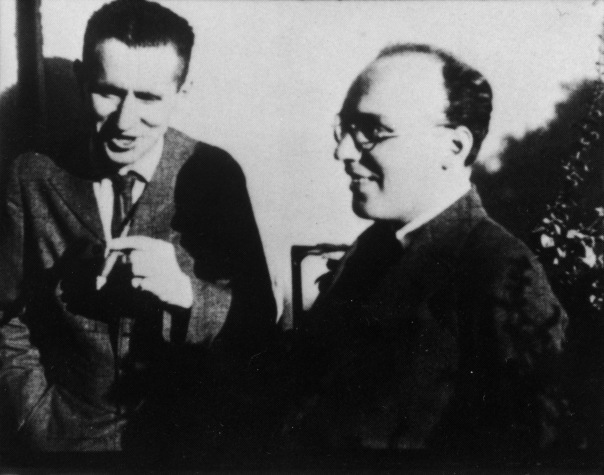
In 1941/1942 schreef Bertolt Brecht de tekst van een protestlied tegen de oorlog in 7 strofen, waar Kurt Weill de muziek bij schreef. Hanns Eisler schreef de oorspronkelijke muziek bij de tekst en gaf het de titel ‘Ballade vom Weib des Nazisoldaten’. Weill kwam met een versie voor piano en zangstem. Het lied gaat over een soldaat in de Tweede Wereldoorlog die overal moet vechten. Hij komt daardoor terecht in diverse steden en stuurt cadeaus naar huis. Zijn vrouw ontvangt de meest luxe zaken: vanuit Praag komen schoenen met hoge hakken, vanuit Oslo een bontkraag, vanuit Rotterdam een hoed, vanuit Brussel kant, vanuit Parijs een zijden japon, vanuit Boekarest een geborduurd en parmantig shirt. Echter vanuit Rusland kwam een “rouwsluier” ( het lied is geschreven voordat de Slag om Stalingrad plaatsvond).
Ook popartiesten waagden zich aan dit lied. De bekendste versie daarvan is die van PJ Harvey ; ‘The ballad of the soldier’s wife’. En Iain Matthews en Elliott Murphy namen het nummer op voor het album La terre commune. In de Engelstalige versie van Marianne Faithfull uit 1985 is het gebombardeerde Rotterdam vervangen door ‘Amsterdam’. Dit is later door andere artiesten overgenomen, zoals ook door PJ Harvey.
.
Und was bekam des Soldaten Weib?
.
Und was bekam des Soldaten Weib
Aus der alten Hauptstadt Stadt Prag?
Aus Prag bekam sie die Stöckelschuh’
Einen Gruss und dazu die Stöckelschuh’
Das bekam sie aus der Hauptstadt Prag
Und was bekam des Soldaten Weib
Aus Warschau am Weichselstrand?
Aus Warschau bekam sie das leinerne Hemd
So bunt und so fremd, ein polnisches Hemd
Das bekam sie vom Weichselstrand
Und was bekam des Soldaten Weib
Aus Oslo über dem Sund?
Aus Oslo bekam sie das Kräglein aus Pelz
Hoffentlich gefällt’s, das Kräglein aus Pelz
Das bekam sie aus Oslo am Sund
Und was bekam des Soldaten Weib
Aus dem reichen Rotterdam?
Aus Rotterdam bekam sie den Hut
Und der steht ihr so gut, der holländische Hut
Den bekam sie aus Rotterdam
Und was bekam des Soldaten Weib
Aus Brüssel im Belgischen Land?
Aus Brüssel bekam sie die seltenen Spitzen
Ha, das zu besitzen, so seltene Spitzen
Die bekam sie aus Belgischem Land
Und was bekam des Soldaten Weib
Aus der Lichterstadt Paris?
Aus Paris bekam sie das seidene Kleid
Zu der Nachbarin Leid, das seidene Kleid
Das bekam sie aus der Stadt Paris
Und was bekam des Soldaten Weib
Aus dem lieblichen Tripolis?
Aus Tripolis bekam sie das Kettchen
Das Amulettchen am Kopfe mit Kettchen
Das bekam sie aus Tripolis
Und was bekam des Soldaten Weib
Aus dem weiten Russland?
Aus Russland bekam sie den Witwenschleier
Zur Totenfeier den Witwenschleier
Den bekam sie aus Russland
.
Ballad Of The Soldier’s Wife
.
What was sent to the soldier’s wife
From the ancient city of Prague
From Prague came a pair of high heeled shoes
With a kiss or two came the high heeled shoes
From the ancient city of Prague
What was sent to the soldier’s wife
From Oslo over the sound
From Oslo there came a collar of fur
How it pleases her, little collar of fur
From Oslo over the sound
What was sent to the soldier’s wife
From the wealth of Amsterdam
From Amsterdam he got her a hat
She looked sweet in that, in the little dutch hat
From the wealth of Amsterdam
What was sent to the soldier’s wife
From Brussels in Belgium land
From Brussels he sent her laces so rare
To have and to wear, oh those laces so rare
From Brussels in Belgium land
What was sent to the soldier’s wife
From Paris city of light
In Paris he got her a silken gown
T’was end in town, oh silken gown
From Paris city of light
What was sent to the soldier’s wife
From the south of Bucharest
From Bucharest he sent her his shirt
Embroidered and pert, that Rumanian shirt
From the south of Bucharest
What was sent to the soldier’s wife
From far off Russian land
From Russia there came just a widow’s veil
From a death to be wed in a widow’s veil
From far off Russian land
.
Goud
Bazart
.
Iemand vroeg mij pas geleden wat maakt dat sommige songteksten als poëtisch worden gezien en waarom sommige lieddichters heel makkelijk ook als dichter worden gezien en andere juist niet. Een eenduidig antwoord kon ik daar toen niet op geven. De meeste songteksten zijn wat ze zijn, je leest ze en je weet; het gaat over een verloren liefde, over een meisje/vrouw/jongen/man of over een emotie. Volgens mij worden songteksten als poëtisch gezien als niet meteen duidelijk is waar ze over gaan, als er gespeeld wordt met de taal, als er mooie zinnen in staan die je bijblijven, niet omdat ze honderd keer herhaald worden maar omdat ze iets bijzonders hebben.
Ik moest hier aan denken toen ik het nummer ‘Goud’ van de Vlaamse band Bazart op de radio hoorde. De dromerige muziek gevoegd bij het Vlaams en de ietwat ongrijpbare teksten maken deze band bijzonder en luisterend naar de tekst dacht ik; het is net een gedicht. Daarom hier de tekst maar vooral ook het nummer.
.
Goud
.
Eén dans, geef me één dans met de duivel
Geen kans, er is geen kans op nog twijfel
Oh liever snel naar de hel, dan traag naar de hemel
Oh liever snel naar de hel, dan traag naar de hemel
Meevalt, als het meevalt op het einde
Oh geloof mij, elk feest duurt hier oneindig
Ik zie goud aan de rand van de zon
Ik ben te oud om te weten waarom
Mijn trein op het foute perron
Mijn trein zoekt nieuwe wagon
Oh liever snel naar de hel, dan traag naar de hemel
Oh liever snel naar de hel, dan traag naar de hemel
Neen dan, liever niet voorgoed verdwijnen
Oh alles wat ooit groot was, is nu kleiner
Ik zie goud aan de rand van de zon
Ik ben te oud om te weten waarom
Mijn trein op het foute perron
Mijn trein zoekt nieuwe wagon
Oh liever snel naar de hel, dan traag naar de hemel
Liever snel naar de hel, dan traag naar de hemel
Oh liever snel naar de hel, dan traag naar de hemel
Oh liever snel naar de hel, dan traag naar de hemel
.

Poëzie en film
Artificial intelligence
.
Het is alweer even geleden dat ik schreef over films die een gedicht als basis hebben. De film AI, Artificial Intelligence uit 2001 is zo’n film. AI (van regiseur Steven Spielberg) is een film over een robot die een echte jongen wil zijn (zoiets als Pinocchio). Dr. Know (met de stem van Robin Williams) citeert in de film uit het gedicht ‘The Stolen Child’ van William Butler Yeats. (Een slimme referentie in een film die veel van de donkere elementen van een sprookje bevat). Yeats publiceerde dit gedicht in 1889 in ‘The Wanderings of Oisin and Other Poems’. Zijn gedicht is gebaseerd op deze Ierse legende en heeft betrekking op faeries die een kind bedriegen om met hen mee te komen.
.
The Stolen Child
.
Where dips the rocky highland
Of Sleuth Wood in the lake,
There lies a leafy island
Where flapping herons wake
The drowsy water rats;
There we’ve hid our faery vats,
Full of berrys
And of reddest stolen cherries.
Come away, O human child!
To the waters and the wild
With a faery, hand in hand,
For the world’s more full of weeping than you can understand.
Where the wave of moonlight glosses
The dim gray sands with light,
Far off by furthest Rosses
We foot it all the night,
Weaving olden dances
Mingling hands and mingling glances
Till the moon has taken flight;
To and fro we leap
And chase the frothy bubbles,
While the world is full of troubles
And anxious in its sleep.
Come away, O human child!
To the waters and the wild
With a faery, hand in hand,
For the world’s more full of weeping than you can understand.
Where the wandering water gushes
From the hills above Glen-Car,
In pools among the rushes
That scarce could bathe a star,
We seek for slumbering trout
And whispering in their ears
Give them unquiet dreams;
Leaning softly out
From ferns that drop their tears
Over the young streams.
Come away, O human child!
To the waters and the wild
With a faery, hand in hand,
For the world’s more full of weeping than you can understand.
Away with us he’s going,
The solemn-eyed:
He’ll hear no more the lowing
Of the calves on the warm hillside
Or the kettle on the hob
Sing peace into his breast,
Or see the brown mice bob
Round and round the oatmeal chest.
For he comes, the human child,
To the waters and the wild
With a faery, hand in hand,
For the world’s more full of weeping than he can understand.
.

This is the place
Manchester, 22 mei 2017
.
Na de terroristische aanslag op de Manchester Arena kwamen mensen bij elkaar om hun woede en verdriet te delen. Bij één van deze bijeenkomsten waar duizenden mensen aanwezig waren droeg Tony Walsh zijn gedicht ‘This is the place’ voor. Dit gedicht dat hij oorspronkelijk schreef voor Forever Manchester, een goede doelen stichting die gemeenschapsactiviteiten ondersteunt in Manchester paste zo goed bij de gevoelens die veel mensen hadden; niet opgeven, doorgaan met leven en als inwoners van Manchester één front vormen. Tony Walsh schrijft onder de naam Longfella en is freelance dichter, schrijver en performer en artist -in-education.
Meer informatie over Walsh op zijn website http://longfella.co.uk/
.
This is the place
.
Manchester!
This is the place In the north-west of England.
It’s ace, it’s the best and the songs that we sing
from the stands, from our bands set the whole planet shaking.
Our inventions are legends. There’s nowt we can’t make, and
.
so we make brilliant music. We make brilliant bands
We make goals that make souls leap from seats in the stands
And we make things from steel and we make things from cotton
And we make people laugh, take the mick summat rotten
.
And we make you at home and we make you feel welcome
and we make summat happen and we can’t seem to help it
and if you’re looking from history, then yeah we’ve a wealth
But the Manchester way is to make it yourself.
.
And make us a record, a new number one
And make us a brew while you’re up, love, go on
And make us feel proud that you’re winning the league
And make us sing louder and make us believe it
.
that this is the place that has helped shape the world
And this is the place where a Manchester girl
named Emmeline Pankhurst from the streets of Moss Side
led a suffragette city with sisterhood pride
.
And this is the place with appliance of science,
we’re on it, atomic, we struck with defiance,
and in the face of a challenge, we always stand tall,
Mancunians, in union, delivered it all
.
Such as housing and libraries and health, education
and unions and co-ops and first railway stations
So we’re sorry, bear with us, we invented commuters.
But we hope you forgive us, we invented computers.
.
And this is the place Henry Rice strolled with rolls,
and we’ve rocked and we’ve rolled with our own northern soul
And so this is the place to do business then dance,
where go-getters and goal-setters know they’ve a chance
.
And this is the place where we first played as kids.
And me mum, lived and died here, she loved it, she did.
And this is the place where our folks came to work,
where they struggled in puddles, they hurt in the dirt
.
and they built us a city, they built us these towns
and they coughed on the cobbles to the deafening sound
to the steaming machines and the screaming of slaves,
they were scheming for greatness, they dreamed to their graves.
.
And they left us a spirit. They left us a vibe.
That Mancunian way to survive and to thrive
and to work and to build, to connect, and create and
Greater Manchester’s greatness is keeping it great.
.
And so this is the place now with kids of our own.
Some are born here, some drawn here, but they all call it home.
And they’ve covered the cobbles, but they’ll never defeat,
all the dreamers and schemers who still teem through these streets.
.
Because this is a place that has been through some hard times:
oppressions, recessions, depressions, and dark times.
But we keep fighting back with Greater Manchester spirit.
Northern grit, Northern wit, and Greater Manchester’s lyrics.
.
And these hard times again, in these streets of our city,
but we won’t take defeat and we don’t want your pity.
Because this is a place where we stand strong together,
with a smile on our face, greater Manchester forever.
.
And we’ve got this place where a team with a dream can
get funding and something to help with a scheme.
Because this is a place that understands your grand plans.
We don’t do “no can do” we just stress “yes we can”
.
Forever Manchester’s a charity for people round here,
you can fundraise, donate, you can be a volunteer.
You can live local, give local, we can honestly say,
we do charity different, that Mancunian way.
.
And we fund local kids, and we fund local teams.
We support local dreamers to work for their dreams.
We support local groups and the great work they do.
So can you help us. help local people like you?
.
Because this is the place in our hearts, in our homes,
because this is the place that’s a part of our bones.
Because Greater Manchester gives us such strength from the fact
that this is the place, we should give something back.
.
Always remember, never forget, forever Manchester.
.
Choose love.

Amazing Grace
Hymne
.
In de dichtkunst is de hymne een ietwat vergeten vorm. De Hymne is een verheven lofzang op een bepaald onderwerp (zoals een land, God of een godheid, of een gebeurtenis zoals de Olympische Spelen). Hymnen kunnen zowel wereldlijk als geestelijk van aard zijn. In de christelijke traditie is het zingen van hymnen een vast onderdeel van de liturgie. Het zingen van hymnen is de vroegst gedocumenteerde muzikale activiteit in de christelijke kerk. Van alle bekende hymnen is ‘Amazing Grace’ misschien wel de bekendste in het Engels taalgebied.
Wat veel mensen denk ik niet weten en wat mij in ieder geval verraste was dat ‘Amazing Grace’ is een christelijke hymne is, die al in 1772 werd geschreven door de Engelsman John Newton. Het lied is door diverse bekende muzikanten gebruikt, onder wie ook vele Amerikaanse zangers en zangeressen. Voorbeelden zijn Elvis Presley, Johnny Cash, Aretha Franklin en Willie Nelson. In Nederland werd het nummer op de plaat gezet door Mieke Telkamp en André Rieu.
Oorspronkelijk werd ‘Amazing Grace’ op allerlei verschillende melodieën gezongen. Pas in 1835 werd de tekst door William Walker in zijn liedboek ‘Southern Harmony’ gekoppeld aan de huidige melodie, een traditionele melodie genaamd ‘New Britain’. Deze melodie werd wereldbekend, en wordt vooral veel gespeeld op doedelzakken. Het wordt wel gezien als het volkslied van de Cherokee, omdat zij dit zongen bij hun begrafenissen.
Persoonlijk heb ik een voorkeur voor de versie van Aretha Franklin omdat zij als soul en gospelzangeres als geen anders de tekst vanuit het hart zingt.
.
Amazing Grace
- Amazing grace (how sweet the sound)
- that saved a wretch like me!
- I once was lost, but now I am found,
- Was blind, but now I see.
- ‘Twas grace that taught my heart to fear,
- and grace my fears relieved;
- how precious did that grace appear,
- the hour I first believed!
- Through many dangers, toils and snares,
- I have already come;
- ‘twas grace has brought me safe thus far,
- and grace will lead me home.
- The Lord has promised good to me,
- His word my hope secures;
- He will my shield and portion be,
- as long as life endures.
- Yes, when this flesh and heart shall fail,
- and mortal life shall cease;
- I shall possess, within the veil,
- a life of joy and peace.
- The earth shall soon dissolve like snow,
- the sun forbear to shine;
- but God, who call’d me here below,
- will be forever mine.
.
Van het dubbelalbum ‘Gospel greats’ uit 1972 van Aretha Franklin haar uitvoering (waarop ook haar vader Reverend C.L. Franklin nog is te horen) van Youtube.
.
Met dank aan Wikipedia.

Magical Mystery Tour
Charles Bukowski
.
Mocht je denken dat deze blog over The Beatles gaat, helaas, dat is niet het geval. De titel doet wellicht iets dergelijks vermoeden maar in dit geval betreft het een gedicht van één van mijn favoriete dichters uit het Engelse taalgebied Charles Bukowski. In dit gedicht neemt Bukowski de titel letterlijk en fantaseert hij erop los over hoe zo’n mysterieuze magische rit eruit zou kunnen zien. Natuurlijk maken vrouwen en drank deel uit van zijn fantasie.
Behalve de tekst van Magical Mystery Tour ook een video waarin Tom O’Bedlam het gedicht voordraagt.
.
Magical Mystery Tour
.
I am in this low-slung sports car
painted a deep, rich yellow
driving under an Italian sun.
I have a British accent.
I’m wearing dark shades
an expensive silk shirt.
there’s no dirt under my
fingernails.
the radio plays Vivaldi
and there are two women with
me
one with raven hair
the other a blonde.
they have small breasts and
beautiful legs
and they laugh at everything I
say.
as we drive up a steep road
the blonde squeezes my leg
and nestles closer
while raven hair
leans across and nibbles my
ear.
we stop for lunch at a quaint
rustic inn.
there is more laughter
before lunch
during lunch and after
lunch.
after lunch we will have a
flat tire on the other side of
the mountain
and the blonde will change the
tire
while
raven hair
photographs me
lighting my pipe
leaning against a tree
the perfect background
perfectly at peace
with
sunlight
flowers
clouds
birds
everywhere.
.

Gedichtenjukebox
Bibliotheek Rotterdam
.
Voor Ongehoord! maar ook voor mijn werk kom ik regelmatig in de centrale bibliotheek van Rotterdam. Pal naast station Blaak en de markthal gelegen in het centrum van Rotterdam. Al jaren loop ik op de eerste verdieping langs de Gedichtenjukebox en eerlijk gezegd was het nooit in me opgekomen om daar iets over te schrijven. Ten onrechte natuurlijk want de Gedichtenjukebox biedt een keur aan prachtige poëzie.
De echte ouwe jukebox met daarin filmpjes van dichters die voordragen uit eigen werk is gevuld met filmpjes van het VPRO programma Dode Dichters Almanak en biedt onder andere filmpjes met onder andere Simon Vestdijk, Gerrit Kouwenaar, Gerard Reve maar ook Charles Bukowski en Wislawa Szymborska. Op de filmpjes zijn de dichters te zien en te beluisteren terwijl ze zelf hun poëzie voordragen.
Kijk voor alle filmpjes op http://www.vpro.nl/boeken/programmas/dode-dichters-almanak.html of loop een keer binnen bij de centrale bibliotheek in Rotterdam.
.
Hieronder een gedicht van en door Gerard Reve (niet die uit de gedichtenjukebox) met als titel ‘Getuigenis’.
Getuigenis
Ze willen dat ik schrijf
voor de vooruitgang.
Maar ik kan niet schrijven zoals zij,
al stam ik van hen af.
Ik moet de wijken van het volk in
en mijn oor te luisteren leggen:
zo hoor je nog eens wat.
Wat wil het volk?
Niet veel goeds, dat is zeker.
Dus ga ik de straat op,
met mijn eigen vaandel
waarop geschreven staat:
Vrijheid! Ziekte! Ouderdom!
Lang leve de Dood!
.





 ZICHTBAAR ALLEEN