Site-archief
Le Divorce
Poëzie in films
.
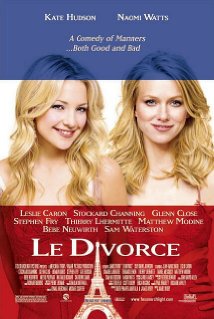
In de film Le Divorce uit 2003 van James Ivory met Kate Hudson en Naomi Watts in de hoofdrollen komt het gedicht ‘To my dear and loving husband ‘ van anne Bradstreet voor. De film gaat over twee Amerikaanse zusjes die in Parijs te maken krijgen met cultuurverschillen en liefdesperikelen.
Anne Bradstreet (1613 – 1672) werd geboren in Engeland maar emigreerde op haar 18e naar de Amerika. Zij neemt in de geschiedenis van de Amerikaanse literatuur een bijzondere plaats in. Niet alleen was zij de eerste Amerikaanse dichter van belang, maar zij was ook nog eens de eerste vrouw die gepubliceerd werd in koloniaal Amerika. Pas in de 20ste eeuw kreeg ze erkenning, in het bijzonder voor de in de 19e eeuw gepubliceerde reeks religieuze gedichten ‘Contemplations’ (Beschouwingen) die ze voor haar familie schreef.
.
To my dear and loving husband
.
If ever two were one, then surely we.
If ever man were loved by wife, then thee;
If ever wife was happy in a man,
Compare with me ye women if you can.
I prize thy love more than whole mines of gold,
Or all the riches that the East doth hold.
My love is such that rivers cannot quench,
Nor ought but love from thee give recompense.
Thy love is such I can no way repay;
The heavens reward thee manifold, I pray.
Then while we live, in love let’s so persever,
That when we live no more we may live ever.
.
The Nightmare Before Christmas
Films gebaseerd op poëzie: Deel 4
.
Tim Burton schreef in 1982, toen hij nog bij Walt Disney Animation Studio werkte, een drie pagina’s tellend gedicht genaamd The Nightmare Before Christmas. Hij liet zich hiervoor inspireren door de televisiespecials Rudolph the Red-Nosed Reindeer en How the Grinch stole Chrismas en het gedicht A visit from St. Nicholas. Na het succes van Burton’s stop-motion film Vincent in 1982, begon Disney plannen te maken om Burton’s gedicht om te zetten naar een korte film. Rick Heinrichs en Tim Burton maakten hierop een voorlopig script en bedachten al enkele personages.
De korte film kwam niet van de grond, maar in de loop der jaren bleef het idee voor de film wel hangen bij Burton. In 1990 ontdekte Burton dat Disney nog steeds de filmrechten op het verhaal had, en maakte plannen om in plaats van een korte film een speelfilm te produceren. Hij kreeg groen licht van Disney. De film kwam er in 1993 en werd bijna helemaal gemaakt met stop-motion, een filmtechniek waarmee speciale effecten in films kunnen worden gecreëerd.
Het gedicht waar Tim Burton zijn film op baseerde lees je hier: http://www.timburtoncollective.com/nmbcpoem.html
Hieronder het gedicht voorgedragen door Christopher Lee.
.
Mulan
Films gebaseerd op poëzie Deel 3: Mulan
.
Elke Walt Disneyliefhebber kent wel de Disney klassieker Mulan. Mulan is een Amerikaanse animatiefilm uit 1998 en de 36e grote animatiefilm van Disney. Deze film is losjes gebaseerd op de Chinese legende van Hua Mulan. Een belangrijk onderdeel van de uitgave van de film was de distributie in China. Disney hoopte met Mulan net zo’n grote hit te scoren als met De Leeuwenkoning, die in China een van de meest succesvolle westerse films was. Aanvankelijk werd de film geweigerd daar de Chinese overheid slechts een beperkt aantal westerse films per jaar toestond, maar een jaar na uitgave werd de film alsnog in China vertoond.
Hua Mulan was een heroische vrouw die het leger in ging om China te beschermen tegen de Xiong nu. Beide personen worden beschreven in een ballade.
In Mulan ci wordt het leven en de heldendaden van Hua Mulan beschreven. Deze Chinese poëzie wordt op Chinese scholen en in het voortgezet onderwijs in China en Singapore onderwezen.
.
Hieronder de Engelse vertaling en deel 1 en 2 in het Chinees.
Ode of Mulan
Anonymous (c.5 A.D.)
Tsiek tsiek and again tsiek tsiek,
Mu-lan weaves, facing the door.
You don't hear the shuttle's sound,
You only hear Daughter's sighs.
They ask Daughter who's in her heart,
They ask Daughter who's on her mind.
"No one is on Daughter's heart,
No one is on Daughter's mind.
Last night I saw the draft posters,
The Khan is calling many troops,
The army list is in twelve scrolls,
On every scroll there's Father's name.
Father has no grown-up son,
Mu-lan has no elder brother.
I want to buy a saddle and horse,
And serve in the army in Father's place."

In the East Market she buys a spirited horse,
In the West Market she buys a saddle,
In the South Market she buys a bridle,
In the North Market she buys a long whip.
At dawn she takes leave of Father and Mother,
In the evening camps on the Yellow River's bank.
She doesn't hear the sound of Father and Mother calling,
She only hears the Yellow River's flowing water cry tsien tsien.

At dawn she takes leave of the Yellow River,
In the evening she arrives at Black Mountain.
She doesn't hear the sound of Father and Mother calling,
She only hears Mount Yen's nomad horses cry tsiu tsiu.
She goes ten thousand miles on the business of war,
She crosses passes and mountains like flying.
Northern gusts carry the rattle of army pots,
Chilly light shines on iron armor.
Generals die in a hundred battles,
Stout soldiers return after ten years.

On her return she sees the Son of Heaven,
The Son of Heaven sits in the Splendid Hall.
He gives out promotions in twelve ranks
And prizes of a hundred thousand and more.
The Khan asks her what she desires.
"Mu-lan has no use for a minister's post.
I wish to ride a swift mount
To take me back to my home."

When Father and Mother hear Daughter is coming
They go outside the wall to meet her, leaning on each other.
When Elder Sister hears Younger Sister is coming
She fixes her rouge, facing the door.
When Little Brother hears Elder Sister is coming
He whets the knife, quick quick, for pig and sheep.
"I open the door to my east chamber,
I sit on my couch in the west room,
I take off my wartime gown
And put on my old-time clothes."
Facing the window she fixes her cloudlike hair,
Hanging up a mirror she dabs on yellow flower powder
She goes out the door and sees her comrades.
Her comrades are all amazed and perplexed.
Traveling together for twelve years
They didn't know Mu-lan was a girl.
"The he-hare's feet go hop and skip,
The she-hare's eyes are muddled and fuddled.
Two hares running side by side close to the ground,
How can they tell if I am he or she?"
Uit: The Flowering Plum and the Palace Lady: Interpretations of Chinese Poetry
Door Han H. Frankel, Yale University Press, 1976.
.

Films gebaseerd op poëzie
Deel 1: Lady Lazarus
.
Was ik al een categorie begonnen over poëzie in films (meestal gedichten of delen van gedichten die in een film voorkomen), er zijn ook films gebaseerd op een gedicht of een dichtbundel. In deze nieuwe categorie zal ik een aantal van deze films behandelen.
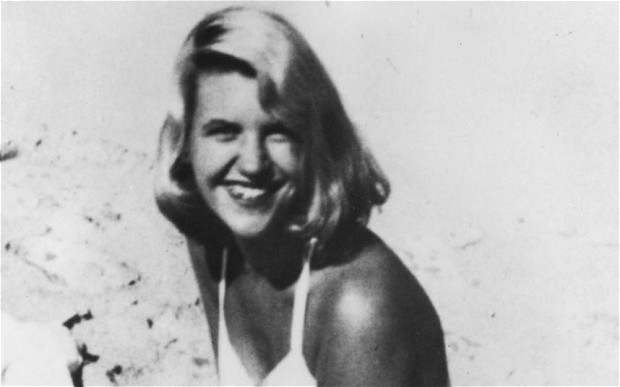
Vandaag als eerste ‘Lady Lazarus’ van Sylvia Plath (1932 – 1963).
Deze experimentele film uit 1991 van filmmaakster en feministe Sandra Lahire is gemaakt rond het beroemde gedicht van Sylvia Plath ‘Ladfy Lazarus’. De film bestaat behalve uit audio fragmenten waarbij Sylvia Plath gedichten voordraagt als Lady Lazarus, Cut, Daddy, Ariel en Ouija ook uit een interview met haar uit 1962.Sandra Lahire beschrijft haar film als de eerste in een trilogie waarbij de film een visuele reactie is op de woorden van Sylvia Plath die vooral een voorbeeld zijn van haar zwarte humor en cinematografische visie, aldus Lahire. Een carrousel van ingeraamde beelden in een atmosfeer van constante metamorfose; haar poëzie als film.
.
Hieronder kun je de film bekijken.
https://player.bfi-staging.org.uk/free/film/watch-lady-lazarus-1991-online
.
Twee uur, bier
Poëzie en film
.
De film Barfly uit 1987 van Barbet Schroeder is een semi-autobiografische film naar het leven van Charles Bukowski. In deze film worden de hoofdrollen vertolkt door Mickey Rourke (die het alter ego van Bukowski speelt Henry Chinaski) en Faye Dunaway (die Wanda Wilcox speelt). Charles Bukowski komt ook heel even kort voor in de film als cameo in een stukje zonder tekst.
Een korte inhoud van de film: Henry Chinaski is dichter en alcoholist, en spendeert zijn dagen in de kroeg. Op een dag ontmoet hij Wanda. Zij is ook alcoholist, en Henry wordt verliefd op haar. Even lijkt het erop dat Henry’s gedichten succesvol worden, maar zijn beroemdheid is van korte duur. Het wordt de twee duidelijk dat ze eigenlijk maar één doel in hun leven hebben, en dat is drinken en de buitenwereld laten voor wat die is.
In de film komen twee (delen) van gedichten voor van Charles Bukowski: ‘2 P.M. Beer’ en ‘Old man, dead in a room’. De laatste komt uit een bijzonderecollectie gedichten met de titel ‘It catches my heart in its hands’ (Loujon Press, 1963). De naam van de collectie gedichten is een regel uit het werk van Robinson Jeffers, een vroege inspiratiebron van Bukowski.
.
“2 p.m. beer”
.
nothing matters
but flopping on a mattress
with cheap dreams and a beer
as the leaves die and the horses die
and the landladies stare in the halls;
brisk the music of pulled shades,
a last man’s cave
in an eternity of swarm
and explosion;
nothing but the dripping sink,
the empty bottle,
euphoria,
youth fenced in,
stabbed and shaven,
taught words
propped up
to die.”
.
“Old man, dead in a room”
.
this thing upon me is not death
but it’s as real
and as landlords full of maggots
pound for rent
I eat walnuts in the sheath
of my privacy
and listen for more important
drummers;
it’s as real, it’s as real
as the broken-boned sparrow
cat-mouthed, uttering
more than mere
miserable argument;
between my toes I stare
at clouds, at seas of gaunt
sepulcher. . .
and scratch my back
and form a vowel
as all my lovely women
(wives and lovers)
break like engines
into steam of sorrow
to be blown into eclipse;
bone is bone
but this thing upon me
as I tear the window shades
and walk caged rugs,
this thing upon me
like a flower and a feast,
believe me
is not death and is not
glory
and like Quixote’s windmills
makes a foe
turned by the heavens
against one man;
…this thing upon me,
great god,
this thing upon me
crawling like snake,
terrifying my love of commonness,
some call Art
some call Poetry;
it’s not death
but dying will solve its power
and as my grey hands
drop a last desperate pen
in some cheap room
they will find me there
and never know
my name
my meaning
nor the treasure
of my escape.
.

The Notebook
Poëzie en Film
.
In de film ‘The Notebook’ van Nick Cassavetes uit 2004 naar een boek van Nicholas Sparks. In de hoofdrollen zijn Ryan Gosling en Rachel McAdams te zien naast Gena Rowlands en James Garner. Leuk weetje is dat de twee hoofdrolspelers in 2005 bij de MTV movie awards de prijs wonnen voor beste kus.
Het verhaal van de film gaat over verloren liefdes en in de film zijn twee gedichten van Walt Whitman verwerkt; ‘Spontaneous me’ en ‘So long’ .
.
So long!
To conclude, I announce what comes after me.
I remember I said before my leaves sprang at all,
I would raise my voice jocund and strong with reference to consummations.
When America does what was promis’d,
When through these States walk a hundred millions of superb persons,
When the rest part away for superb persons and contribute to them,
When breeds of the most perfect mothers denote America,
Then to me and mine our due fruition.
I have press’d through in my own right,
I have sung the body and the soul, war and peace have I sung, and
the songs of life and death,
And the songs of birth, and shown that there are many births.
I have offer’d my style to every one, I have journey’d with confident step;
While my pleasure is yet at the full I whisper So long!
And take the young woman’s hand and the young man’s hand for the last time.
I announce natural persons to arise,
I announce justice triumphant,
I announce uncompromising liberty and equality,
I announce the justification of candor and the justification of pride.
I announce that the identity of these States is a single identity only,
I announce the Union more and more compact, indissoluble,
I announce splendors and majesties to make all the previous politics
of the earth insignificant.
I announce adhesiveness, I say it shall be limitless, unloosen’d,
I say you shall yet find the friend you were looking for.
I announce a man or woman coming, perhaps you are the one, (So long!)
I announce the great individual, fluid as Nature, chaste,
affectionate, compassionate, fully arm’d.
I announce a life that shall be copious, vehement, spiritual, bold,
I announce an end that shall lightly and joyfully meet its translation.
I announce myriads of youths, beautiful, gigantic, sweet-blooded,
I announce a race of splendid and savage old men.
O thicker and faster–(So long!)
O crowding too close upon me,
I foresee too much, it means more than I thought,
It appears to me I am dying.
Hasten throat and sound your last,
Salute me–salute the days once more. Peal the old cry once more.
Screaming electric, the atmosphere using,
At random glancing, each as I notice absorbing,
Swiftly on, but a little while alighting,
Curious envelop’d messages delivering,
Sparkles hot, seed ethereal down in the dirt dropping,
Myself unknowing, my commission obeying, to question it never daring,
To ages and ages yet the growth of the seed leaving,
To troops out of the war arising, they the tasks I have set
promulging,
To women certain whispers of myself bequeathing, their affection
me more clearly explaining,
To young men my problems offering–no dallier I–I the muscle of
their brains trying,
So I pass, a little time vocal, visible, contrary,
Afterward a melodious echo, passionately bent for, (death making
me really undying,)
The best of me then when no longer visible, for toward that I have
been incessantly preparing.
What is there more, that I lag and pause and crouch extended with
unshut mouth?
Is there a single final farewell?
My songs cease, I abandon them,
From behind the screen where I hid I advance personally solely to you.
Camerado, this is no book,
Who touches this touches a man,
(Is it night? are we here together alone?)
It is I you hold and who holds you,
I spring from the pages into your arms–decease calls me forth.
O how your fingers drowse me,
Your breath falls around me like dew, your pulse lulls the tympans
of my ears,
I feel immerged from head to foot,
Delicious, enough.
Enough O deed impromptu and secret,
Enough O gliding present–enough O summ’d-up past.
Dear friend whoever you are take this kiss,
I give it especially to you, do not forget me,
I feel like one who has done work for the day to retire awhile,
I receive now again of my many translations, from my avataras
ascending, while others doubtless await me,
An unknown sphere more real than I dream’d, more direct, darts
awakening rays about me, So long!
Remember my words, I may again return,
I love you, I depart from materials,
I am as one disembodied, triumphant, dead.
.

Holy Smoke
Poëzie in de film
.
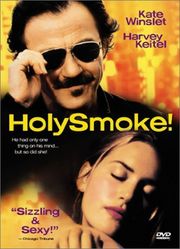
In de film Holy Smoke uit 1999 van Jane Campion met in de hoofdrollen Kate Winslet en Harvey Keitel komt het gedicht ‘Ignorance’ voor van Philip Larkin (1922-1985). De film Holy Smoke gaat over Ruth, die na een reis naar India in de ban komt van Indiase goeroe’s als Bhagwan Shri Shiv, Bhagwan Shri Kishan en Devi Maa Lakshmi. Haar moeder bezoekt haar in India en lokt haar naar huis (VS) met het bericht dat haar vader op sterven ligt. Eeenmaal in de VS wordt ze vastgehouden in een huisje in de woestijn samen met de Cult exorcist P.J. Waters. Philip Arthur Larkin was schrijver, dichter en jazz criticus (en een tijdje werkzaam als bibliothecaris). Uit zijn bundel ‘The Whitsun Weddings’ (1964) het gedicht ‘Ignorance’. Wil je het gedicht beluisteren, voorgelezen door Philip Larkin? Ga dan naar: http://www.youtube.com/watch?v=7469bvS5mRk
Ignorance
.
Strange to know nothing, never to be sure
Of what is true or right or real,
But forced to qualify or so I feel,
Or Well, it does seem so:
Someone must know.
.
Strange to be ignorant of the way things work:
Their skill at finding what they need,
Their sense of shape, and punctual spread of seed,
And willingness to change;
Yes, it is strange,
.
Even to wear such knowledge - for our flesh
Surrounds us with its own decisions -
And yet spend all our life on imprecisions,
That when we start to die
Have no idea why.
.
Into the wild
Poëzie en film
.
Into the wild, de film van Sean Penn uit 2007 is behalve een bijzondere mooie film om nog een reden een aanrader namelijk om de filmmuziek van Eddie Vedder. Heel anders dan de muziek die hij maakt met Pearl Jam maar nog steeds prachtig.
In deze, op een waar gebeurde verhaal gebaseerde, film met Emile Hirsch in de hoofdrol komt het gedicht ‘I go back to may 1937’ uit The Gold Cell (1987) van Sharon Olds (1942) voor.
.
I go back to may 1937
.
Uit: Selected poems 1980-2002

Laatste zinnen Blade Runner
Rutger Hauer
.
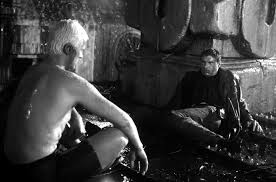
Vandaag was ik in Amsterdam waar tijdens de Biebplaza, Gene Tan (directeur bibliotheek Singapore) zijn liefde voor de film deelde met het publeik. Volgens hem was een van de mooiste scenes uit een film ooit de laatste (sterf)scene uit Blade Runner.
de laatste zinnen hebben een hoog poëtisch karakter en de allerlaatste woorden zijn het motto (één van de twee motto’s) van mijn eerste dichtbundel die ik samen met Ruben Philipsen maakte ‘Zichtbaar alleen’.
I’ve seen things you people wouldn’t believe. Attack ships on fire off the shoulder of Orion. I watched c-beams glitter in the dark near the Tannhäuser Gate. All those moments will be lost in time, like tears in rain. Time to die.
.
.