Site-archief

Waarom Amerikanen niet lopen

Mona van Duyn

.

Ik lees het geweldige boek ‘Waarom Amerikanen niet lopen’ van Arjen van Veelen. En met geweldig bedoel ik in dit geval, geweldig interessant en ook wel heel confronterend. Ik was een aantal jaren geleden in de Verenigde Staten en reisde toen met vrienden van Chicago, via Memphis naar New Orleans. We zouden ook naar Saint Louis gaan maar omdat we via een andere staat reisden (waar de de Rock & Roll hall of fame is gevestigd) sloegen we Saint Louis over. Nu ik ‘Waarom Amerikanen niet lopen’ lees spijt me dit maar tegelijkertijd weet ik nu wel veel meer over de stad. En over de VS. Want wat mij toen al opviel, namelijk de enorme armoede, segregatie en het enorme verschil tussen arm en rijk, wordt in dit boek bevestigd en uitgelegd. ik begrijp waarom dit boek, uitgegeven door De Correspondent zo’n enorm succes is. Niet alleen leer je uit dit boek dat de VS nog steeds heel racistisch is maar ook hoe dit komt, waar het vandaan komt maar ook dat er grote armoede heerst onder grote delen van de witte bevolking.

Natuurlijk begin ik niet over dit boek als er niet een verwijzing naar poëzie in zou staan. En die is er inderdaad. In een hoofdstuk waarin de schrijver binnen de straal van ‘1 tank benzine’ zo’n beetje alle hoofdsteden van Europa en daarbuiten afreist (veel Amerikaanse steden hebben de namen van buitenlandse steden als Cairo, Athene, maar ook Berlijn (ben er geweest) en Parijs). De schrijver verwijst in het boek naar een gedicht van de Amerikaanse dichter Mona Van Duyn  die vanaf getiteld ‘A small excursion’ waarin ze veel van deze steden aanhaalt.

Mona Van Duyn (1921 – 2004) werd geboren in Waterloo (!)  was dichter en schrijfster. Ze stamde af van een Nederlandse familie die zich in 1649 vestigde in het Nieuw Nederland van Peter Stuyvesant. In 1971 won ze de National Book Award, in 1991 de Pulitzerprijs voor poëzie en in 1992-1993 was ze de United States Poet Laureate, een soort dichter des vaderlands. In 1959 debuteerde ze met ‘Valentines to the Wide World’.

.

Let America Be America Again

Langston Hughes

.

Over Langston Hughes (1902 – 1967) schreef ik al eerder maar ik werd opnieuw op een gedicht van hem opmerkzaam gemaakt toen ik in ‘Waarom Amerikanen niet lopen’ een passage over dit betreffende gedicht las. In dit geval gaat het om het gedicht ‘Let America Be America Again’. Zoals Arjen van Veelen in zijn boek schrijft, lijkt dit wat op de term die Trump gebruikt (make America great again) maar in dit geval gaat het om een heel ander onderwerp. Dit gedicht, geschreven in 1935, gaat over de Amerikaanse droom, dat deze droom nooit heeft bestaan voor de Amerikaan uit de lower-class, zwart, wit of gekeurd. En over de vrijheid en gelijkheid waar elke immigrant in de VS ooit op heeft gehoopt maar nooit heeft gekregen. De Verenigde staten staat voor een land waar alles mogelijk is, maar hebzucht en corruptie beletten gewone mensen vooruit te komen. Het gedicht is een contrast tussen wat Amerika hoopt te zijn en wat Hughes en anderen hebben meegemaakt

.

Let America Be America Again

.

Let America be America again.
Let it be the dream it used to be.
Let it be the pioneer on the plain
Seeking a home where he himself is free.

.
(America never was America to me.)

.
Let America be the dream the dreamers dreamed —
Let it be that great strong land of love
Where never kings connive nor tyrants scheme
That any man be crushed by one above.

.
(It never was America to me.)

.
O, let my land be a land where Liberty
Is crowned with no false patriotic wreath,
But opportunity is real, and life is free,
Equality is in the air we breathe.

.
(There’s never been equality for me,

.
Nor freedom in this “homeland of the free.”)
Say, who are you that mumbles in the dark?

.
And who are you that draws your veil across the stars?
I am the poor white, fooled and pushed apart,

.
I am the Negro bearing slavery’s scars.
I am the red man driven from the land,
I am the immigrant clutching the hope I seek —
And finding only the same old stupid plan
Of dog eat dog, of mighty crush the weak.

.
I am the young man, full of strength and hope,
Tangled in that ancient endless chain
Of profit, power, gain, of grab the land!
Of grab the gold! Of grab the ways of satisfying need!
Of work the men! Of take the pay!
Of owning everything for one’s own greed!

.
I am the farmer, bondsman to the soil.
I am the worker sold to the machine.
I am the Negro, servant to you all.
I am the people, humble, hungry, mean —
Hungry yet today despite the dream.
Beaten yet today–O, Pioneers!
I am the man who never got ahead,
The poorest worker bartered through the years.

.
Yet I’m the one who dreamt our basic dream
In the Old World while still a serf of kings,
Who dreamt a dream so strong, so brave, so true,
That even yet its mighty daring sings

In every brick and stone, in every furrow turned
That’s made America the land it has become.
O, I’m the man who sailed those early seas
In search of what I meant to be my home —
For I’m the one who left dark Ireland’s shore,
And Poland’s plain, and England’s grassy lea,
And torn from Black Africa’s strand I came
To build a “homeland of the free.”

.
The free?

.
Who said the free? Not me?
Surely not me? The millions on relief today?
The millions shot down when we strike?
The millions who have nothing for our pay?
For all the dreams we’ve dreamed
And all the songs we’ve sung
And all the hopes we’ve held
And all the flags we’ve hung,
The millions who have nothing for our pay —
Except the dream that’s almost dead today.

.
O, let America be America again —
The land that never has been yet —
And yet must be–the land where every man is free.
The land that’s mine — the poor man’s, Indian’s,
Negro’s, ME —
Who made America,
Whose sweat and blood, whose faith and pain,
Whose hand at the foundry, whose plow in the rain,
Must bring back our mighty dream again.

.
Sure, call me any ugly name you choose —
The steel of freedom does not stain.
From those who live like leeches on the people’s lives,
We must take back our land again,

America!

.
O, yes,
I say it plain,
America never was America to me,
And yet I swear this oath —
America will be!

.
Out of the rack and ruin of our gangster death,
The rape and rot of graft, and stealth, and lies,
We, the people, must redeem
The land, the mines, the plants, the rivers.
The mountains and the endless plain —
All, all the stretch of these great green states —
And make America again!

.
Charles Bukowski

De poëzie lezing

.

Ik heb op dit log al veel en vaak een gedicht of een stuk over één van mijn favoriete dichters Charles Bukowski gedeeld. Dus waarom in deze vakantie periode niet nog een. Daarom hier het gedicht ‘The Poetry Reading’ een heerlijk, tikje vilein maar eerlijk gedicht over het voordragen van gedichten.

.

the poetry reading

.

poetry readings have to be some of the saddest
damned things ever,
the gathering of the clansmen and clanladies,
week after week, month after month, year
after year,
getting old together,
reading on to tiny gatherings,
still hoping their genius will be
discovered,
making tapes together, discs together,
sweating for applause
they read basically to and for
each other,
they can’t find a New York publisher
or one
within miles,
but they read on and on
in the poetry holes of America,
never daunted,
never considering the possibility that
their talent might be
thin, almost invisible,
they read on and on
before their mothers, their sisters, their husbands,
their wives, their friends, the other poets
and the handful of idiots who have wandered
in
from nowhere.
.
I am ashamed for them,
I am ashamed that they have to bolster each other,
I am ashamed for their lisping egos,
their lack of guts.
.
if these are our creators,
please, please give me something else:
.
a drunken plumber at a bowling alley,
a prelim boy in a four rounder,
a jock guiding his horse through along the
rail,
a bartender on last call,
a waitress pouring me a coffee,
a drunk sleeping in a deserted doorway,
a dog munching a dry bone,
an elephant’s fart in a circus tent,
a 6 p.m. freeway crush,
the mailman telling a dirty joke
.
anything
anything
but
these.

.

Blue tits

Phoebe Hesketh

.

Afgelopen zaterdag droeg ik voor tijdens de Dag van de Roos in het Westbroekpark in Den Haag. In dit mooie park vol bomen, struiken, rozen en andere bloemen moest ik denken aan een bundel die ik ooit kreeg van Elisabeth getiteld ‘Poems for gardeners’ samengesteld door Germaine Greer uit 2003. Deze Engelse bundel (hoe kan het ook anders, een dichtbundel over tuinieren), met een collectie gedichten van de antieke oudheid tot de 21ste eeuw staat vol tuingedichten. Over specifieke bloemen en planten, over tuinieren, over bomen en zelfs over gemaaid gras. Maar ook over de dieren in de tuin, zoals de ‘Blue tit’ of Pimpelmees. Het aardige van dit boekje is dan ook nog, speciaal voor de echte natuurliefhebber, dat achterin de bundel informatie staat over het onderwerp van het gedicht. In het geval van de Blue tit over wat de Pimpelmees eet, en waar en wanneer hij nestelt.

De dichter die ‘Blue Tits’ schreef, Phoebe Hesketh (1909-2005) kwam uit Lancashire en was vooral bekend door haar gedichten over de natuur. Zij schreef in haar lange leven 17 dichtbundels.

.

Blue Tits

.

Bobbing on willow branches, blue and yellow

Acrobatic blue tits swing and sway

In careful somersault and neat gyrations

Grub-picking deftly down and bending spray.

.

Now one rebuffs an alien intruder-

Humdrum sparrow, drab among the gold-

Churrs and scolds in azure crested anger,

Scuttles down a twig in blue and bold

Defiance at this urchin gutter-haunter

Till all the blues combine against one grey:

Active whirr and flutter, feathered thunder

Of tiny wings to drive the foe away.

.

Brave blue tit, white-cheeked like a painted toy

Jerking to life from pavement-seller’s string,

Twirls round twigs, his natural trapezes,

Darts to snap a moth upon the wing.

Plumb-as-willow-catkin, primrose-breasted,

This sky-capped morsel magnifies the Spring.

.


Sylvia Plath

Koeriers

.

Over Sylvia Plath (1932 – 1963) schreef ik al enkele malen. Maar toen ik de bundel ‘Ariel’ (oorspronkelijk uit 1965 maar in mijn geval in vertaling door Anneke Brassinga uit 1980) weer eens in handen nam en herlas wist ik dat ik uit de bijzondere bundel nog een gedicht wilde delen. Het betreft hier het gedicht ‘Koeriers’ of ‘The Couriers’ zoals het in het Engels luidt.

.

Koeriers

.

Het woord van een slak op het bord van een blad?

Het is niet van mij. Neem het niet aan.

.

Azijnzuur in een verzegeld blik?

Neem het niet aan. Het is niet puur.

.

Een ring van goud, en daarin de zon?

Leugens. Leugens en droefenis.

.

Rijp op een blad, de smetteloze

Heksenketel, zwetsend en knetterend

.

In zichzelf, op elke top

Van negen zwarte alpen.

.

Beroering in spiegels,

De zee die de zijne, zo grijs, verbrijzelt –

.

Liefde, liefde, mijn seizoen.

.

The Couriers

.

The word of a snail on the plate of a leaf?
It is not mine. Do not accept it.

Acetic acid in a sealed tin?
Do not accept it. It is not genuine.

A ring of gold with the sun in it?
Lies. Lies and a grief.

Frost on a leaf, the immaculate
Cauldron, talking and crackling

All to itself on the top of each
of nine black Alps.

A disturbance in mirrors,
the sea shattering its grey one-

Love, love, my season.

.

De koffer

John Ashbery

.

In 1977 staat Poetry International in het teken van de koffer, symbool van het reizen. Naast de gebruikelijke poëzie en dichters uit vele landen is er een tentoonstelling van oude reiskoffers. In 1977 staat de Amerikaanse dichter John Ashbery op het podium in Rotterdam. Ashbery (1927- 2017) werkte van 1955 tot 1965 voor The New York Herald Tribune in Parijs als kunstcriticus. Na zijn terugkeer in de Verenigde Staten werkte hij als docent Engels en was hij ook daar kunstcriticus. Ashbery was een avant-gardistisch dichter.

Ashbery’s vroege werk werd sterk geïnspireerd door door het werk van Auden, alsook door de obscure Franse surrealistische dichter Pierre Martory. Later werd zijn werk steeds meer modernistisch. In de jaren zestig verkeerde hij in avant-gardistische kringen, met wereldwijd de aandacht trekkende kunstenaars als Andy Warhol en John Cage.

Ashbery’s werk kenmerkt zich door vrije, spontane associatie, waarbij zijn gedichten meestal nauwelijks een echt onderwerp kennen. Hij kan heel vaag en poëtisch zijn over concrete alledaagse dingen, waarbij hij regelmatig de parodie als stijlmiddel gebruikt. Een overkoepelend thema is de relatie tussen chaos en het bewuste menselijk denken en met de kunst in zijn algemeenheid. Hoewel Ashbery vaak beweerd heeft voor een groot publiek te willen schrijven, geldt veel van zijn werk als moeilijk toegankelijk, niet in de laatste plaats door de semantische en linguïstische experimenten in zijn werk.

Uit zijn bundel ‘The double dream of spring’ uit 1970 het gedicht ‘The task’ en in een vertaling van Peter van Lieshout, ‘De taak’.

.

De taak

.

Ze maken zich klaar om opnieuw te beginnen:

Problemen, een nieuwe wimpel aan de vlaggemast

in een voorspelde romance.

.

Rond de tijd dat de zon laag boven het

Westelijk halfrond haar stralen vlijt, de kermis echoot,

Dringen de vluchtende landen onder andere namen bijeen.

Leegte neemt de plaats van vreugde in, en Ieder moet vetrtrekken

Weg, ver weg in de stokkende nacht, want zijn lot

Is vruchteloos terug te keren uit het licht

Voorgetoverd door verstrijkende tijd. Slechts

Luchtkastelen waren het, doorkneed in de kunst het verleden

Te grijpen en met pijn te beheersen. En de weg ligt open

Nu om regelrechtschapen te handelen in deze tijd

Verterende dichtheid waarin hij ooit leerde ademen.

.

Kijk eens naar de rommel die je gemaakt hebt,

Zie eens wat je hebt gedaan

Maar als dat dat al spijt mocht zijn raakt het nauwelijks

De kinderen die na het eten buitenspelen.

Belofte van kussens en meer in de nacht die straks valt.

Ik ben van plan hier wat langer te blijven

Omdat dit enkel ogenblikken zijn, ogenblikken van inzicht,

En omdat getast en gereikt nog moet worden,

Naar uiterst en vurig verlangen dat wegsmelt

Ondertussen, als afstand onder pelgrimsvoeten.

.

The task

.

They are preparing to begin again:
Problems, new pennant up the flagpole
In a predicated romance.

.
About the time the sun begins to cut laterally across
The western hemisphere with its shadows, its carnival echoes,
The fugitive lands crowd under separate names.
It is the blankness that follows gaiety, and Everyman must depart
Out there into stranded night, for his destiny
Is to return unfruitful out of the lightness
That passing time evokes. It was only
Cloud-castles, adept to seize the past
And possess it, through hurting. And the way is clear
Now for linear acting into that time
In whose corrosive mass he first discovered how to breathe.

.
Just look at the filth you’ve made,
See what you’ve done.
Yet if these are regrets they stir only lightly
The children playing after supper,
Promise of the pillow and so much in the night to come.
I plan to stay here a little while
f’or these are moments only, moments of insight,
And there are reaches to be attained,
A last level of anxiety that melts
In becoming, like miles under the pilgrim’s feet.

.

Dichters in verzet

Shelley en Whitman

.

Bijna 175 jaar geleden zei Percy Bysshe Shelley in zijn “Verdediging van de Poëzie” dat “dichters de niet-erkende wetgevers van de wereld zijn”. In de jaren daarna hebben vele dichters die rol ter harte genomen, tot op de dag van vandaag. Het waren oproerkraaiers en demonstranten, revolutionairen en soms ook opstellers van wetten. Dichters hebben commentaar geleverd op de gebeurtenissen van de dag, hebben stem gegeven aan de onderdrukten, rebellen en voerden campagne voor sociale verandering. Er zijn inmiddels vele klassieke gedichten bekend over protest en revolutie. Percy Bysshe Shelley’s eigen ‘The Masque of Anarchy’ is daarvan een mooi voorbeeld. Omdat het een nogal lang gedicht is (91 verzen van 4 regels elk) plaats ik hier een link naar de volledige tekst http://knarf.english.upenn.edu/PShelley/anarchy.html  zodat je , als je dat wilt, het na kan lezen.

Een andere klassieke dichter die een protestgedicht schreef is Walt Whitman (1819-1892). Whitman begreep hoe belangrijk democratie was en hoe kwetsbaar. In ‘Leaves of Grass’ zijn levenswerk (tijdens zijn leven herschreef hij dit werk, het verscheen in verschillende edities waarbij in de eerste editie 12 gedichten stonden en in de laatste editie meer dan 400!) is het gedicht ‘O a foil’d European Revolutionaire’ uit 1900 opgenomen. Hierin spreekt hij tot de revolutionaire krachten in Europa. Het werk van Whitman werd in de eerste helft van de 20e eeuw geïntroduceerd in de populaire Little Blue Book- serie. Hierin werd het werk van Whitman voor een breder publiek dan ooit tevoren toegankelijk. De Little Blue Book was een serie die socialistische en progressieve standpunten ondersteunde. De publicatie verbond de focus van de dichter op de gewone man en het empowerment van de arbeidersklasse.

.

To a foil’d European Revolutionaire
.
COURAGE yet, my brother or my sister!
Keep on—Liberty is to be subserv’d whatever occurs;
That is nothing that is quell’d by one or two failures, or any num-
ber of failures,
Or by the indifference or ingratitude of the people, or by any
unfaithfulness,
Or the show of the tushes of power, soldiers, cannon, penal statutes.
What we believe in waits latent forever through all the continents,
Invites no one, promises nothing, sits in calmness and light, is
positive and composed, knows no discouragement,
Waiting patiently, waiting its time.
(Not songs of loyalty alone are these,
But songs of insurrection also,
For I am the sworn poet of every dauntless rebel the world over,
And he going with me leaves peace and routine behind him,
And stakes his life to be lost at any moment.)
The battle rages with many a loud alarm and frequent advance
and retreat,
The infidel triumphs, or supposes he triumphs,
The prison, scaffold, garroté, handcuffs, iron necklace and lead-
balls do their work,
The named and unnamed heroes pass to other spheres,
The great speakers and writers are exiled, they lie sick in distant
lands,
The cause is asleep, the strongest throats are choked with their
own blood,
The young men droop their eyelashes toward the ground when
they meet;
But for all this Liberty has not gone out of the place, nor the
infidel enter’d into full possession.
When liberty goes out of a place it is not the first to go, nor the
second or third to go,
It waits for all the rest to go, it is the last.
When there are no more memories of heroes and martyrs,
And when all life and all the souls of men and women are dis-
charged from any part of the earth,
Then only shall liberty or the idea of liberty be discharged from
that part of the earth,
And the infidel come into full possession.
Then courage European revolter, revoltress!
For till all ceases neither must you cease.
I do not know what you are for, (I do not know what I am for
myself, nor what any thing is for,)
But I will search carefully for it even in being foil’d,
In defeat, poverty, misconception, imprisonment—for they too
are great.
Did we think victory great?
So it is—but now it seems to me, when it cannot be help’d, that
defeat is great,
And that death and dismay are great.
.
                                                                                                                                                                  Een van de vele uitvoeringen van ‘Leaves of Grass’.

T. S. Eliot

Gedicht in vertaling

.

Soms lees je een gedicht in vertaling en dan ben je nieuwsgierig naar het origineel. In het geval van onderstaand gedicht van dichter T.S. Eliot ( 1888-1965) las ik eerst de vertaling maar voor wie het Engels machtig is, is het origineel misschien wel te verkiezen. In dit geval het gedicht ‘Aunt Helen’ in een vertaling van Bert Voeten ‘Tante Helen’.

.

Tante Helen

.

Miss Helen Slingsby, mijn ongetrouwde tante,
Woonde in een klein huis bij een deftig plein,
Verzorgd door bedienden ten getale van vier.
Toen zij doodging werd het stil in de hemel
En stil aan haar eind van de straat.
De blinden gingen dicht en de lijkbezorger veegde zijn voeten –
Hij had dit soort dingen meer bij de hand gehad.
Voor de honden werd voortreffelijk gezorgd,
Maar kort daarop stierf ook de papegaai.
De Dresdener klok bleef tikken op de schoorsteenmantel,
En de tafelbediende ging op de eettafel zitten
En hield het tweede meisje op zijn schoot –
Dat altijd zo had opgepast toen mevrouw nog leefde.
.
.
Aunt Helen
.
Miss Helen Slingsby was my maiden aunt,
And lived in a small house near a fashionable square
Cared for by servants to the number of four.
Now when she died there was silence in heaven
And silence at her end of the street.
The shutters were drawn and the undertaker wiped his fee
He was aware that this sort of thing had occurred before.
The dogs were handsomely provided for,
But shortly afterwards the parrot died too.
The Dresden clock continued ticking on the mantelpiece,
And the footman sat upon the dining-table
Holding the second housemaid on his knees –

Who had always been so careful while her mistress lived.

.


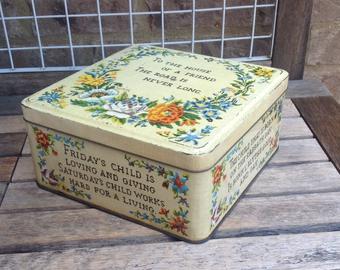
Up-Hill

Christina Rossetti

.

Christina Georgina Rossetti (1830 – 1894) was een Engels dichteres en prozaschrijfster. In haar werk zijn een aantal thema’s herkenbaar zoals haar preoccupatie met de dood, religie en het afstand doen van aardse liefde. Ze komt uit een beroemde familie, zo was haar broer Dante Gabriel Rossetti lid van de Prerafaëlieten, haar broer William Michael Rossetti kunstcriticus en haar zus schrijfster Maria Francesca Rossetti. In 1850 publiceerde zij onder het pseudoniem Ellen Allayne in ‘The Germ’, het tijdschrift van de Prerafaëlieten. In 1862 verscheen haar beste en bekendste bundel, ‘Goblin Market and Other Poems’. Haar werk (niet alleen gedichten, maar ook verhalen en sprookjes, grotendeels gericht op kinderen) wordt gekenmerkt door een zekere zwaarmoedigheid, maar ook door een diep geloof. De toon van de gedichten is eenvoudig en natuurlijk. Met kunstenaars als John Donne en William Blake wordt zij gerekend tot de grote mystieke Engelse dichters.

In de bundel ‘Favourite’ an anthology of poems, illustrated with nostalgic photographs from the Francis Frith collection, staat het gedicht ‘Up-Hill’ van Rossetti.

.

Up-Hill

.

Does the road wind up-hill all the way?
   Yes, to the very end.
Will the day’s journey take the whole long day?
   From morn to night, my friend.
,
But is there for the night a resting-place?
   A roof for when the slow dark hours begin.
May not the darkness hide it from my face?
   You cannot miss that inn.
.
Shall I meet other wayfarers at night?
   Those who have gone before.
Then must I knock, or call when just in sight?
   They will not keep you standing at that door.
.
Shall I find comfort, travel-sore and weak?
   Of labour you shall find the sum.
Will there be beds for me and all who seek?
   Yea, beds for all who come.
.

Help!

Charles Bukowski

.

Op zoek naar iets anders (zo gaat het vaak) kwam ik het gedicht ‘help wanted’ tegen van Charles Bukowski. En omdat ik een groot fan ben van Bukowski en omdat het weer zo’n typisch gedicht dat alleen door hem geschreven had kunnen worden, wil ik het met jullie delen.

.

help wanted

.

divine grace of

circumstance–

the knife is back

again,

my radio sings to me;

drunk, i phone women in distant

places–

I speak, not knowing what I am

saying; I listen, I hear a voice

but when I put the phone down

it’s only a phone

and the walls look at

me.

.

all these women, holy jesus,

all these women everywhere

some of them are pissing

some of them are plotting

some of them are cooking beans

.

holy jesus

send me the one who is pissing

.

I need somebody to pull

the knife out

.

age 20 to 60

no experience necessary

will

train.

.