Incident
.
Once riding in old Baltimore,
Heart-filled, head-filled with glee,
I saw a Baltimorean
Keep looking straight at me
.
.
In 2001 publiceerde Nikki Moustaki ‘The complete Idiot’s Guide to writing Poetry’. Een boek over poëzie en het schrijven van poëzie, met tips en adviezen om meer uit het creatieve schrijfproces te halen en advies over te gebruiken vormen van poëzie.
Het boek is opgedeeld in een aantal hoofdstukken met verschillende paragrafen. Zo zijn de hoofdstukken getiteld: What is poetry and how do I write it, Opening the stanza’s door: entering poetry, Popular types of poems and how to write them, en Poetry and practicality.
Een leuk en leerzaam boek voopr elke dichter die verder wil komen, die zijn of haar grenzen wil verleggen of gewoon nieuwsgierig is naar een boek over poëzie.
Het boek is te koop voor het luttele bedrag van $1,99 (tweedehands) via Amazon.com maar je kunt het boek ook gratis als E-book lezen via Google books. (ga naar Google, boeken en typ de titel in).
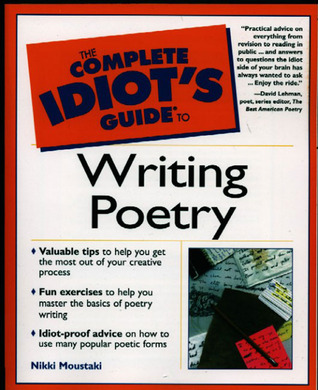
Nikki Moustaki is is schrijfster van boeken over exotische vogels. Ze heeft een master degree in creative writing poetry van de New York University, een master of fine arts in creative writing poetry, van de Indiana University, master of fine arts in creative writing fiction, aan de New York University. Daarnaast heeft ze inmiddels verschillende prijzen gekregen voor haar literaire werk.
Na de tragedie van 11 september in New York schreef Nikki het gedicht ‘How to write a poem after september 11th’
.
How to write a poem after september 11th’
First: Don’t use the word souls. Don’t use the word fire.
You can use the word tragic if you end it with a k.
The rules have changed. The word building may precede
The word fall, but only in the context of the buildings falling
Before the fall, the season we didn’t have in Manhattan
Because the weather refused, the air refused . . .
Don’t say the air smelled like smoldering desks and drywall,
Ground gypsum, and something terribly organic,
Don’t make a metaphor about the smell, because it wasn’t
A smell at all, but the air washed with working souls,
Piling bricks, one by one, spreading mortar.
Don’t compare the planes to birds. Please.
Don’t call the windows eyes. We know they saw it coming.
We know they didn’t blink. Don’t say they were sentinels.
Say: we hated them then we loved them then they were gone.
Say: we miss them. Say: there’s a gape. Then, say something
About love. It’s always good in a poem to mention love.
Say: If a man walks down stairs, somewhere
Another man is walking up. Say: He sits at his desk
And the other stands. He answers the phone and the other
Ends a call with a kiss. So, on a rainy dusk in some other
City of Commerce and Art, a mayor cuts a ribbon
With giant silver scissors. Are you writing this down?
Make the executives parade through the concourse,
Up the elevators, to the top, where the restaurant,
Open now for the first time, sets out a dinner buffet.
Press hard. Remember you’re writing with ashes.
Say: the phone didn’t work. Say: the bakery was out of cake,
The dogs in the pound howled. Say: the world hadn’t
Asked your permission to change. But you were asleep.
If only you had written more poems. If only you had written
More poems about love, about peace, about how abstractions
Become important outside the poem, outside. Then, then,
You could have squinted into the sky on September 11th
And said: thank you, thank you, nothing was broken today.
.

.
Naar aanleiding van het boek ‘Jij zegt het’ van Connie Palmen (over het huwelijk van Sylvia Plath en Ted Hughes, beide dichters, de zelfmoord van Plath en het zwijgen van Hughes) wil ik hier graag een gedicht van beide plaatsen. Veel mensen kennen de namen van dit beroemde dichterspaar wel maar hun werk is vaak bij hen onbekend (zo was het bij mij ook). Daarom van Sylvia Plath het gedicht ‘Memoirs of a spinach-picker’ en van Ted Hughes het gedicht ‘The seven sorrows’.
.
Memoirs of a Spinach-Picker
They called the place Lookout Farm.
Back then, the sun
Didn’t go down in such a hurry. How it
Lit things, that lamp of the Possible!
Wet yet
Lay over the leaves like a clear cellophane,
A pane of dragonfly wing, when they left me
With a hundred bushel baskets on the edge
Of the spinach patch.
Bunch after bunch of green
Upstanding spinach-tips wedged in a circle—
Layer on layer, and you had a basket
Irreproachable as any lettuce head,
Pure leafage. A hundred baskets by day’s end.
Sun and sky mirrored the green of the spinach.
In the tin pail shaded by yellow paper
Well-water kept cool at the start of the rows.
The water had an iron taste, and the air,
Even, a tang of metal.
Day in, day out,
I bent over the plants in my leather-kneed
Dungarees, proud as a lady in a sea
Of prize roses, culling the fullest florets;
My world pyramided with laden baskets.
I’d only to set one foot in wilderness—
A whole sea of spinach-heads leaned to my hand.
.

The Seven Sorrows
The first sorrow of autumn
Is the slow goodbye
Of the garden who stands so long in the evening-
A brown poppy head,
The stalk of a lily,
And still cannot go.
The second sorrow
Is the empty feet
Of a pheasant who hangs from a hook with his brothers.
The woodland of gold
Is folded in feathers
With its head in a bag.
And the third sorrow
Is the slow goodbye
Of the sun who has gathered the birds and who gathers
The minutes of evening,
The golden and holy
Ground of the picture.
The fourth sorrow
Is the pond gone black
Ruined and sunken the city of water-
The beetle’s palace,
The catacombs
Of the dragonfly.
And the fifth sorrow
Is the slow goodbye
Of the woodland that quietly breaks up its camp.
One day it’s gone.
It has only left litter-
Firewood, tentpoles.
And the sixth sorrow
Is the fox’s sorrow
The joy of the huntsman, the joy of the hounds,
The hooves that pound
Till earth closes her ear
To the fox’s prayer.
And the seventh sorrow
Is the slow goodbye
Of the face with its wrinkles that looks through the window
As the year packs up
Like a tatty fairground
That came for the children.
.
.
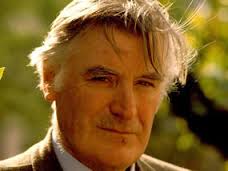
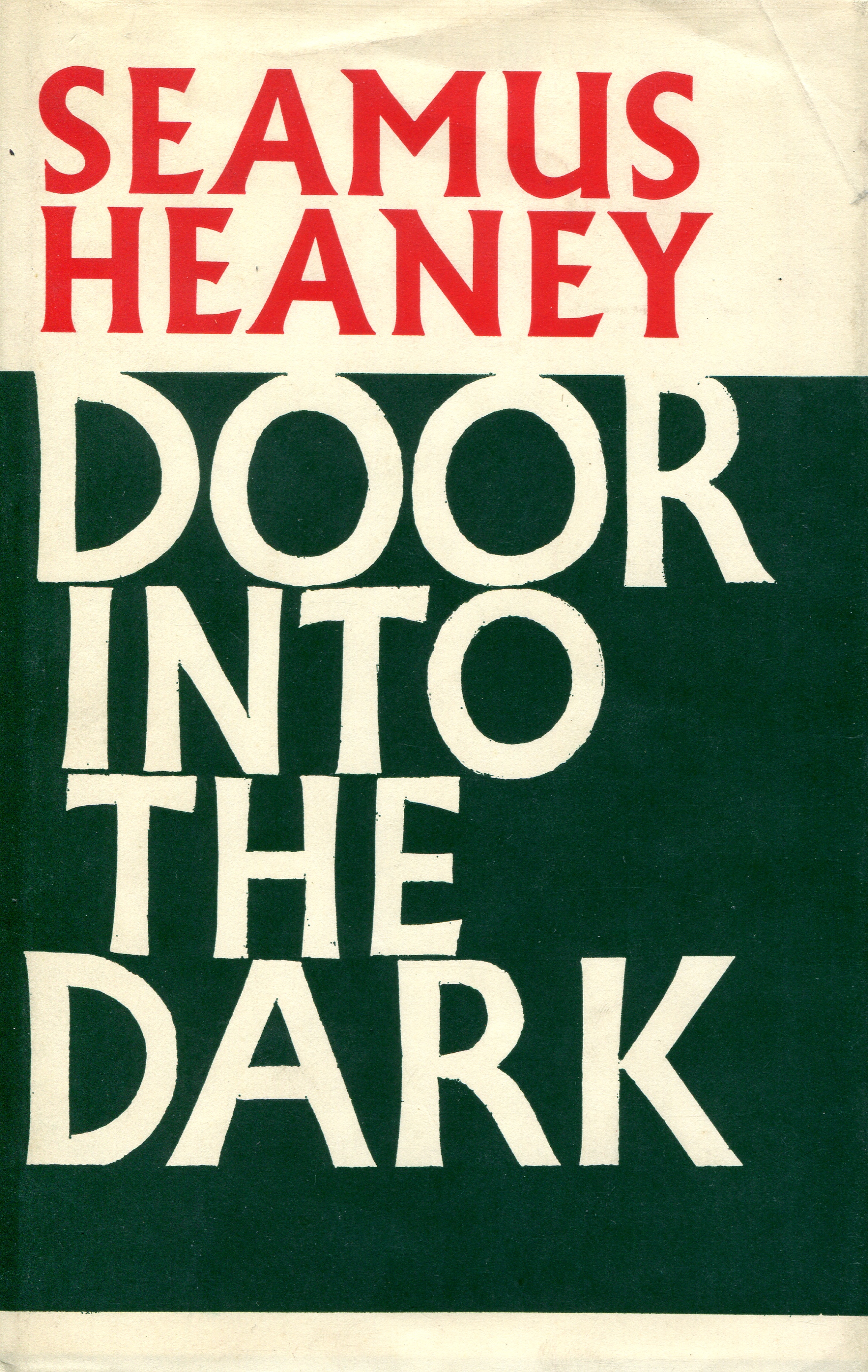
Uit mijn boekenkast heb ik vandaag gekozen voor Seamus Heaney, Opened Ground; poems 1966-1996. En uit deze vuistdikke verzamelbundel het gedicht ‘Night Drive’ uit de bundel ‘Door into the dark’ uit 1969.
.
Night Drive
.
The smells of ordinariness
Were new on the night drive through France:
Rain and hay and woods on the air
Made warm draughts in the open car
.
Signposts whitened relentlessly.
Montreuil, Abbeville, Beauvais
Were promised, promised, came and went,
Each place granting its name’s fulfilment.
.
A combine groaning its way late
Bled seeds across its work-light.
A forest fire smouldered out.
One by one small cafés shut.
.
I thought of you continuously
A thousand miles south where Italy
Laid its loin to France on the darkened sphere.
Your ordinariness was renewed there.
.
.
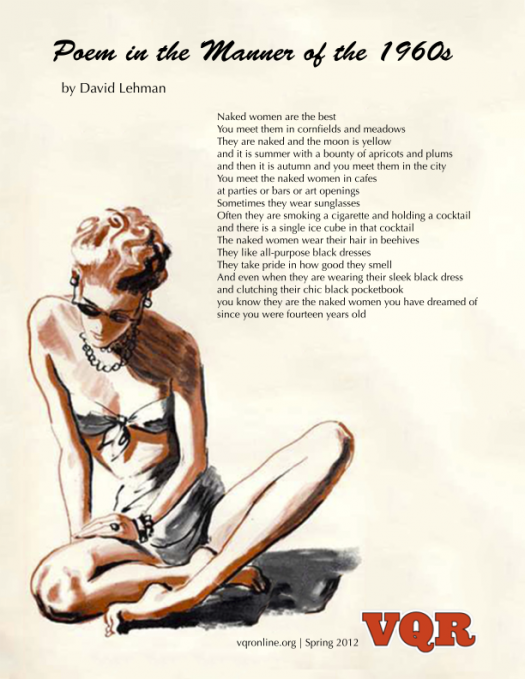
De Virginia Quarterly Review (VQR) heeft in 2012 een aantal mini poëzieposters uitgebracht. Elke vrijdag werd een miniposter op PDF formaat online gezet. VQR is een ‘nationaal tijdschrift voor literatuur en discussie’. Op de website is veel poëzie te vinden (http://www.vqronline.org/).
Hieronder de eerste miniposter van David Lehman met het gedicht ‘Poem in the Manner of the 1960s’.
.
.
Gisteren was ik wat aan het opruimen toen ik twee pagina’s uit een tijdschrift tegen kwam. Het waren twee pagina’s uit de Chronogram met allerlei gedichten in het Engels. In 2011 was ik in de Verenigde Staten op vakantie en toe moet ik deze pagina’s uit een tijdschrift hebben gescheurd.
The Chronogram is overigens niet alleen een tijdschrift maar ook een website en daar is veel poëzie te vinden. Op http://www.chronogram.com/hudsonvalley/poetry/Category?oid=2124613 bijvoorbeeld is veel, door lezers ingestuurde, poëzie te lezen.
Van de twee pagina’s met gedichten heb ik het gedicht ‘Haven’ gekozen van Catherine Wald. Ik kende haar helemaal niet, het was het gedicht dat me aansprak. Het mooie van Internet is dat ik vervolgens naar haar op zoek ben gegaan en wat schetst mijn verbazing?
Het gedicht ‘Haven’ is, samen met een aantal andere gedichten van haar, te beluisteren en te bekijken op Youtube waar Catherine het voordraagt op het kanaal van Writersread ( zie ook de website http://www.writersreadonline.com/).
Catherine Wald is een “wordsmith and communications artisan” zoals ze zichzelf beschrijft, van wie al vele gedichten gepubliceerd zijn.
.
Haven
.
When the thunder started
rolling in, a cat and a dog
rained into my tiny office
.
Maybe they thought I
could keep electricity at
bay. Or that my
superior intelligence
would make sense of it all.
.
I’m not a very good God
but I did stroke Jerry
into purrs, pat Molly’s nerves
towards a ponderous sigh, a sinking
back into carpet.
.
For fifteen minutes we shared
safe haven.
Then the storm withdrew
the sky re-blued
and we went our separate
ways.
.
.
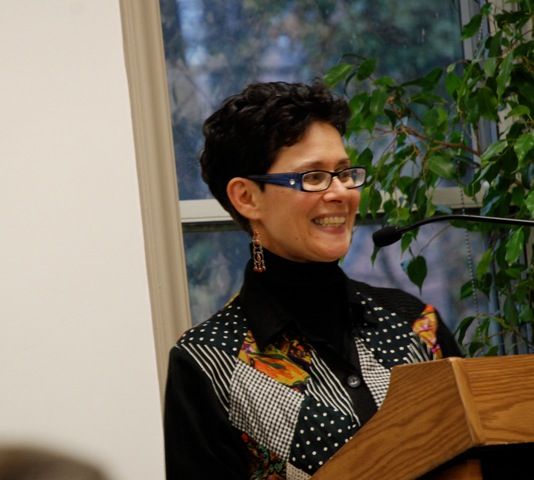
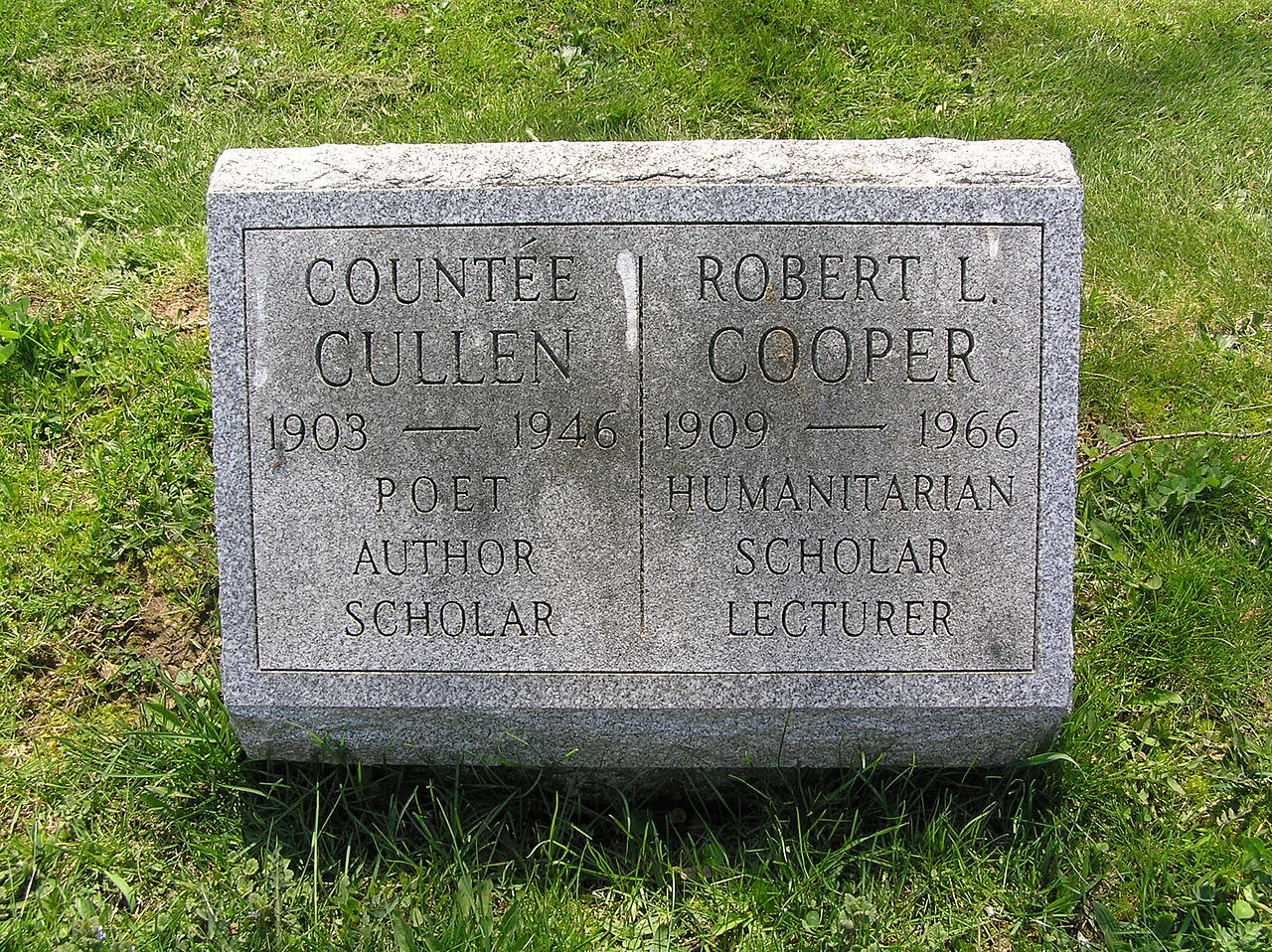
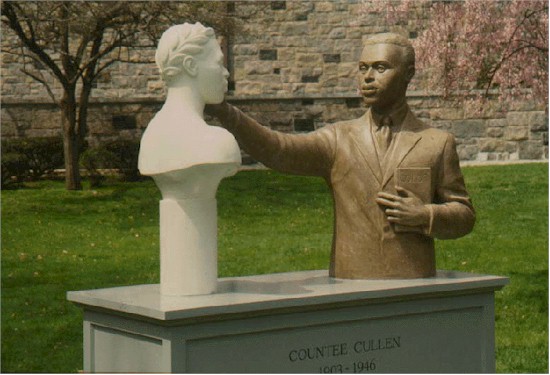
Countee Cullen (1903-1946) werd als wees geadopteerd door een dominee en groeide op in een Methodistisch gezin. Als student blonk hij uit en hij schreef op zijn 14e zijn eerste gedichten. Als student aan de New York University was hij het productiefst, hij publiceerde in die periode zijn eerste drie bundels: ‘Color’, ‘Copper sun’ en ‘The ballad of the brown girl’. Cullen werd een prominent lid van de ‘Harlem Renaissance’ waar hij veel over raciale ongelijkheid en ongelijkheid tussen de rassen schreef. Zijn bundel ‘Color’ geldt als éen van de belangrijkste bouwstenen van deze beweging. Tegelijkertijd werd hij door sommige van zijn mede dichters bekritiseerd omdat hij sociale en politieke kwesties zou vermijden in zijn werk.
In 1929 had Cullen 4 bundels gepubliceerd. Het titel gedicht van ‘The black Christ and other poems’ werd sterk bekritiseerd omdat hij veelvuldig gebruik maakte in zijn gedichten van religieuze beelden. Zo vergeleek hij in het titelgedicht het lynchen van zwarte Amerikanen met het kruisigen van Christus.
In 1946 , na een bewogen leven, stierf Countee Cullen aan hoge bloeddruk en bloedvergiftiging. Een filiaal van de Openbare Bibliotheek van New York is naar hem vernoemd en in 2013 werd zijn naam toegevoegd aan de New York Writers Hall of Fame.
In 1925 was er nogal wat ophef toen Countee Cullen het N-word (Nigger) gebruikte in zijn gedicht ‘Incident’ maar het gedicht legt de vinger op de zere plek en geeft precies weer hoe de verhoudingen lagen tussen de blanke en zwarte Amerikanen in die tijd. Hoewel Cullen liever niet als ‘zwart’ dichter bekend wilde zijn (maar gewaardeerd wilde worden om zijn gebruik van de zogenaamde ‘traditional English standards’) worden juist zijn meest kritische gedichten als hieronder het hoogst gewaardeerd. Cullen wordt tegenwoordig als één van de belangrijkste African-American schrijvers ooit gezien.
.
Incident
.
Once riding in old Baltimore,
Heart-filled, head-filled with glee,
I saw a Baltimorean
Keep looking straight at me
.

.
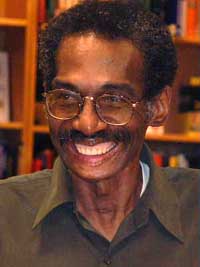
Lorenzo Thomas werd geboren in Panama maar op 4 jarige leeftijd verhuisde hij naar New York met zijn ouders waar hij woonde in The Bronx en Queens. Lorenzo sprak vloeiend Spaans en Engels en in 1968 ging hij bij de Marine waar hij dienst deed tijdens de Vietnam oorlog. Zijn werk is zowel persoonlijk als politiek geladen. Hij werd in New York lid van The Umbra Workshop, welke bijdroeg aan de opkomst van de Black Art Movement in de jaren 60’en 70′.
Meer dan 20 jaar lang was hij als professor verbonden de faculteit Engels van de University of Houston-Dowtown waar hij belangrijke bijdragen leverde aan de African-American literatuur studies.
Lorenzo publiceerde vijf poëziebundels: ‘A Visible Island’ (1967), ‘Dracula’ (1973), ‘Chances Are Few’ (1979, opnieuw uitgegeven in 2003), ‘The Bathers’ (1981) en ‘Dancing on Main Street’ (2004).
Uit de bundel ‘Chances are few’ het gedicht ‘Inauguration’ waar zijn politieke betrokkenheid duidelijk blijkt. Waar hij het over us (ons) heeft kan ook US (United States) worden gelezen wat het gedicht een extra dimensie en inhoud geeft.
.
Inauguration
.
Florence Margaret Smith, schrijvend onder de naam Stevie Smith (1902 – 1971) was een Engels schrijfster en dichteres. Haar werk neemt een bijzondere positie in de Engels literatuur in omdat haar poëzie weinig gemeen heeft met die van haar tijdgenoten. Soms is de invloed van William Blake of Edward Lear te bespeuren.
Haar taal schommelt tussen eenvoudig en archaïsch Engels, ze gebruikt zowel traditionele als vrije vormen. De speelse en humoristische toon van veel gedichten herinnert aan kinderversjes, maar vaak is de tekst gecontrasteerd met subtiele melancholie en een thematische voorkeur voor de dood en zelfmoord.
Ze schreef acht dichtbundels en een aantal romans en ontving voor haar poëzie in 1969 de Queen’s Gold Medal for Poetry. Uit ‘Poems’ uit 1971 het volgende gedicht.
Tenuous and Precarious
Tenuous and Precarious
Were my guardians,
Precarious and Tenuous,
Two Romans.
My father was Hazardous,
Hazardous
Dear old man,
Three Romans.
There was my brother Spurious,
Spurious Posthumous,
Spurious was Spurious,
Was four Romans.
My husband was Perfidious,
He was Perfidious
Five Romans.
Surreptitious, our son,
Was Surreptitious,
He was six Romans.
Our cat Tedious
Still lives,
Count not Tedious
Yet.
My name is Finis,
Finis, Finis,
I am Finis,
Six, five, four, three, two,
One Roman,
Finis.
.
.
Good-night
.
Good-night? ah! no; the hour is ill
Which severs those it should unite;
Let us remain together still,
Then it will be good night.
How can I call the lone night good,
Though thy sweet wishes wing its flight?
Be it not said, thought, understood —
Then it will be — good night.
To hearts which near each other move
From evening close to morning light,
The night is good; because, my love,
They never say good-night.
.

.
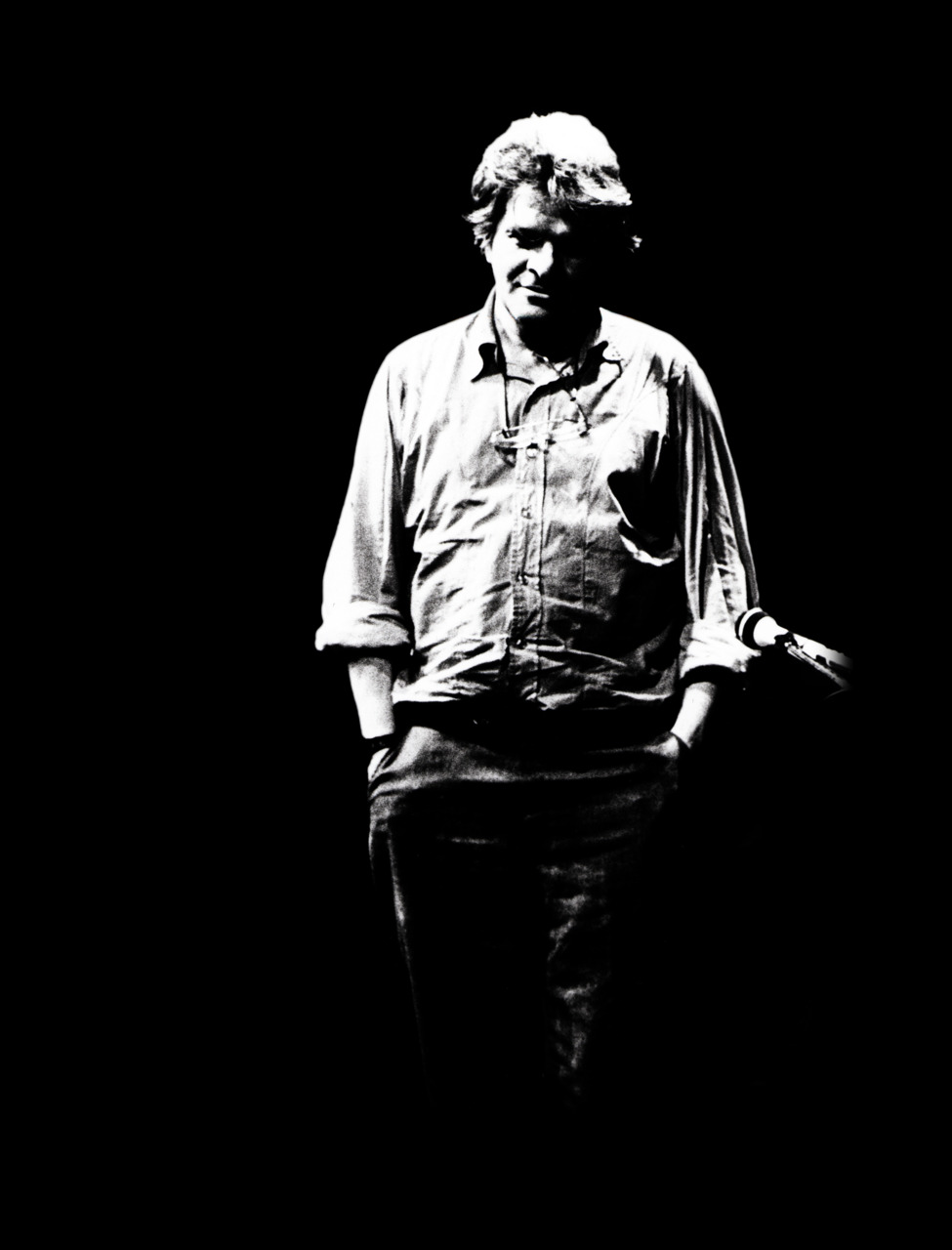
De leeftijd van 32 jaar blijkt schrijvers te inspireren. Iedereen kent het nummer 32 jaar van Doe Maar en deze post gaat over een gedicht geschreven op de vooravond van de 32ste verjaardag van Beat poet Gregory Corso.
Gregory Corso (1930 – 2001) groeide op onder slechte omstandigheden en belande dan ook al op jonge leeftijd in de gevangenis. Daar leerde hij echter de literatuur kennen en ontwikkelde hij een voorkeur voor de dichtkunst. Over zijn ervaringen in de cel zei hij later: “When I left, I left there a young man, educated in the ways of men at their worst and at their best. Sometimes hell is a good place – if it proves to one that because it exists, so must its opposite, heaven exist” Zijn hemel vond hij in de poëzie.
In 1950 kwam hij uit de gevangenis en kwam hij in contact met Allen Ginsberg, William S. Burroughs en Jack Kerouac. Hij begon te schrijven voor de Los Angeles Examiner maar acteerde en speelde ook onder andere in Andy Warhols film ‘Couch’.
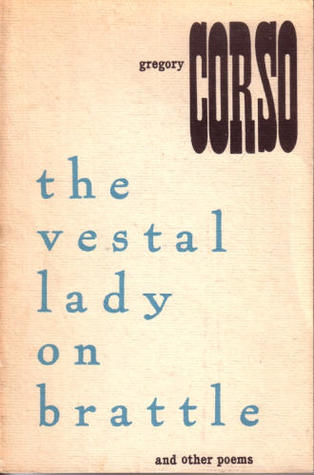
In 1954 verscheen ‘The Vestal Lady on Brattle and Other Poems’, zijn eerste dichtbundel. Dit was het begin van een reeks voordrachten van Corso waarvoor hij stad en land afreisde, bijvoorbeeld naar Oost-Europa en Mexico. In 1956 verhuisde hij naar San Francisco en werd het boegbeeld van de Beat Generation. Het hoogtepunt van zijn dichtersbestaan lag in de jaren ’50 en ’60.
In totaal publiceerde Corso ruim 20 dichtbundels. Zijn werk droeg hij voor “in his natural voice, a trademark high-pitched “New Yorkese” drawl with subtle undertones of expressiveness.” In 2001 overleed Corso en op zijn eigen verzoek werd hij begraven in een graf naast dat van Percy Shelley op de Cimitero Acattolico in Rome.
Hieronder het gedicht dat hij schreef op de vooravond van zijn 32ste verjaardag in 1962.
.
Writ On The Eve Of My 32nd Birthday
.
a slow thoughtful spontaneous poem
I am 32 years old
and finally I look my age, if not more.
Is it a good face what’s no more a boy’s face?
It seems fatter. And my hair,
it’s stopped being curly. Is my nose big?
The lips are the same.
And the eyes, ah the eyes get better all the time.
32 and no wife, no baby; no baby hurts,
but there’s lots of time.
I don’t act silly any more.
And because of it I have to hear from so-called friends:
“You’ve changed. You used to be so crazy so great.”
They are not comfortable with me when I’m serious.
Let them go to the Radio City Music Hall.
32; saw all of Europe, met millions of people;
was great for some, terrible for others.
I remember my 31st year when I cried:
“To think I may have to go another 31 years!”
I don’t feel that way this birthday.
I feel I want to be wise with white hair in a tall library
in a deep chair by a fireplace.
Another year in which I stole nothing.
8 years now and haven’t stole a thing!
I stopped stealing!
But I still lie at times,
and still am shameless yet ashamed when it comes
to asking for money.
32 years old and four hard real funny sad bad wonderful
books of poetry
—the world owes me a million dollars.
I think I had a pretty weird 32 years.
And it weren’t up to me, none of it.
No choice of two roads; if there were,
I don’t doubt I’d have chosen both.
I like to think chance had it I play the bell.
The clue, perhaps, is in my unabashed declaration:
“I’m good example there’s such a thing as called soul.”
I love poetry because it makes me love
and presents me life.
And of all the fires that die in me,
there’s one burns like the sun;
it might not make day my personal life,
my association with people,
or my behavior toward society,
but it does tell me my soul has a shadow.
.




 ZICHTBAAR ALLEEN