Site-archief
Poetry International
Sinéad Morrissey
.
Afgelopen dinsdag was ik bij de opening van Poetry International in de Rotterdamse Schouwburg. Achttien dichters uit verschillende landen gaven daar een proeve van bekwaamheid af. Er waren een aantal dichters bij waar ik van onder de indruk was zoals Raúl Zurita uit Chili (de grootste levende dichter van Latijns Amerika volgens de festivalkrant), Ruth Lasters uit België, Sergio Raimondi uit Argentinië en Sinéad Morrissey.
Vooral van de laatste dichter was ik erg gecharmeerd. Niet in de laatste plaats door het gedicht dat ze voordroeg getiteld ‘Genetics’. Ik heb het opgezocht en deel het graag met jullie.
Sinéad Morrissey (1972) is een Noord Ierse dichter. Haar gedichten vallen met de deur in huis. De setting is helder maar niet zelden ongewoon. Naarmate de gedichten zich ontvouwen verschuift het perspectief en raken binnen- en buitenwereld, geschiedenis en actualiteit vervlochten. De hierdoor ontstane beelden en soepele associaties geven de gedichten een sterke dramatische kracht. (bron festivalkrant). Sinéad Morrissey was de eerste ‘poet laureate’ van Belfast (soort stadsdichter) en in 2014 won zij de T.S. Elliot poetry prize.
Ik vind het ook vooral een prachtig gedicht, in vorm, soepelheid van haar taal en in boodschap. Uit haar bundel ‘The state of the prisons’ uit 2005.
.
I lift them up and look at them with pleasure –
I know my parents made me by my hands.They may have been repelled to separate lands,
to separate hemispheres, may sleep with other lovers,
but in me they touch where fingers link to palms.With nothing left of their togetherness but friends
who quarry for their image by a river,
at least I know their marriage by my hands.
I shape a chapel where a steeple stands.
And when I turn it over,
my father’s by my fingers, my mother’s by my palms
demure before a priest reciting psalms.
My body is their marriage register.
I re-enact their wedding with my hands.
So take me with you, take up the skin’s demands
for mirroring in bodies of the future.
I’ll bequeath my fingers, if you bequeath your palms.
We know our parents make us by our hands.

Gedicht op een bijzondere plek
Grosvenor Square, Londen
.
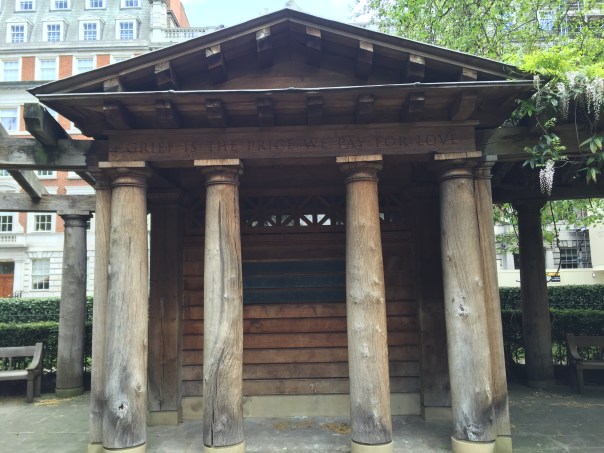
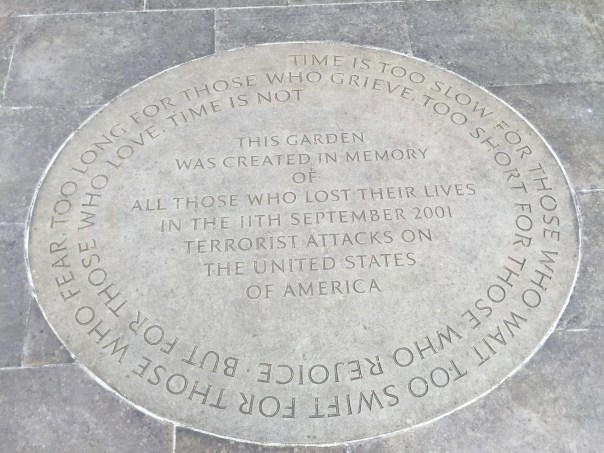
Op 11 september 2003 werd in Londen op Grosvenor Square een monument onthuld dat is gewijd aan de 67 Britse slachtoffers van de terroristische aanval op de Twin Towers in New York op 11 september 2001. Een gedicht van de Amerikaanse dichter Henry van Dyke werd gekozen als inscriptie op een herdenkingssteen, waaronder een stuk staal van de Twin Towers is begraven.
Het monument werd mogelijk gemaakt door bedrijven en individuen die te maken hadden met de aanval op het World Trade Center. De opzet en bouw werd in nauw overleg met de familie van de slachtoffers gedaan en biedt een plaats voor rust en beschouwing.
Het monument bestaat uit een soort tempeltje van hout. In het fries boven de ingang staat te lezen ‘Grief is the price of love’ en op drie lange bronzen platen ‘Those United Kingdom citizens who lost their lives are remembered here by name:’ gevolgd door de 67 namen van de slachtoffers.
De palen van de omringende pergola zijn elk gemaakt van een stam van een eik. Voor het ‘tempeltje’ ligt de herdenkingssteen met daarop het gedicht van Henry van Dyke. Het gedicht schreef van Dyke in 1904 als inscriptie op een zonnewijzer.
Henry van Dyke (1852 – 1933) was een Amerikaans protestants predikant, schrijver en dichter. Hij was zeer populair in de eerste decennia van de 20e eeuw. Hij publiceerde diverse korte verhalen, gedichten en essays.
.
Time is
.
Time is
too slow for those who wait,
too swift for those who fear,
too long for those who grieve,
too short for those who rejoice,
but for those who love,
time is not.
.
Onzichtbare gedichten
Regenpoëzie
.
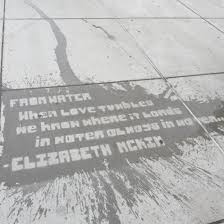
Poëzie komt in vele vormen, ik schreef er al vaker over. Op de meest bijzondere plekken. Dit keer is de poëzie echter onzichtbaar totdat het gaat regenen. In Boston hebben plaatselijke dichters in samenwerking met Mass Poetry op de stoepen gedichten gestempeld die alleen zichtbaar zijn als het regent of als er water over wordt gegoten.
Op de betonnen stoepen zijn de gedichten gestempeld door middel van biologisch afbreekbare waterafstotende spray.
De laatste gedichten die zijn toegevoegd zijn van ‘Still Here’ van Harlem Renaissance dichter Langston Hughes , ‘The Red Thread’ van Elizabeth McKim, en gedichten zonder titel van Gary Duehr en Barbara Helfgott Hyatt.
.
Still here
.
been scared and battered.
My hopes the wind done scattered.
Snow has friz me,
Sun has baked me,
Looks like between ‘em they done
Tried to make me
Stop laughin’, stop lovin’, stop livin’–
But I don’t care!
I’m still here!


E.E. Cummings in 100 gedichten
Verzamelbundel
.
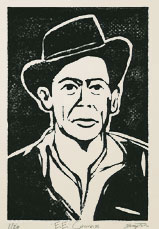
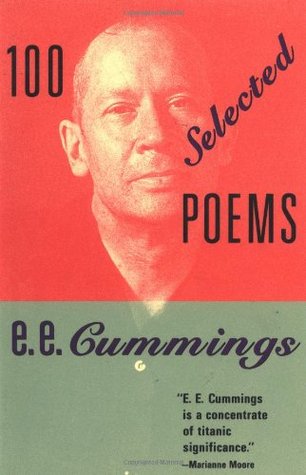
When in London, buy a poetrybook. En dat deed ik dus. In een klein tweedehands boekenwinkeltje in Camden market kocht ik afgelopen weekend de bundel ‘100 selected poems’ van E.E. Cummings. Al jaren is E.E. één van mijn favoriete Engelstalige dichters maar ik bezat geen enkele bundel van hem. Daar is nu dus verandering in gekomen en ik ben er blij mee.
In deze bundel staan gedichten uit maar liefst 10 bundels van Cummings. De oudste uit 1923 ‘Tulips and Chimneys’ en de meest recente XAIPE (wees gegroet in het Grieks) uit 1950.
Edward Estlin Cummings (1894 – 1962) was een Amerikaans dichter en schrijver. Hij was een van de meest radicaal experimentele en inventieve schrijvers van de 20e eeuw. Zijn stijl wordt gekenmerkt door typografisch non-conformisme, het gebruik van jazzritmes, jargon en andere elementen uit de populaire cultuur. Zijn poëzie is nog steeds, na al die jaren, actueel, modernistisch en opwindend.
Uit de bundel het gedicht ‘Raise the shade’ (hoewel het gedicht eigenlijk geen titel heeft, Cummings gedichten hebben nooit een titel maar worden met hun eerste regel aangeduid) dat oorspronkelijk verscheen in de bundel ‘And’ uit 1925. Hoewel de typerende non-conformistische typografie en interpunctie van zijn latere werk hier nog ontbreekt herken je al elementen hiervan in dit gedicht.
.
raise the shade
will you dearie?
rain
.
get yer goat but
we don’t care do
we dearie we should
worry about the rain
.
huh
dearie?
yknow
i’m
.
sorry for awl the
poor girls thatgets up god
knows when every
.
day of their
lives
ain’t you
oo-oo, dearie
.
not so
hard dear
.
you’re killing me
.
Woorden
William Butler Yeats
.
Ik schreef al verschillende keren direct of indirect over William Butler Yeats (1865-1939), de Ierse dichter die werd geboren te Sandymount in de buurt van Dublin. Dat doe ik omdat, van alle Engelstalige dichters, ik hem tot één van mijn favorieten reken. Hoewel hij als zoon van een kunstschilder aanvankelijk naar de kunstacademie ging, besloot hij zich na drie jaar studie geheel aan het schrijven (poëzie, toneel) te wijden.
Yeats overleed in 1939 in Frankrijk, maar werd later begraven op het bescheiden kerkhof van het Ierse plaatsje Drumcliff bij Sligo. In een eerder bericht schreef ik al over mijn reis door Ierland en dat we, zonder het te weten maar gelukkig stond het op een bord, langs de begraafplaats reden waar hij begraven ligt.
Hij wordt gezien als één van de grootste dichters van Ierland, een land dat een meerdere voortreffelijke dichters heeft voortgebracht. In 1923 kreeg hij de Nobelprijs voor literatuur.
In de bundel ‘Al keert het grote zingen niet terug’ uit 1999 staat zijn gedicht ‘Words’ in vertaling van J. Eijkelboom. Hier het origineel en de vertaling.
.
Words
I had this thought a while ago,
‘My darling cannot understand
What I have done, or what would do
In this blind bitter land.’
And I grew weary of the sun
Until my thoughts cleared up again,
Remembering that the best I have done
Was done to make it plain;
That every year I have cried, ‘At length
My darling understands it all,
Because I have come into my strength,
And words obey my call’;
That had she done so who can say
What would have shaken from the sieve?
I might have thrown poor words away
And been content to live.
.
Woorden
Ik dacht een tijd geleden:
‘Mijn lief kan niet begrijpen wat
ik gedaan heb of wat stand hield
in dit blind bitter land.’
En ik werd lusteloos in de zon
tot mijn denken op ging klaren
en ‘k mij herinnerde dat wat ik kon
gedaan werd om het duidelijk te maken;
dat ik elk jaar maar riep: ‘Eindelijk
begrijpt mijn lief dit allemaal
daar ik mijn wasdom heb bereikt
en meester ben over de taal.’
Wat was, had zij aldus besloten,
er afgevallen bij het zeven?
Ik had het pover woord misschien verstoten
en was content geweest met leven.
.


Red poem
Rives Granade
.
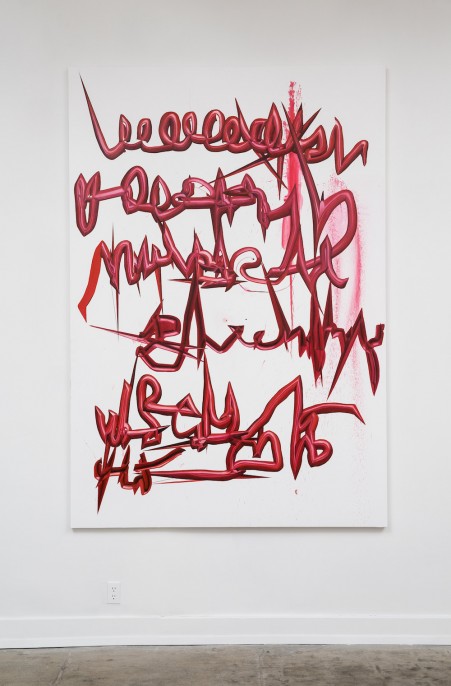
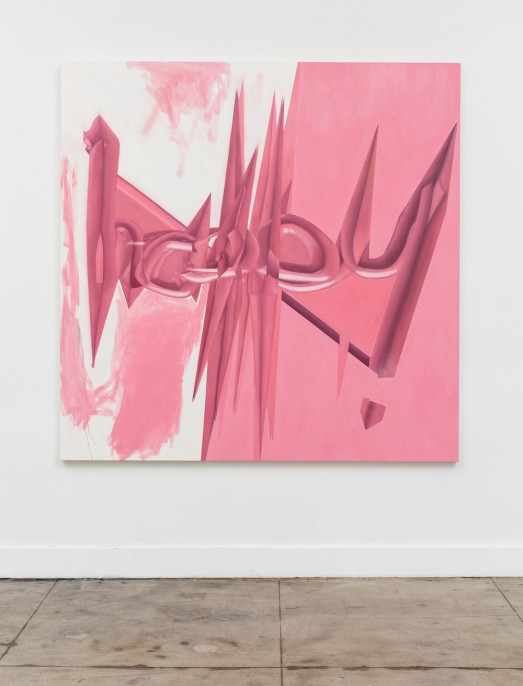
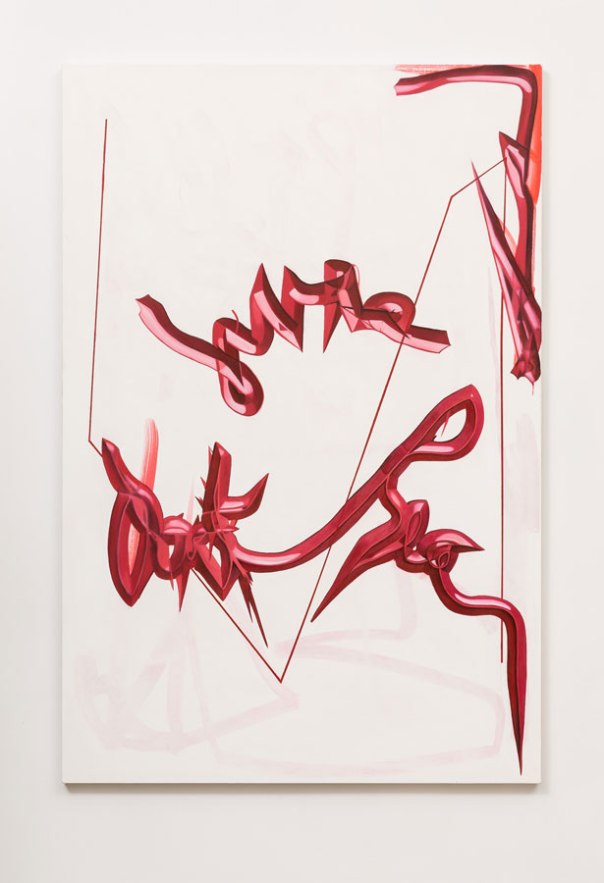
Kunstenaar Rives Granade uitv het plaatsje Mobile in Alabama in de Verenigde Staten exposeerde afgelopen jaar met, wat hij noemt, poetically charged architectural fusions. Omdat ik graag de grens tussen poëzie en kunst verken viel mijn oog op één van de schilderijen die deze tentoonstelling bevatte (de tentoonstelling was tot december 2015). Het betreft hier het schilderij ‘Red Poem’.
Hoewel Red Poem geen gedicht is, volgens mij is het zelfs geen tekst of taal, deed het me erg herinneren aan eerdere kunstwerken van kunstenaars die zich lieten inspireren door poëzie.
Zo ook Rives Granade. De schilderijen in deze tentoonstelling hebben allemaal een tekstueel element, een soort graffiti met een poëtische referentie. Dit slaat terug op Rives’ filosofie over het maken van kunst, het creëren van ruimte en het definiëren van kleur.
Veel van de werken in Red Poem zijn een middenweg tussen taal, architectuur en beeldhouwkunst. Het uitgangspunt voor deze werken was het lezen van poëzie. Rives schrijft ook poëzie, zijn dichtbundel komt in het voorjaar van 2016 uit.
.
Humanity
e.e. cummings
.
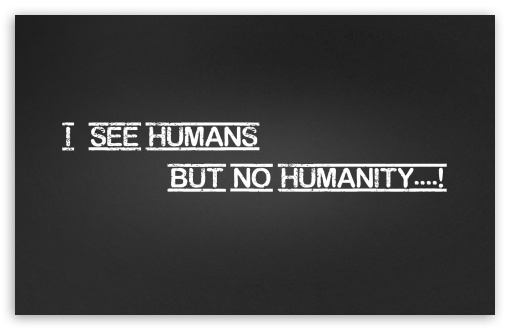
Onder de Engelstalige dichters is E.E. Cummings toch wel één van mijn favorieten. Cummings (1894 -1962) poëzie is misschien niet altijd in één keer te bevatten maar zorgvuldig lezen en je wordt verwend met prachtige zinnen en beelden. In het gedicht ‘Humanity’ beschrijft Cummings zijn gedachten over de mensheid en in een omkering aan het einde laat hij niets te fantaseren over als het gaat om zijn kritische gedachten over de mensheid.
.
Humanity i love you
because you would rather black the boots of
success than enquire whose soul dangles from his
watch-chain which would be embarrassing for both
parties and because you
unflinchingly applaud all
songs containing the words country home and
mother when sung at the old howard
Humanity i love you because
when you’re hard up you pawn your
intelligence to buy a drink and when
you’re flush pride keeps
you from the pawn shop and
because you are continually committing
nuisances but more
especially in your own house
Humanity i love you because you
are perpetually putting the secret of
life in your pants and forgetting
it’s there and sitting down
on it
and because you are
forever making poems in the lap
of death Humanity
i hate you
.
Uit: ‘100 selected poems’
Life is a killer
Recensie
.
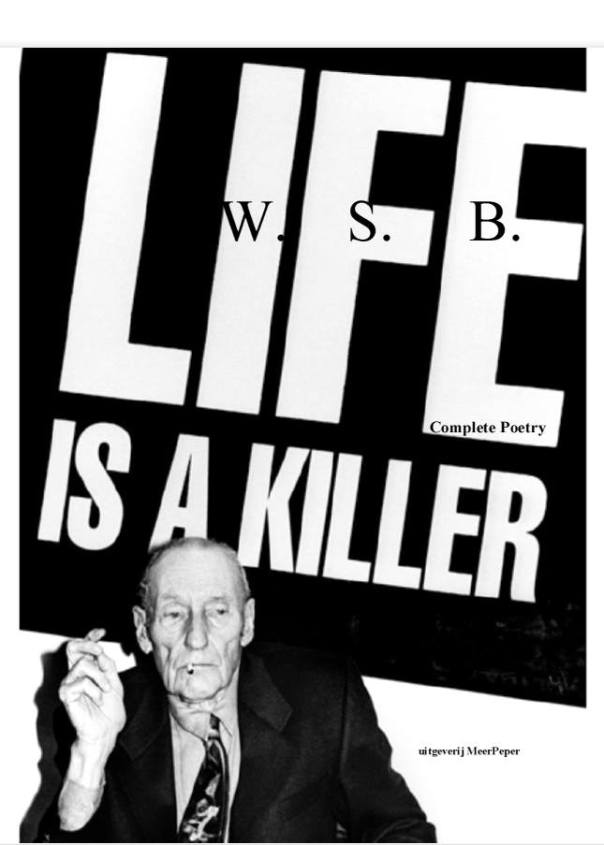
Derrel Niemeijer is een eigen uitgeverijtje begonnen en met ‘Life is a killer’ debuteert hij met zijn uitgeverij MeerPeper gelijk maar met een icoon uit de beatgeneration William S. Burroughs II of W.S.B. zoals op de cover staat te lezen.
William S. Burroughs (1914 – 1997) werd in 1959 beroemd door de uitgave van de roman ‘Naked Lunch’, een boek met een innovatieve, deconstructivistische structuur waarin hij harde maatschappijkritiek levert, met drugsverslaving en homoseksualiteit als metaforen. Tevens is het een kroniek van zijn eigen ervaringen met homoseksualiteit, het gebruik en afkicken van drugs. Hij maakte in dit boek onder meer gebruik van elementen uit genres als hard-boiled, sciencefiction en porno. Ook zijn enige gedeelten geschreven als satire op wetenschappelijke traktaten. (bron: Wikipedia).
In ‘Life is a killer’ complete poetry, heeft Derrel met toestemming van de erven Burroughs het poëtische werk van W.S.B. bijeengebracht. Dit poëtische werk is een zeer klein gedeelte van wat hij heeft geschreven en er zullen mensen zijn die ook dit werk niet als poëzie zien.
Burroughs past hier namelijk steeds de cut-up techniek toe, waarbij hij letterlijk tekst verknipt en op een andere manier weer samenvoegt. Hierdoor ontstaan zeer bevreemdende en onsamenhangende teksten. In feite maakt Burroughs ready mades. Met name in de eerste ‘gedichten’ uit 1959 worden allerlei medische stukken verknipt over kanker, polio en dierenziekten. In latere stukken maakt Burroughs ook gebruik van proza van Stalin en gedichten van Rimbaud. Pas in de gedichten van na 1962 komt er enige samenhang in zijn teksten die ook voor de (geoefende) lezer begrijpelijker zijn. In de laatste twee gedichten ‘Pistol Poem No. 2’ en ‘Pistol Poem No. 3’ herkende ik een stijl die ik eerder bij andere post moderne dichters las.
In de bundel (geheel in het Engels) maakt Derrel gebruik van de interpunctie, de opmaak en het invoegen van lege bladzijden helemaal in de stijl van zijn grote held (die dit ook deed). Hoewel ik nog steeds niet kan wennen aan een gecentreerd Forword en Index, begrijp ik de keuze hiervoor.
Als pamflettistische bundel is dit dan ook een zeer geslaagd debuut van MeerPeper. Als je, zoals ik, graag de (rafel)randen van de poëzie opzoekt mag de cut-up techniek en de “geconcentreerde gekte” zoals ik het dan maar noem, van William S. Burroughs niet ontbreken.
De totale oplage van dit werkje bestaat uit maar 25 stuks maar ik weet zeker dat de liefhebbers van het werk van William S. Burroughs en/of van de beatgeneration deze uitgave graag zullen aanschaffen.
Uit deze uitgave het gedicht “People are some bath tub” uit 1959.
.
“PEOPLE ARE SOME BATH TUB”
,
“people are some bath tub.”
for new cancer holes
Ma viruses
made the night for She Ovation
Dish Soprano
separated by long peee
another mystery
other kill cells and future
agent at work
new cancer hole
These individuals are marked foe
They are of malignancy the link
The usual procedure
seperated by a long Pee
eventual program
known as COOL
virus graphed
Time.
OURS?
THAT?
.
The Waste Land
T.S. Eliot
.
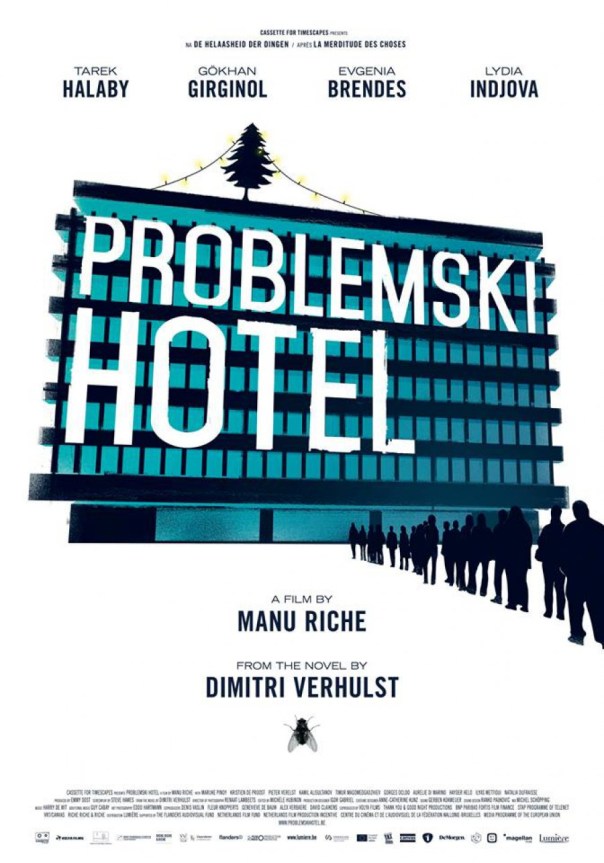
Vorige week bezocht ik het filmhuis voor de film ‘Problemski Hotel’ naar het boek van Dimitri Verhulst. Een bijzondere film, dramatisch en komisch tegelijk. In deze film citeert de hoofdpersoon Bipul enige keren een aantal zinnen uit het gedicht ‘The Waste land’ van T.S. Eliot (1888 – 1965) en dan met name de regels uit de eerste strofe ‘April is the cruelest month’. De eerste 7 regels van de eerste strofe bevatten deze regels. In deze regels noemt T.S. Eliot April een wrede maand terwijl wij hier in het Westen April zien als de maand dat de Lente begint.
In dit gedicht spreekt een getormenteerd mens. Een dichter die aan depressies lijdt. In plaats van het mooie nieuwe te zien voelt de dichter hier een pijnlijke opluchting en brengt dit pijnlijke herinneringen bij hem boven. In de rest van het gedicht werkt hij dit (zijn depressie) verder uit. In de film verwijzen deze regels naar de problemen en uitzichtloosheid van de vluchtelingen in de opvang (het Problemski Hotel).
T.S. Eliot droeg dit gedicht op de dichter Ezra Pound. Het gedicht bestaat uit 5 delen. Als je het gehele gedicht wil lezen kan dat op http://www.poetryfoundation.org/poem/176735 Ik plaats hier het eerste gedeelte.
.
The waste Land

September 1958: Portrait of American-born poet TS Eliot (1888 – 1965) sitting with a book and reading eyeglasses, around the time of his seventieth birthday. (Photo by Express/Express/Getty Images)
Poetry Anywhere
David Julius Caesar Salad
.
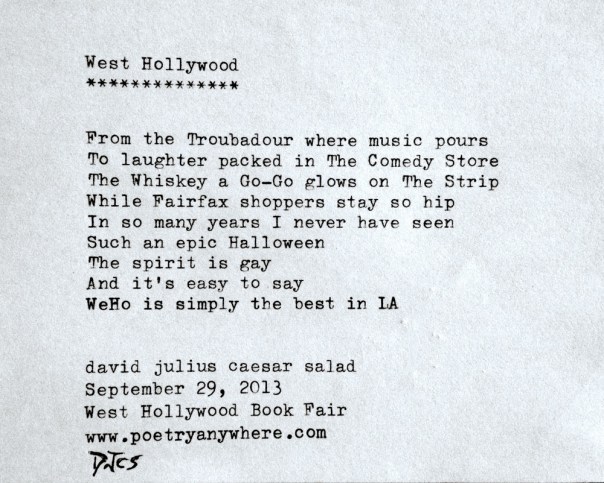
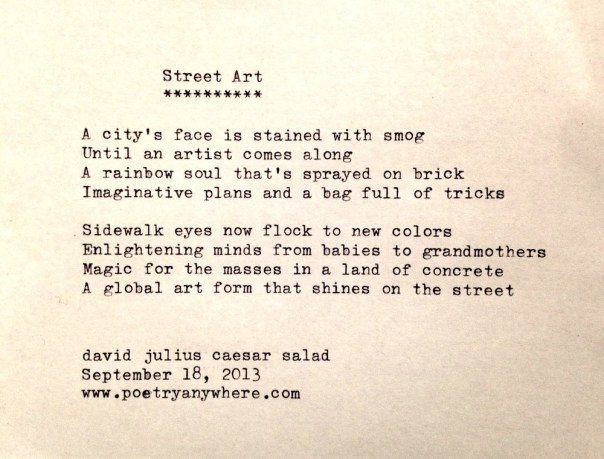
Poëzie Anywhere is een mobiel-poëzie-performance-kunst project waarin gepersonaliseerde getypte gedichten direct worden gemaakt in ruil voor een donatie.
De dichter van dienst, David Julius Caesar Salad leende dit concept van de dichter Lynn Gentry (San Franciosco), in 2010. Gentry schonk hem een turquoise Olivetti typemachine en moedigde hem aan om zijn gesproken woord obsessie te kanaliseren in een getypte gedichten. David Julius Caesar Salad werd verliefd op het samenstellen van poëzie onder druk en het delen van vaak intense momenten met volslagen vreemden op straat.
Hij begon in Ann Arbor, Michigan, elk weekend op een boerenmarkt. Al snel maakte hij deel uit van een groep straat dichters die in de Verenigde Staten deze vorm van poëzie bedrijven. Sindsdien reisde hij naar New York, Spanje, Bulgarije en Los Angeles.
Zijn belangrijkste drijfveren bij het uitvoeren van de Poëzie Anywhere zijn puur voor de menselijke interactie en onvoorspelbare ervaringen. De meeste gedichten die hij zo schrijft gaan over in andere handen en verdwijnen daarmee uit het zicht. Dit is voor David een voorwaarde: “Ik heb liever geen kopie of een foto van mijn gedichten om te behouden, omdat dit voelt als afstand nemen van het moment’.
.
Gelukkig zijn er wel een paar voorbeelden gedeeld door de ontvangers van deze spontane gedichten. Hieronder zie je een paar voorbeelden. Meer informatie over Poetry Anywhere lees je op http://poetryanywhere.com